


 Jul 14, 2026
 8 min
8 minEquipment reservation app: prevent conflicts and track returns
Plan an equipment reservation app that prevents double bookings, records returns and damage, and places faulty items on maintenance hold.

Discover the concept of software democracy and learn about low-/no-code platforms like AppMaster, easing the process for everyone.

Software democracy is a movement that seeks to provide people from diverse backgrounds, especially non-technical individuals, with the tools and opportunities to build, maintain, and shape technology. The idea behind software democracy is to eliminate the barriers that have traditionally hindered non-programmers from participating in the digital world. By empowering a more extensive range of users to build and manage software applications, software democracy aims to democratize access to technology, foster innovation, and drive digital transformation.
At the heart of software democracy is the concept that anyone, regardless of their technical expertise, should be able to create digital solutions to solve problems and fulfill their needs. This approach challenges the notion that only individuals with advanced coding skills can contribute to the world of technology. Software democracy nurtures a more inclusive, innovative, and agile ecosystem where non-technical users can thrive in an increasingly digital world.
The emergence and growth of low-code and no-code platforms have played a significant role in promoting software democracy. These platforms provide development environments that enable users to create software applications without the need for deep programming knowledge or writing lines of code.
Low-code platforms simplify the application development process by offering visual interfaces, drag-and-drop components, and predefined features that automate portions of the coding process. This enables users with basic programming skills to build applications faster and more efficiently than traditional coding methods.
No-code platforms go a step further by removing the need for coding altogether. They offer visual development tools, premade templates, and pre-built components that allow non-technical users to create applications without writing any code. This opens up the world of software development to a much broader audience, giving non-techies the tools and confidence to participate in the digital revolution.
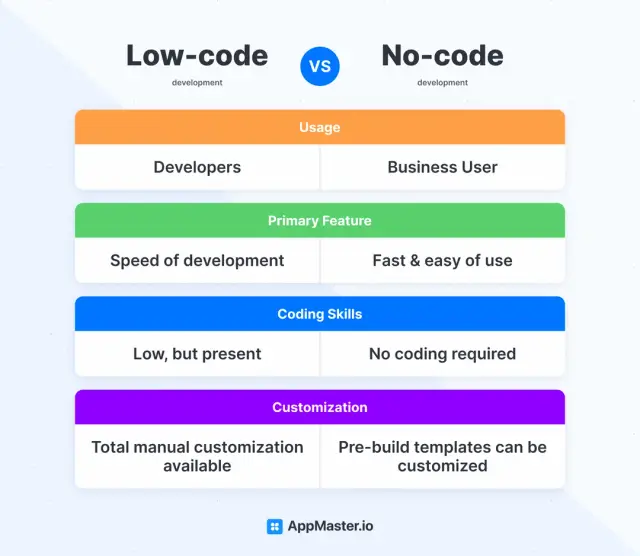
Low-code and no-code platforms have gained mainstream acceptance, with enterprises and businesses of all sizes turning to them for rapid application development and innovation. According to Gartner, by 2024, low-code application development will be responsible for more than 65% of application development activity.
Software democracy levels the playing field for non-technical individuals, enabling them to contribute to the digital world without the need for coding expertise. Some of the key benefits for non-techies include:
Software democracy is pivotal in empowering non-techies to engage with technology on their own terms, enabling them to thrive in the digital world.
AppMaster is a powerful no-code platform designed to make developing backend, web, and mobile applications more accessible for individuals from various backgrounds, technical or not. It accelerates software democracy by enabling non-technical users to create applications without writing custom code. By offering functionalities like high-quality visual design tools, pre-built components, and an easy-to-navigate interface, AppMaster helps non-techies get started with their digital projects in no time.
Founded in 2020, AppMaster enables users to build applications with three main components: backend, web, and mobile. Users can design data models, business logic, REST API, and websocket endpoints for backend applications, and configure user interfaces for web and mobile apps using drag-and-drop components. The platform also has a built-in Business Process Modeler that allows non-techies to create and manage business processes without programming knowledge.
AppMaster generates an executable binary file or source code for hosting applications on-premises when a user publishes a project. Since the platform allows customers to export applications, organizations can maintain control and ownership of their code. This combination of flexibility, ownership, and low-code/no-code capabilities makes AppMaster a significant contributor to software democracy.
With a growing user base of over 60,000 (as of April 2023) spanning startups, small businesses, educational institutions, and enterprises, AppMaster has already impacted many sectors. It was featured as a high performer in multiple categories by G2, such as No-Code Development Platforms, Rapid Application Development, API Management, and more. AppMaster offers a variety of subscription plans to cater to different customers, making it an affordable option to empower non-technical users and enhance their access to the digital world. By providing support for a wide range of users, AppMaster is helping to level the playing field and accelerate the adoption of software democracy.
While low-code and no-code platforms like AppMaster are excellent for democratizing software development, they have challenges and limitations. Potential drawbacks need to be considered to understand the scope and impact of these platforms.
Despite these limitations, low-code and no-code platforms continue to evolve, addressing these challenges and expanding their capabilities. Considering their benefits, particularly to non-technical individuals, low-code/no-code platforms can play a crucial role in software democracy.
For non-technical individuals to harness the benefits of software democracy and make the most of low-code/no-code platforms, several essential skills need to be developed and nurtured.
As software democracy continues gaining traction, non-technical individuals should invest time in building these skills to keep up with the changing industry. Enhancing these skills will enable non-techies to create increasingly sophisticated digital solutions using low-code/no-code platforms, contributing to a more inclusive digital world.
Software democracy and the use of low-code/no-code platforms are poised to significantly impact various industries, both in the short and long term. As more non-techies leverage these platforms to create tailored digital solutions, we can anticipate a transformation in the way businesses operate, innovate, and compete in today's digital-driven world.
One of the primary benefits of software democracy is the potential for increased innovation. As people from diverse backgrounds and skill sets gain access to digital development tools, they bring fresh ideas and perspectives. This surge in creative thinking can lead to innovative solutions that address niche and untapped markets, paving the way for new business opportunities and growth.
Low-code/no-code platforms have emerged as a driving force behind rapid digital transformation. As more non-technical users employ these tools to create custom digital solutions, industries that were once considered slow to adapt to digital trends will fast-track their transformation and become more efficient and competitive. Software democracy will enable non-techies in sectors like healthcare, logistics, and agriculture, among others, to develop tailored applications that enhance productivity and customer experience.
The democratization of software development because of low-code/no-code platforms will make it more affordable and accessible for small and medium-sized businesses to create their own digital solutions. This accessibility can help level the playing field between large enterprises and small-to-medium businesses, promoting healthy competition and empowering companies of all sizes to participate in the digital economy.
As software democracy gains momentum, the job market will also adapt to these changes. Non-technical professionals can expand their skill sets and play a more significant role in software development, decision-making, or technology planning. This shift can create new job opportunities, foster collaboration between technical and non-technical teams, and lead to a more interdisciplinary approach to problem-solving. Still, it's crucial to acknowledge that while software democratization can open up new horizons for non-techies, it won't entirely replace the need for skilled developers, programmers, and software engineers. In fact, more complex projects and applications might still require the expertise of seasoned developers, as low-code/no-code platforms might not always cater to every specific need. As a result, collaboration between techies and non-techies will become more important than ever.
While software democracy has many promising features, it is essential not to overlook the challenges and risks associated with low-code/no-code platforms. As more people become involved in software development, it becomes crucial to consider aspects like application quality, security, data protection, and scalability. Platforms like AppMaster are taking steps to provide secure, and scalable solutions, but it is a collective responsibility of all stakeholders involved in software development to be mindful of these risks. It is crucial to balance fostering software democracy and ensuring that the digital solutions created are high quality, reliable, and secure.
Software democracy has the potential to revolutionize industries and make digital development more accessible, inclusive, and innovative. By providing non-techies with the tools and learning opportunities to develop tailor-made digital solutions, software democracy will continue to reshape the way we use, create, and think about technology in the coming years. Companies like AppMaster play a vital role in accelerating this movement and empowering non-techies to participate and thrive in the world of software development.
 What is software democracy?
Software democracy is a concept wherein people from diverse backgrounds, especially non-technical individuals, are empowered to build, maintain, and shape technology without relying on extensive coding expertise. It encompasses the use of low-code/no-code platforms, giving more people the opportunity to participate in the digital world.
What are low-code and no-code platforms?Low-code and no-code platforms are development environments that enable the creation of software applications with minimal or no coding skills. They use visual interfaces, drag-and-drop components, and pre-built features, making it easier and faster for non-techies to develop digital solutions without writing lines of code.
How does software democracy benefit non-technical individuals?Software democracy provides non-techies with a level playing field in today's digital-centric world. By utilizing low-code/no-code platforms, they can create custom solutions for their needs, participate in the technology industry, enhance their career prospects, foster innovation, and reduce reliance on traditional developers.
How does AppMaster support software democracy?AppMaster is a powerful no-code platform designed to create backend, web, and mobile applications. It offers an intuitive, visual development environment, enabling non-technical users to develop applications without writing code. AppMaster accelerates software democracy by simplifying and speeding up the application development process.
What are the limitations of low-code/no-code platforms?Despite their advantages, low-code/no-code platforms have limitations such as potential performance issues, scalability concerns, limited customization, and dependency on the platform provider. However, constant iterations and improvements help address these challenges and expand the scope of these platforms.
What skills do non-techies need to succeed in software democracy?Non-techies need a basic understanding of digital concepts, problem-solving skills, data literacy, and an ability to work with pre-built templates, user interfaces, and visual tools. Developing soft skills like communication and collaboration is also essential to interact with technical team members effectively.
How will software democracy impact industries and the job market?Software democracy is expected to encourage innovation, drive digital transformation, and enhance competitiveness across industries. It can broaden the scope of non-technical individuals' career options and increase collaboration between technical and non-technical teams. However, it is also important to find a balance between democratizing technology and ensuring quality and security in software development.
Experiment with AppMaster with free plan.
When you will be ready you can choose the proper subscription.
 Jul 14, 20268 min
 Jul 13, 20268 min
 Jul 08, 20268 min