Grow with AppMaster Grow with AppMaster.
Become our partner arrow ico

No-Code App Builders: What You Need to Know

No-Code App Builders: What You Need to Know

What Are No-Code App Builders?

No-code app builders are software development platforms enabling users to create web and mobile applications without writing code. They provide a visual interface where users can design the layout, behavior, and functionality of their applications using drag-and-drop components and built-in features.

No-code app builders cater to both technical and non-technical users, empowering them to bring their app ideas to life quickly and efficiently without relying on programming skills. A significant factor behind the growing popularity of no-code app builders is the desire to streamline and simplify the software development process.

With the ever-growing demand for applications across industries, businesses need ways to launch new solutions quickly and move faster in response to market needs and customer expectations. By offering an easy-to-use platform that automates aspects of app development, no-code app builders have emerged as a powerful solution for businesses of all sizes.

The Rise of No-Code Technology

The increasing adoption of no-code technology can be attributed to several factors, including technological advancements, evolving business needs, and the democratization of software development.
  • Technological Advancements: The growth of cloud computing, APIs (Application Programming Interfaces), and AI (Artificial Intelligence) has made no-code platforms more accessible, powerful, and flexible. By leveraging these technologies, no-code app builders can offer scalable, high-performance applications built on top of reliable and secure infrastructures.
  • Evolving Business Needs: The demand for applications and software solutions has skyrocketed as businesses undergo digital transformation. Traditional software development processes can be slow and costly, making it challenging for businesses to meet their ever-changing requirements. No-code app builders provide an alternative that allows teams to rapidly prototype, test, and deploy applications, ensuring they can respond to new challenges and opportunities quickly.
  • Democratization of Software Development: No-code app builders have played a vital role in empowering users across different roles and levels of technical expertise to create applications. By providing a visual interface for building applications, no-code platforms enable non-developers to contribute to the development process and foster a more inclusive and collaborative environment.

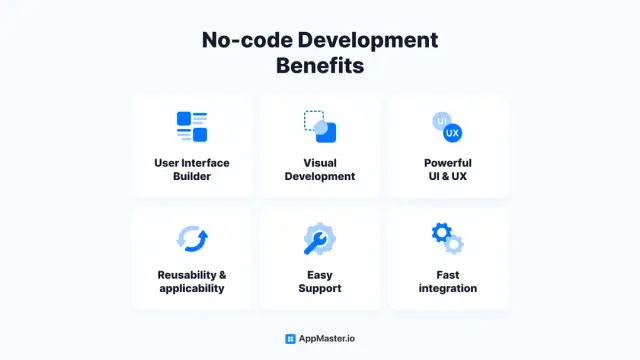
No-code benefits

With the popularity of no-code app builders on the rise, an increasing number of platforms have entered the market, each offering unique features and capabilities. Examples of popular no-code app builders include AppMaster, OutSystems, Wix, and Bubble, among others.

Key Features of No-Code App Builders

While different no-code platforms may offer varying functionalities, some key features are commonly found in no-code app builders:

  • Visual Design Interface: No-code app builders offer a graphical interface for designing application layouts using drag-and-drop components and elements. Elements such as buttons, text boxes, images, and forms can be easily added and customized to create the desired user interface (UI).
  • Prebuilt Functionality: To help users create functional applications, no-code app builders often include built-in features such as workflow automation, database management, user authentication, and reporting. These ready-made functions enable users to configure the behavior and logic of their applications without having to write any code.
  • Responsive Design: Most no-code app builders support responsive design, allowing users to create applications that automatically adapt to different screen sizes and devices. This ensures a seamless user experience across desktop, tablet, and mobile devices.
  • Integration and API Support: Integration with existing systems, services, and data sources is crucial to application development. No-code app builders typically support connecting to various third-party services through APIs, enabling users to integrate their applications with tools like CRM, ERP, or marketing automation.
  • App Publishing and Deployment: Once users have created their applications, no-code app builders make it easy to publish and deploy them to various platforms such as iOS, Android, and the web. Some platforms also support creating Progressive Web Apps (PWAs) that can be installed on devices and accessed offline.
  • Customization and Extensibility: While no-code app builders aim to provide users with a comprehensive set of prebuilt features and tools, they often also offer options for customization and extensibility. Users may be able to customize the appearance and behavior of their applications using CSS and JavaScript or even create custom components and functionalities using low-code or traditional coding methods.
  • Collaboration and Team Management: No-code app builders typically facilitate teamwork and collaboration by offering features like role-based access control, version control, and real-time editing. This allows multiple users to contribute to app development and helps ensure a smooth and coordinated workflow.
Try AppMaster no-code today!
Platform can build any web, mobile or backend application 10x faster and 3x cheaper
Start Free

By leveraging these key features, no-code app builders enable users to create fully functional, professional-quality applications without writing a single line of code.

Advantages of using No-Code App Builders

No-code app builders have become increasingly popular in recent years as they offer numerous advantages over traditional development methods. Some of the most significant benefits include:

Rapid App Development

One of the primary advantages of no-code app builders is their ability to speed up the app development process markedly. By utilizing visual design tools and pre-built components, users can create fully functional apps in a fraction of the time it would take with traditional coding methods. This accelerated development enables businesses to bring their products to market faster and respond more quickly to changing customer needs.

Lower Development Costs

Creating apps using no-code platforms can significantly reduce development costs. Organizations no longer need to rely solely on hiring expensive development teams or outsourcing projects to third parties. With a no-code app builder, even small teams or individual users can build and maintain their apps, resulting in substantial cost savings.

Accessibility to Non-Technical Users

No-code app builders enable users with minimal or no programming knowledge to create and manage their applications. By providing intuitive, user-friendly interfaces and visual design tools, these platforms democratize the app development process, allowing a broader range of people to participate in realizing their software ideas.

Easier Collaboration

No-code platforms promote collaboration between team members, as both technical and non-technical users can contribute to the app's design and functionality. This inclusive environment facilitates communication and fosters a deeper understanding of the project among all stakeholders, resulting in higher-quality, user-centric applications.

Low Maintenance

No-code app builders generate clean, optimized code that often requires little to no maintenance. This minimizes the risk of technical debt accumulating over time and ensures a more stable, maintainable application. Continuous updates provided by the platform also reduce the need for extensive manual updates, making it easier to keep apps up-to-date and secure.

Scalability and Integration

Modern no-code app builders, like AppMaster, enable users to create scalable applications that can grow with their business. Moreover, many platforms offer a variety of pre-built connectors and APIs, simplifying integration with other services and systems. This flexibility makes no-code platforms a valuable and adaptable choice for businesses of all sizes.

Limitations and Concerns of No-Code App Builders

Despite their numerous advantages, no-code app builders also come with some limitations and concerns that users must be aware of before embracing this technology. Some of these limitations include:

Limited Customization and Flexibility

While no-code app builders offer an extensive range of pre-built components and capabilities, there may be instances where your specific needs cannot be met without custom code. This limitation can make it challenging to implement highly specialized features or tailor the app to unique business processes and requirements.

Performance and Scalability Issues

Some no-code platforms may not be optimized for high-performance or high-scale use cases. Traditional coding methods might be a better option in such scenarios, as they can provide greater control over performance optimizations. It's essential to evaluate the performance expectations of your app and choose a suitable platform accordingly.

Try AppMaster no-code today!
Platform can build any web, mobile or backend application 10x faster and 3x cheaper
Start Free

Vendor Lock-In

Depending on the no-code platform, there might be a risk of vendor lock-in, making it difficult to switch platforms or migrate your app to a different technology stack in the future. Before committing to a no-code platform, be sure to investigate its export capabilities, data ownership policies, and the potential costs associated with transitioning to another solution.

Security and Compliance Concerns

When building an app using a no-code platform, it's crucial to consider the security measures in place and ensure that they meet your organization's compliance requirements. While most platforms prioritize security and offer features like encryption and role-based access control, it's always essential to thoroughly evaluate each platform against your specific security and compliance needs.

How to Choose the Right No-Code Platform

Selecting the right no-code platform for your needs requires careful consideration of several factors. Here are some guidelines to help you make an informed decision:

  1. Ease of Use: Evaluate the platform's user interface, design tools, and learning curve. A user-friendly platform can save time and eliminate frustration during app development, particularly for non-technical users.
  2. Feature Set: Ensure that the no-code platform offers the features and functionalities required for your specific use case. This includes support for the desired app types (e.g., mobile, web, or backend apps), pre-built components and templates, and customizable design elements.
  3. Integration and Extensibility: Check if the platform provides pre-built connectors, APIs, and integration options to interface with your existing systems, applications, or third-party services. Extensibility is crucial for scaling and adapting your app to evolving business needs.
  4. Scalability: Look for a no-code platform that supports app scalability, particularly if your app is expected to handle a growing user base or increased complexity over time. Platforms like AppMaster offer excellent scalability for enterprise and high-load use-cases.
  5. Support and Community: Consider the level of support provided by the platform vendor, including documentation, tutorials, and customer service. A strong user community can also be valuable for troubleshooting and learning best practices.
  6. Pricing: Compare the pricing plans of different platforms, considering any hidden costs or limitations associated with each plan. Be sure to select a platform that offers the necessary features within your budget.

By carefully evaluating the above factors and comparing the offerings of various no-code platforms, you can find the perfect solution to fulfill your app development needs and unlock the power of no-code technology.

Getting Started with No-Code App Development

Embarking on your no-code app development journey can be exciting and rewarding. With the right approach and resources, you can create impressive applications even if you lack coding expertise. Below are some steps to help you get started with no-code app builders:

  1. Research and explore no-code platforms: Familiarize yourself with the various no-code app builders available in the market, such as AppMaster.io, Bubble, and Wix. Evaluate their features, pricing, accessible resources, and community support to identify the platform that best suits your needs and goals.
  2. Start with free trials and tutorials: Many no-code platforms offer free trial periods or limited-feature versions to help new users learn and understand the capabilities of their tools. Utilize these resources to gain hands-on experience with no-code development and learn more about the platform's features and options.
  3. Define your app's purpose and goals: Before you start building your app, you must clearly understand what you want to achieve with your application. Identifying the purpose and goals of your app will guide you through the development process and help you make informed decisions regarding features and design elements.
  4. Create a visual layout: Plan your app's user interface (UI) by sketching out the various screens and visual components you want to include. This will help you visualize your app's structure and flow, which you can later replicate using the no-code builder's drag-and-drop editor.
  5. Use prebuilt components and templates: Leverage the built-in components, templates, and examples provided by no-code platforms to expedite development. These resources can help you create functional and aesthetically appealing apps without starting from scratch.
  6. Integrate with third-party services, if necessary: If your app requires advanced functionalities or interactions with external services, explore the integration options offered by your chosen no-code platform. Most no-code builders support integration with popular APIs and services, which can add useful features to your app without requiring extensive coding knowledge.
  7. Test your app thoroughly: Ensure that your app's features and functionalities work as intended by testing it on different devices and browsers. Identify and fix any issues or bugs before deployment to provide a smooth user experience.
  8. Deploy and share your app: Once it is tested and ready, publish it using the no-code platform's deployment options. Share your application with users and gather feedback to refine and improve your app based on user input continuously.
Try AppMaster no-code today!
Platform can build any web, mobile or backend application 10x faster and 3x cheaper
Start Free

No-Code App Builders: Future and Expectations

The future of no-code app builders is promising, driven by technological advancements, increasing adoption, and growing demand across various industries. As no-code platforms evolve, they are expected to offer increasingly powerful and flexible capabilities that further democratize the app development process. Here are some anticipated trends that will shape the future of no-code app builders:

  1. Increased adoption across industries: As no-code app builders continue to prove their value, more organizations across different industries will adopt these platforms to streamline app development, reduce costs, and empower non-technical team members to contribute to organizational innovation.
  2. Enhanced customization and flexibility: No-code app builders are expected to provide even more advanced customization options, enabling users to create highly tailor-made applications that cater to their unique needs and requirements. This will allow no-code platforms to accommodate an even greater variety of use cases and applications.
  3. Growth of specialized no-code tools: As the market for no-code app builders expands, more specialized tools catering to specific industries or use cases may emerge, enabling users to create applications with industry-specific features and capabilities without requiring extensive coding knowledge.
  4. Improved collaboration and team development: No-code app builders are poised to facilitate better collaboration among development teams by providing features such as real-time co-editing, version control, and role-based access. This will enable businesses to harness the power of cross-functional collaboration and drive innovation more effectively.
  5. Integration with emerging technologies: No-code app builders are expected to increasingly embrace emerging technologies such as artificial intelligence, machine learning, and the Internet of Things. This will allow users to create cutting-edge applications that leverage the power of these technologies without requiring specialized programming expertise.
  6. Greater emphasis on security and compliance: As organizations become more aware of the importance of data security and compliance, no-code app builders will focus more on providing secure and compliant solutions. This includes offering advanced security features, data encryption, and integration with popular identity providers and compliance tools.
  7. Hybrid development approaches: As no-code platforms become more sophisticated, we may see a rise in hybrid development approaches that combine no-code and low-code solutions or traditional programming. This will offer developers increased flexibility and control, enabling them to create applications that balance customization, performance, and ease of development perfectly.

No-code app builders have revolutionized the software development industry by enabling rapid app creation and deployment without extensive coding knowledge. As these platforms continue to evolve and improve, they will further democratize app development and enable businesses to innovate and adapt to changing market demands effectively and efficiently.

How do no-code app builders work?

No-code app builders provide a visual interface, where users can drag and drop components and elements, such as buttons, images, and forms, to design the layout of their application. Then, they configure the logic and behavior of the app using prebuilt actions and triggers. Once the app is designed and configured, it can be published and deployed to various platforms and devices with minimal effort.

What is a no-code app builder?

A no-code app builder is a software development platform that allows users to create applications without writing any code. By using visual design tools and built-in functionalities, users can quickly build and deploy applications without the need for programming skills.

What are the benefits of using no-code app builders?

No-code app builders offer several benefits such as faster development time, reduced costs, increased accessibility to app development, and simplified collaboration. They empower non-technical users to create applications without requiring programming skills and enable companies to bring their ideas to life quickly and efficiently.

Are no-code app builders secure and compliant?

Most no-code app builders prioritize security and compliance, offering features such as encryption, role-based access control, and integration with identity providers. However, it's essential to thoroughly evaluate each platform's security measures and ensure it meets your organization's compliance requirements before making a decision.

How do I choose the right no-code app builder for my needs?

When choosing a no-code app builder, consider factors such as ease of use, available features, integration options, scalability, support, pricing, and community. Be sure to evaluate several options and compare their offerings to find the best fit for your specific needs, requirements, and budget.

Can I build complex applications using no-code app builders?

While no-code app builders can handle a wide range of application types and complexities, they may not be the best fit for highly complex and specialized applications that require extensive customizations and integrations. In such cases, you may need to consider a combination of low-code or traditional coding solutions to achieve the desired results.

What is the future of no-code app builders?

The future of no-code app builders is promising, with continuous advancements in technology and growing adoption across industries. No-code platforms will likely become more powerful and flexible, enabling users to create even more sophisticated applications and further democratize the app development process.

What are some limitations of no-code app builders?

Some limitations of no-code app builders include limited customization options, potential performance and scalability issues, and less flexibility compared to traditional coding. Additionally, depending on the platform, there may be concerns regarding data security and compliance.

Related Posts

How to Develop a Scalable Hotel Booking System: A Complete Guide
Learn how to develop a scalable hotel booking system, explore architecture design, key features, and modern tech choices to deliver seamless customer experiences.
Step-by-Step Guide to Developing an Investment Management Platform from Scratch
Explore the structured path to creating a high-performance investment management platform, leveraging modern technologies and methodologies to enhance efficiency.
How to Choose the Right Health Monitoring Tools for Your Needs
Discover how to select the right health monitoring tools tailored to your lifestyle and requirements. A comprehensive guide to making informed decisions.
GET STARTED FREE
Inspired to try this yourself?

The best way to understand the power of AppMaster is to see it for yourself. Make your own application in minutes with free subscription

Bring Your Ideas to Life