


 Jul 14, 2026
 8 min
8 minEquipment reservation app: prevent conflicts and track returns
Plan an equipment reservation app that prevents double bookings, records returns and damage, and places faulty items on maintenance hold.

Discover how no-code artificial intelligence (AI) is revolutionizing the creative industry, empowering artists and designers to unlock new potentials without traditional coding expertise.

Artificial Intelligence (AI) has penetrated nearly every sector, catalyzing innovation and enhancing human capabilities. Yet, one crucial segment embracing AI's transformative power is the creative industry, where the intersection of technology and artistry unlocks extraordinary potential. The emergence of no-code AI is not just a trend; it has become a pivotal tool for artists, designers, and content creators who seek to elevate their work while simplifying complex processes. The beauty of no-code AI lies in its accessibility: creative minds who may lack programming proficiency can still harness the prowess of AI to augment their creative process.
Envisioned as the democratization of technology, no-code AI platforms provide visual interfaces and drag-and-drop functionalities that enable creatives to build, experiment with, and deploy AI-driven applications or features with relative ease. This trend reshapes the conventional narrative - AI is no longer an exclusive playground for coders and data scientists. Instead, it has become an extension of the creative's toolkit, much like a painter's brush or a musician's instrument, unlocking a realm where technicality meets creativity without barriers.
With tools like AppMaster, creatives are empowered to generate complex data models, craft personalized user experiences, and even automate mundane tasks, giving them the freedom to channel more time and energy into the creative aspects of their projects. Whether for building interactive web applications or data-intensive mobile apps, no-code AI presents an exhilarating opportunity for creatives to push boundaries and realize visions once ensnared by technical constraints.
As we delve deeper into the capabilities of no-code AI, we will explore how it serves as a bridge between raw creative potential and sophisticated digital execution. It’s an exciting epoch for creatives, where AI is not a distant, arcane science but an intimate partner in the artistic journey, awaiting the touch of imagination to unleash its full spectrum of possibilities.
When creativity meets artificial intelligence (AI), a paradigm shift occurs in how art is conceptualized, created, and shared. Creativity, once the exclusive domain of human intuition and imagination, now dances in a symbiotic relationship with AI's computational power and pattern-recognition prowess. Together, these forces are reshaping existing creative practices and birthing entirely new forms of expression. In this era of digital alchemy, no-code AI tools are the cauldron in which traditional artistry and futuristic innovation meld.
AI in the creative industries has often been viewed through the lens of automation: tools that expedite processes that once consumed an artist's time, such as editing or sorting through large datasets. But the fusion we're witnessing today goes beyond mere acceleration. AI is becoming a co-creator, offering a set of 'digital brushes' that paint in strokes of algorithmic complexity no human hand could replicate. It widgets up pictures from the pixels, infers 3D structures from 2D images, and composes music that resonates with the mathematical subtleties of sound. It is a new virtual studio partner offering feedback loops that push creatives beyond their habitual boundaries.
This partnership also extends to more conceptual dimensions. Artists engage with AI to examine themes of consciousness, identity, and the nature of machine 'thought'. As AI generates art that perplexes and enthralls human audiences, it raises questions about the source of creativity and the definition of originality. In the creative workspace, the AI doesn't just streamline tasks but enriches and complicates the palette with which artists paint the human experience.
The leverage of AI in the creative process is nuanced — it's not about replacing the artist but rather enhancing and expanding their capabilities. Picture a digital illustrator using an AI tool to generate intricate patterns that are the foundation for their next masterpiece. Or consider a filmmaker employing AI to script a sequence of scenes, using it as a creative springboard rather than a definitive script. AI is the spell in the proverbial spellbook that transforms the ordinary into the magical, catalyzing an expansion of the possible.
No-code platforms, which democratize access to AI, are instrumental in this fusion. They invite artists of all stripes to experiment without the barrier of code, smoothing the path from vision to reality. Platforms like AppMaster, for example, allow creatives with no prior programming knowledge to harness the power of AI in their app creations, thereby integrating complex functionalities with a simple drag-and-drop interface. This empowerment reshapes the artistic horizon, making the extraordinary ordinary and the inconceivable attainable.
The fusion of creativity and AI, facilitated by no-code platforms, is not about one eclipsing the other. It is about co-evolving and creating a symbiotic relationship where each enhances the strengths of the other. As AI continues to evolve and become more integrated into creative professions, the canvas of the possible expands, inviting creatives to explore realms previously unimaginable and to redefine the boundaries of their craft.
The intersection between artistry and technology has always been a hotbed for innovation, and the rise of no-code artificial intelligence tools is a testament to this ongoing synergy. Creatives now have a variety of AI-driven applications at their disposal, capable of enhancing their work in ways that were once inconceivable without extensive computational knowledge. With no-code AI tools, the barrier to entry for advanced technological processes is dismantled, enabling artists, musicians, writers, and designers to expand their creative horizons.
Let's explore some of the no-code AI tools that are pioneering changes within the creative sectors:
Tools like generative design software enable creatives to input design parameters and constraints, allowing the AI to suggest many design possibilities. This can vastly accelerate the ideation process and allow the creator to explore designs that might not have been initially considered. These systems can create intricate patterns, complex forms, and even optimize designs for manufacturing efficiencies.
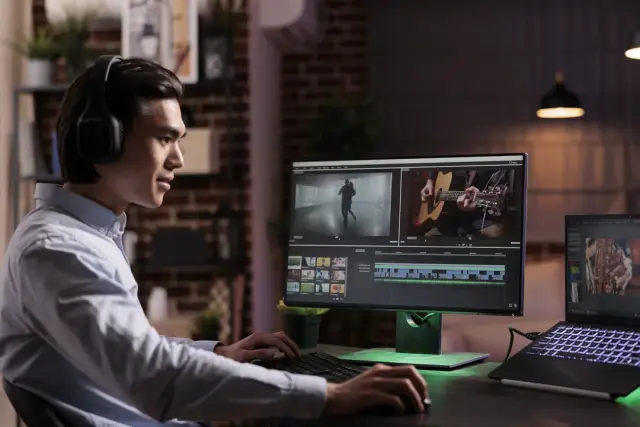
Video artists and filmmakers are leveraging AI to automate tasks such as color correction, sound design, and even editing. AI video editing platforms like Runway ML offer no-code interfaces to manipulate footage using AI models for style transfers, object detection, and more, allowing for creative expression that pushes the boundaries of traditional filmmaking.
Music makers can experiment with AI-powered composition tools that suggest chord progressions, help craft melodies, or even fully compose pieces based on a set of inputs. This educational tool and co-composer can introduce new musical ideas or save time on scoring projects.
Writing no longer needs to be a solitary task restricted to the capabilities of the human intellect. AI writing assistants can help flesh out ideas, provide suggestions for narrative development, grammar corrections, and style improvements, all without requiring technical AI knowledge from the writer.
Graphic designers and visual artists are harnessing the power of AI for image upscaling, style transfer, and even creating new works of art based on prompts. Platforms integrating no-code AI can transform rough sketches into detailed images or apply breathtaking effects that mimic the styles of famous artists.
AI is also making its mark in fashion and textile design. No-code AI platforms enable designers to create intricate patterns and explore color palettes and trends without manually drafting designs. AI algorithms can suggest design modifications, predict trends, and even help create sustainable fashion by optimizing material usage.
AI assists in the creation of highly personalized products. With the help of no-code AI, businesses can tailor their offerings to each customer's unique preferences — be it through customized skincare products or personalized marketing materials — fostering a more individualized approach to consumerism.
Incorporating AI tools into creative work is not only about supplementing human capabilities—it’s also about opening the doors to new forms of collaborative creation. As the technologies develop, we’ll likely see more sophisticated applications to further enhance the interplay between human imagination and computerized efficiency.
Platforms like AppMaster, focusing on easy-to-use no-code solutions, enable artists and designers to become more tech-savvy without getting bogged down in the complexities of coding. They can create prototypes, test new ideas, and build applications that bring their creative visions to life. For instance, a designer looking to integrate AI into their workflow can use AppMaster to create an app that processes user inputs and generates custom artworks or design elements. This kind of democratization of AI means that the technological gatekeepers are no longer programmers but the creatives themselves.
The advent of no-code AI tools is proving to be a boon for the creative fields, offering liberation from the tedium of mundane tasks and opening up a world of creative possibilities through innovative virtual collaboration. As these technologies continue to evolve, we can expect to witness an ever-growing showcase of human creativity enhanced by the support of artificial intelligence.
The integration of no-code AI technologies with the creative processes opens up a myriad of benefits and opportunities for creative professionals. By tapping into artificial intelligence through no-code platforms, artists, designers, musicians, and writers can vastly expand their creative capabilities and the services they offer, ushering an era where technological sophistication becomes an integral part of the creative toolkit.
The most immediate benefit is the liberation of creative thought. AI can handle complex calculations and generative algorithms, allowing creatives to translate their ideas into reality without the heavy lifting of manual execution. This means that, for instance, a musician could guide an AI to compose intricate symphonies based on an initial melody, or a visual artist could create nuanced textures and patterns that would be time-consuming to make by hand.
One of the significant advantages of incorporating no-code AI is the noticeable boost in productivity. Repetitive tasks such as editing photos, organizing files, or generating base models can be automated. This enables creatives to spend more time refining their work and expanding their portfolios rather than getting bogged down in the monotony of what AI can accomplish in seconds.
No-code AI also fosters a collaborative environment between human creativity and machine learning. Creatives can experiment with AI to produce results that neither could achieve alone, allowing for groundbreaking projects that push the boundaries of what's possible in art, design, architecture, and storytelling.
Budget constraints can often limit a creative professional's ability to execute a vision. No-code AI tools can mitigate financial concerns by reducing the need for additional manpower or expensive software solutions. This democratization of technology empowers freelancers and small studios with capabilities that previously required substantial financial investments.
Artificial intelligence, once the domain of specialized researchers and large corporations, is now at the fingertips of every creative individual. No-code platforms provide access to technologies like machine learning, natural language processing, and computer vision, inviting creatives to partake in technological innovations and apply them imaginatively.
Learning to interact with AI and understanding its capabilities can itself become an enriching experience for creative professionals. No-code AI invites individuals to evolve alongside technology, picking up new skills that enhance their work and open up additional career opportunities.
By streamlining complex production processes, creatives can tackle larger projects or enter previously unattainable markets. For example, animators can produce films with fewer resources, or graphic designers can create complex interactive web experiences with minimal coding knowledge, thanks to the simplification enabled by no-code AI.
No-code AI platforms like AppMaster are continuously updated with the latest advancements in AI, ensuring that creatives have access to state-of-the-art tools. These updates can often introduce new functionalities that would be prohibitive if creatives had to develop or implement them manually.
The world of no-code AI for creatives is an exciting frontier with untapped potential. It's an invitation to redefine the artistic process, to marry the ancient human urge to create with the most modern of technologies, and to explore new possibilities that were once the realm of science fiction. For creative professionals, it is time to embrace this technological ally, enhance their artistry, and boldly step into a future where their creative potential knows no bounds.
Although no-code AI presents an exciting frontier for creative professionals, it is not without its challenges and considerations. Creatives venturing into this realm must navigate the intersection where technology meets art, an area packed with both promise and potential pitfalls.
One significant challenge is the reliability and quality of AI-generated content. While AI can produce impressive results quickly, it sometimes lacks the nuanced understanding and emotional depth human creators infuse into their work. Creatives must often refine AI-generated output to ensure it aligns with their vision and maintains high standards.
Another consideration is the loss of control and authorship. Relying on AI to produce creative work raises questions about originality and ownership. Artists need to balance leveraging AI capabilities and retaining the essence of their personal touch in their creations. This ambiguity in creative provenance requires careful navigation, particularly when establishing copyright and attribution protocols.
Data privacy and ethics also come to the forefront when using AI. Creatives work with sensitive and personal data, and ensuring that AI tools honor user consent and legal restrictions is paramount. Moreover, AI systems are prone to biases based on their training data, which can inadvertently introduce stereotypes or reinforce existing cultural biases into the output. Artists must be vigilant and considerate of the ethical implications of the AI tools they employ.
Understanding the limitations of AI is critical. While AI can assist with various tasks, it lacks the full scope of human experience and cannot replace a creative's intuition and expertise. Creatives need to recognize when AI is an appropriate tool and when human judgment will provide the best results.
Moreover, creatives need to stay abreast of the evolving AI technology environment to make informed decisions about which tools to use and how to apply them effectively in their work. This ongoing education requires time and effort that some may find overwhelming. Working with cutting-edge technology also implies that creatives must be ready to pivot and adapt to new developments and updates in AI software, which can disrupt workflows and established processes.
Finally, there's the issue of accessibility and inclusivity. No-code AI can be a great equalizer, democratizing access to advanced tools for various creatives. Yet, the availability of training, resources, and support systems are not uniform across different communities. Ensuring that every creative has the opportunity to engage with no-code AI is a challenge the industry must acknowledge and address proactively.
Despite these challenges, with careful consideration and a strategic approach, no-code AI can still be a powerful ally for creatives. Artists who learn to navigate these waters can uncover new depths of possibility, finding ways to push the boundaries of their craft while addressing potential issues head-on.
As we navigate further into the 21st century, the symbiosis between artificial intelligence (AI) and human creativity is not just a possibility — it's becoming a daily reality for many creatives. The future is painted not in the binary codes of machines versus humans, but in a rich palette where AI acts as a supportive and collaborative partner. Artists, musicians, designers, writers, and creators across all mediums are beginning to see AI not as a replacement but as an enhancement to their creative processes.
Visual artists may find AI tools that learn their preferences and style, helping to quickly generate base sketches that the artist can refine and personalize. Musicians might use AI to analyze countless compositions, extracting understanding from patterns and trends, and offering up new chord progressions and melodies that resonate with human emotions, yet are unlike anything previously heard. Writers can leverage AI-powered assistants that help brainstorm plot ideas, character developments, or even widgets that suggest more engaging wording.
In education, art students and novices could receive guidance from AI tutors, analyzing their work and providing suggestions for improvement. Marketers might use AI-driven analytics to understand audience preferences in design, helping tailor campaigns that are more likely to catch the public's eye.
Moreover, integrating AI with existing creative tools will likely become deeper. Photoshop might have an AI plug-in that suggests color palettes based on emerging trends, or a video editing software could automatically provide the best cut or transition options, guided by an algorithm that understands cinematic pacing. With platforms like AppMaster, creative individuals wishing to build digital solutions will be empowered to manifest their ideas into web, mobile, and backend applications, integrating AI capabilities without the need to master coding languages.
No-code AI tools are also likely to evolve, offering more options for customization and control over AI features, thus permitting creatives more freedom and flexibility to bring their unique visions to life. The narrative that positions AI as a spark for a new renaissance where technology aids creativity is compelling, offering a glimpse into a world where creative boundaries are pushed to new limits.
As creatives, we are on the cusp of a new collaboration age. AI's input is gradually becoming more nuanced, intelligent, and tailored to individual styles and needs. In this future, AI as a collaborative partner in creativity is not just aiding production but is contributing to the genesis of ideas, fostering new forms of expression, and helping to redefine what it means to create.
Stepping into the realm of no-code AI doesn't have to be intimidating, especially when platforms like AppMaster are designed to be friendly to creatives who may not have a background in coding. AppMaster offers an intuitive environment where the fusion of technology and artistry happens seamlessly. Here’s how to venture into the world of no-code AI with AppMaster:
The first step is simple: sign up for an account on AppMaster. With its Learn & Explore subscription, you can begin your journey at no cost. This is perfect for new users who wish to test out the platform's capabilities and familiarize themselves with its features.
Before you dive in, consider what your creative endeavors require. Are you looking to integrate smart content recommendations, automate design tasks, or customize user experience with AI-driven data analysis? Clarifying your goals can help you tailor your journey on the platform.
AppMaster prides itself on its visual interface, which allows you to drag and drop components to build your application. Spend some time exploring the various tools and menus. Watch tutorials, read the documentation, and experiment with the platform’s features. The more comfortable you become with the interface, the more effectively you can wield the tools at your disposal.
Get hands-on with the platform’s Business Process (BP) Designer, which is at the heart of AppMaster's automation capability. You can visualize and create your business logic here, integrating AI components as needed. The no-code approach lets you focus on workflow design without worrying about the underlying code.
Explore the pre-built AI modules available on AppMaster. These can help with tasks such as image recognition, natural language processing, or predictive analytics. Experiment with these modules to understand how they can enhance your application and streamline your creative process.
Incorporate AI bots into your application, enabling a co-creative process. These AI assistants can take over repetitive tasks, offer suggestions, and even inspire new directions for your work. The direct integration within the platform means you won’t have to switch between different software tools to access these capabilities.
When you’re ready, publish your application. AppMaster compiles your project into a working application quickly and efficiently. After publishing, gather user feedback, and continue to tweak and improve your application. The no-code nature of AppMaster means that iterations can be done swiftly, without iterative coding cycles.
As you grow more confident, you can expand the complexity of your AI integrations. AppMaster supports scalability, so your creative application can grow with your ambitions. Explore different subscription models to match your project's needs, from basic plans for startups to enterprise solutions for large-scale applications.
Remember, familiarizing yourself with no-code AI on AppMaster is a journey. Take advantage of community support, utilize the platform’s extensive resources, and embrace the potential for innovative creations at the intersection of AI and creativity.
 What is no-code AI and how does it apply to the creative industry?
No-code AI refers to platforms that allow users to implement artificial intelligence functionalities without writing code. In the creative industry, this means that artists and designers can utilize AI tools for tasks such as pattern recognition, generative art, or enhancing their workflow, while focusing on their creative vision instead of technical barriers.
Can AI truly enhance creativity or does it hinder originality?AI can significantly enhance creativity by providing new tools and possibilities that were not previously available. It allows creatives to explore more complex design patterns, generate ideas, and automate repetitive tasks, freeing them to focus on innovation and originality.
What types of creative tasks can no-code AI assist with?No-code AI can assist with a variety of creative tasks such as image and video editing, generative art creation, music composition, content writing, advanced design modeling, and much more.
Are no-code AI tools challenging to learn for creative professionals?No-code AI tools are designed to be user-friendly and accessible for individuals without technical programming skills. Many creatives find these tools to be intuitive and empowering, as they are tailored to their needs and include visual interfaces.
What are some examples of no-code AI platforms for creatives?AppMaster is an example of a no-code platform that allows for the integration of AI into app development. Other platforms specifically cater to graphic design, music production, and content creation, focusing on ease-of-use for creative professionals.
Is no-code AI cost-effective for independent artists and small businesses?Yes, no-code AI can be very cost-effective, especially for independent artists and small businesses. It reduces the need for hiring specialized developers and makes advanced technologies accessible without a large investment.
How does AppMaster facilitate no-code AI for creatives?AppMaster provides a no-code platform that empowers creatives to build web, mobile, and backend applications with AI functionalities. They can drag and drop elements, design workflows, and integrate AI without writing a single line of code, streamlining the development process.
Can no-code AI tools be integrated with existing creative software?Many no-code AI tools can be integrated with existing creative software through plugins, APIs, and external services, enhancing the capabilities and workflow of the software that creatives are already accustomed to.
What is the future of no-code AI in the creative sector?The future of no-code AI in the creative sector includes more sophisticated tools, greater access to advanced technologies, and seamless collaboration between AI and human creativity, expanding creative potentials and opening new markets.
Are there any limitations to the creativity that no-code AI can offer?While no-code AI offers vast opportunities for creativity, it's still a tool guided by human input. The true limitations often depend on the user's imagination and the ability to synergize AI capabilities with their creative process.
Experiment with AppMaster with free plan.
When you will be ready you can choose the proper subscription.
 Jul 14, 20268 min
 Jul 13, 20268 min
 Jul 08, 20268 min