


 Jul 14, 2026
 8 min
8 minEquipment reservation app: prevent conflicts and track returns
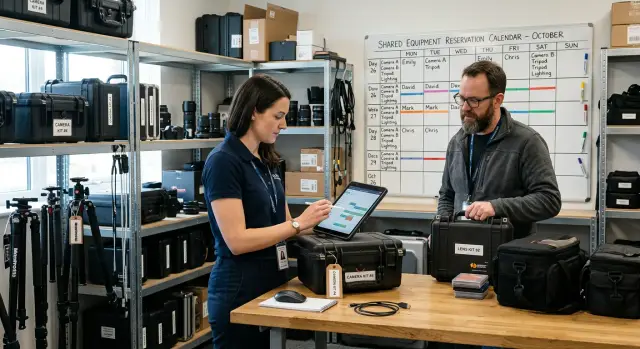
Plan an equipment reservation app that prevents double bookings, records returns and damage, and places faulty items on maintenance hold.

Build a customer complaint resolution workflow that captures each issue, assigns ownership, tracks response deadlines, and records outcomes.

A shared inbox can receive every complaint and still leave cases untouched. Everyone assumes someone else will reply. Spreadsheets create the same risk: one person adds a row, another changes the status, and nobody owns the next step.
Customers experience this as silence or confusion. They may get two replies with different promises, or have to explain the same problem again after a handoff. A delayed answer often feels worse than the original issue because the customer cannot tell whether anyone is working on it.
A customer complaint resolution workflow gives every case one visible owner. That person does not have to solve every part alone. They do need to keep the case moving, ask the right team for facts, update the customer, and confirm the final outcome.
The case record should show the owner, acceptance time, next response deadline, and current status. Anyone opening it should be able to tell whether the team needs to act today or wait for information.
For example, a customer reports that an order has not arrived. Support logs the complaint and assigns it to Maya. She checks the delivery details and asks operations for an update. The record shows that Maya must reply by 3 p.m. Even if another team provides the answer, Maya remains responsible for the next customer message.
A visible record also prevents forgotten follow-up after an initial apology. The owner can add notes, attach supporting details, and set the next action before closing the case. These customer complaint records should explain what happened, what the team promised, and whether it completed that work.
Avoid assigning complaints to labels such as "support" or "operations." Those labels identify a group, not a person. Assign a named owner, then record any handoff in the case history. Clear complaint accountability reduces duplicate work and gives customers a consistent answer.
A complaint record needs enough information for another employee to understand the issue without asking the customer to repeat it. Start with the customer's name, account or order reference, contact details, and preferred reply channel. If someone asks for email updates, do not call without warning.
Record the issue in the customer's own words before adding internal notes. A direct description such as "My replacement part has not arrived and I have been without the machine for six days" preserves what upset the customer. Internal notes can then explain what the team found, such as a warehouse delay or an incorrect address.
Link every case to the product or service involved. Depending on the business, include:
This prevents staff from searching separate inboxes, spreadsheets, and order systems for the same basic facts.
Use a small set of urgency levels that staff can apply consistently. Base urgency on the harm caused and the response promise your business has made, not on how strongly a customer phrases a message.
A customer locked out of a paid account may need an urgent response because they cannot use a service they rely on. A minor cosmetic flaw still deserves a prompt reply, but it usually does not need the same deadline. Add the urgency level and first-response due time when staff create the case.
Four levels often work well: urgent, high, normal, and low. Define each with a short rule. For example, "urgent" can mean that service is unavailable or that the complaint involves a safety, legal, or payment risk. Staff should not have to interpret vague labels such as "important."
A complete intake record gives the investigator a usable starting point. It also makes complaint accountability clear: reviewers can see who reported the issue, what happened, which transaction it concerns, and how quickly the team must respond.
Assign one investigator as soon as the team logs the case. That person owns the next action, even when they need help from billing, delivery, or another support team.
The investigator does not need authority to approve every refund or exception. Their job is to review the facts, request missing details, contact the right colleague, and update the customer by the agreed deadline.
Show the owner's name beside the case status in the view your team uses every day. Keep statuses simple: new, under review, waiting for customer, waiting for an internal answer, resolved, and closed. A colleague should see who acts next without opening a long message thread.
Give managers a separate role for escalations and decisions outside normal policy. A support agent may investigate a delayed delivery, while a manager approves a refund above the usual limit. This prevents investigators from holding cases because they do not know who can make the decision.
Set escalation rules that staff can apply without debate. Send a case to a manager when it involves a safety concern, a legal threat, repeated service failure, or a requested remedy outside policy. The investigator should remain the customer contact until a manager formally takes over.
Sometimes a case needs to move. The original owner may be absent, or a specialist may have better access to the facts. Do not silently replace the name. Keep a short reassignment note with the old owner, new owner, reason, and timestamp.
For example: "Moved from Priya Shah to Daniel Lee, 14 May, 10:30. Daniel handles carrier claims." This protects complaint accountability and gives managers a clear record if a response misses its deadline.
When a manager takes over, update both the owner and status immediately. Customers should never receive conflicting replies because two people believed they owned the same complaint.
A case can sit untouched when the record says only "open." Add a first-response deadline as soon as someone logs the complaint. The deadline means a real person must acknowledge the issue, confirm that the team received it, and state when the customer can expect a fuller update.
The first reply does not need to solve everything. It should be prompt and useful. For example: "We received your report about the duplicate charge. Sam is reviewing it and will update you by 3 p.m. tomorrow." That message gives the customer a name and a date instead of a vague promise.
Use a few clear milestones. Each needs an owner, due date, and definition of completion:
Do not give every complaint the same timer. A safety report needs immediate attention. A suspected payment error often needs a fast response because it affects money and trust. A routine service complaint may allow more time for review. Write these categories into your complaint tracking process so staff do not have to judge urgency from scratch each time.
A team might require an acknowledgement within one hour for safety issues, within one business day for payment complaints, and within two business days for standard service issues. Set separate due dates for the investigation and final decision. A quick acknowledgement helps, but it should not hide a case that has stalled for a week.
Send reminders before a deadline, not after it. Alert the manager when a deadline passes. Escalation should move work to someone who can remove a blocker, approve an exception, or assign more help.
Keep response deadline tracking in the same record as the complaint. A case list should show the owner, next milestone, due date, and overdue status. With AppMaster, a no-code case app can store these fields, route urgent categories to the right person, and send reminder messages before a deadline approaches. The team can then see which customers need an update today.
A complaint can look quiet while someone investigates it. Without visible statuses, managers cannot tell whether the customer has received a reply, whether the team needs more information, or whether the case has been forgotten.
Use statuses that match how the team works:
Each status needs a plain rule. Move a case from New to Investigating only after someone has reviewed it and written the first action, such as "Check delivery scan and contact the carrier." Move it to Waiting for customer only after the team has sent a specific request. Do not use that status as a place to park work nobody has started.
Keep two separate records on every case. Customer updates should use clear, polite language: "We are checking the delivery record and will update you by Tuesday." Internal notes can include order checks, staff comments, policy decisions, and the reason for the chosen remedy. This separation prevents a rushed internal message from reaching the customer.
Keep a history of every change. Record the timestamp, the person who changed the status, and a short reason. If Maya moves a case to Resolved after issuing a replacement, the record should say so. A colleague can then follow the full case history without asking around.
Do not close a complaint just because the team completed its internal task. Close it after the customer has received the outcome, the team has recorded the action, and the owner has checked that no promised follow-up remains.
A closed case needs a clear record. The customer may contact you again, a manager may review the decision, or a similar complaint may appear next month. Complete customer complaint records let the next person understand what happened without digging through old inboxes.
Keep the timeline factual. Add the evidence the investigator reviewed, such as order details, screenshots, delivery scans, call notes, or email messages. Log every action, including refunds, replacements, account changes, and promises made to the customer. For refunds, include the amount, method, and approving person.
Do not guess at the cause while the case is open. Check the facts, compare the evidence, then write a short cause statement. "The warehouse packed the wrong item after staff used an outdated product label" is more useful than "order error" because it identifies a problem the team can fix.
Record the final decision in plain language. State whether the team upheld the complaint, partly upheld it, or found no fault. Add the date and time the customer received the decision, the communication channel, and any action still due after closure.
A closure note should cover the evidence reviewed, confirmed cause, final decision, promised action, final response date, and tags for the product, service area, and issue type.
Tags turn individual cases into patterns. If several complaints use tags such as "late delivery" and "warehouse label," managers can count them and inspect the underlying process. Make these tags required before staff close a case.
Keep the outcome concise but specific. "Refund issued, customer told on 14 May, warehouse label corrected by operations" gives a colleague a real starting point if the customer follows up or the same error returns.
A customer writes to support on Tuesday morning: "My order was due yesterday, and I have not received it." The support agent opens a case and records the order number, promised delivery date, contact details, and preferred outcome. The agent also saves the original message.
The case goes to Maya, the support lead. She owns communication with the customer and must send a first reply by 2:00 p.m. Her reply confirms the complaint, apologizes for the missed date, and promises a clear update time: "I will check the delivery status and contact you by 4:00 p.m. today."
Maya assigns the delivery check to Daniel in operations with a 3:00 p.m. deadline. Daniel reviews the courier record and finds that the parcel reached the local depot but was not loaded onto the delivery vehicle. He adds that fact, the tracking reference, and a screenshot to the case. He asks the courier to prioritize delivery on Wednesday.
At 3:30 p.m., Maya sees Daniel's update and contacts the customer before her promised time. She explains the delay in plain language and offers the agreed remedy: priority delivery the next day and a refund of the delivery charge. She records the offer, the customer's acceptance, and the new delivery date.
On Wednesday afternoon, Daniel checks the courier record again and sees that the parcel was delivered. Maya sends a short confirmation message and asks whether the order arrived in good condition. The customer confirms that it did.
Maya closes the complaint after recording the final outcome: delivery completed, delivery charge refunded, customer confirmed receipt. She tags the cause as "missed depot dispatch." During a weekly review, operations can check whether the same cause appears in other cases and decide whether the depot process needs attention.
Maya owns the customer conversation, Daniel owns the delivery investigation, and every deadline appears in the same case record.
Assigning a complaint to "Support" or "Operations" spreads awareness, but it does not tell the customer or team who must act next. Name one investigator, even when several people need to help.
The owner does not need to solve every part alone. They do need to request updates, keep the customer informed, and make sure promised action happens. Managers can also spot stalled cases before a deadline passes.
Another common mistake is closing a case after sending a reply. A message may say that a replacement will ship, a refund will arrive, or a technical team will investigate. Keep the case open until the promised action is complete and the owner records proof.
Original customer complaint records also need protection. Do not replace the customer's words with a short internal summary, especially if the summary softens the problem or leaves out a request. Keep the original message and add a separate summary for the team.
Private notes need enough detail to help the next person. "Spoke to warehouse" or "sorted with customer" leaves too much room for guesswork. Record the contact time, decision maker, agreed action and due date, supporting evidence, and reason for any delay or change of plan.
Every open case should show the current owner, next action, and response deadline. If these fields are missing, teams rely on memory and private messages. That is where complaints stall.
Use separate statuses for "reply sent," "action in progress," and "closed." The record should show whether the team has fixed the issue, rather than merely acknowledged it.
A weekly review keeps open complaints from disappearing into an inbox. A team lead can review the case list in 20 to 30 minutes and assign follow-up work before the meeting ends.
Start with every open case. Each record needs one named owner and a specific next action. "Investigate delivery scan" is clear. "Follow up soon" is not.
Check the next customer update date as carefully as the planned closure date. A complaint may need several days to resolve, but customers should not wait in silence. If a replacement shipment will take a week, the owner can send an update after two days to confirm that work is continuing.
During the review, confirm the owner and next action for each open case, check overdue customer updates, record reasons for missed deadlines, and make sure closed cases include an outcome and a record of what the customer was told.
Do not treat an overdue date as a reason to close a case quickly. Find the cause. The investigator may be waiting for a courier reply, manager approval, or customer information. Record that reason, set a new date, and decide who will send the next update.
Closed cases deserve a brief check too. The record should say what happened, what the team did, and when the customer received the final message. For example: "Parcel lost in transit. Replacement approved and dispatched on 14 May. Customer notified by email on 14 May."
AppMaster can keep this work in one internal app with a case list, assigned investigator, response deadlines, update dates, and closure notes. A weekly view can place overdue cases first, so the team spends time fixing delays rather than searching for them.
Finish by assigning every new action to a person and setting a date. After the meeting, the case list should contain clear customer updates and an accountable owner for every unresolved complaint.
Start with one common complaint type, such as delayed orders or billing errors. Map what staff do now: where messages arrive, who reads them, who investigates them, and how customers learn that a case is closed. This will expose handoffs that depend on memory or private inboxes.
Create one shared case record for every complaint. Keep the fields practical: customer details, issue summary, evidence, assigned owner, due dates, status, updates, and final outcome. The workflow works only when permitted staff can see the current owner and next required action.
Set assignment rules before cases arrive. Delivery complaints might go to an operations investigator, while payment complaints go to finance. If an owner cannot resolve a case, they should reassign it with a note rather than leave it in an unclear status.
A first version needs a consistent status flow:
AppMaster can support this as an internal complaint app. Its Data Designer can create the case record, while the Business Process Editor can apply assignment rules, track response deadlines, and notify staff when a deadline approaches. Teams can build web and mobile interfaces around the same records instead of spreading cases across email and spreadsheets.
Test the process with three or four sample cases before asking the full team to use it. Include one reassignment, one case waiting for customer evidence, and one missed deadline. Check whether staff can find the owner, understand the status, and record the outcome without extra instructions.
After the test, remove unused fields and clarify any status that caused confusion. Small changes early make complaint accountability easier to maintain as the number of cases grows.
 Who should own a customer complaint?
Assign one named person to every complaint as soon as staff log it. That person keeps the case moving, coordinates with other teams, and sends the next customer update.
What details should a complaint record include?Record the customer's details, the original complaint, the order or account reference, the affected product or service, evidence, urgency, owner, deadline, and preferred contact channel. Keep internal notes separate from customer messages.
How do we decide how urgent a complaint is?Choose urgency from the customer impact, not the tone of the message. Treat safety, legal, payment, and service outage issues as urgent, then set a clear first-response deadline for each level.
What should the first response to a complaint say?Send a prompt acknowledgement that confirms the owner and gives a specific time for the next update. For example, tell the customer who is reviewing the issue and when they will hear back.
Which statuses work best for complaint cases?Use simple statuses such as New, Investigating, Waiting for customer, Waiting for internal answer, Resolved, and Closed. Define what staff must do before moving a case to each status.
What happens when a complaint needs another team?Keep the original owner responsible for customer communication unless a manager formally takes over. Record the new owner, previous owner, reason, and time whenever the case moves.
How should we track complaint deadlines?Set separate dates for the first reply, investigation work, customer updates, and final decision. Send reminders before deadlines and alert a manager when a case becomes overdue.
When can we close a customer complaint?Keep the case open until the team completes the promised action, tells the customer the outcome, and records proof. Sending an apology or promising a refund does not finish the case.
What should the final complaint outcome record contain?Record the evidence reviewed, confirmed cause, decision, remedy, approval details, customer message, and any follow-up still due. Add consistent tags such as late delivery or billing error so the team can spot recurring problems.
How can a team stop complaints from being forgotten?Review open cases weekly and check the owner, next action, customer update date, and overdue work. Use the meeting to assign actions and dates, rather than only discussing what went wrong.
Experiment with AppMaster with free plan.
When you will be ready you can choose the proper subscription.
 Jul 14, 20268 min
 Jul 13, 20268 min
 Jul 08, 20268 min