


 Jul 14, 2026
 8 min
8 minEquipment reservation app: prevent conflicts and track returns
Plan an equipment reservation app that prevents double bookings, records returns and damage, and places faulty items on maintenance hold.

Explore the importance of data security in citizen development and learn about the best practices to ensure your applications are secure in the no-code era.

Citizen development is a growing trend that empowers non-technical users to create applications or solutions using no-code and low-code platforms, without the need for specialized programming skills. It makes application development accessible to employees from different departments, so they can create customized solutions that address their specific needs. As a result, productivity and efficiency are enhanced.
As organizations increasingly adopt citizen development, ensuring the security of the data involved becomes an essential requirement. Data security is crucial for maintaining customer trust, avoiding costly cyberattacks, and complying with relevant regulations. To create secure applications, citizen developers need to understand the potential risks associated with data management and implement best practices for data protection.
Citizen development can unintentionally introduce data security risks if non-technical users lack a complete understanding of the potential risks. Some of the main data security challenges related to citizen development include:
To address these data security challenges, organizations and citizen developers should follow best practices that minimize risks and ensure the secure handling of data. Some of these best practices are:
Encourage citizen developers to learn about data security concepts and best practices. Training programs or workshops can help non-technical users understand the risks associated with handling sensitive data and how to mitigate them.
Implement role-based access control to ensure that users only have the necessary level of access to data and resources. Limiting access according to user roles reduces the chances of unauthorized access to sensitive information and helps prevent data breaches.
Choose a no-code platform with built-in security features, such as data encryption, secure API management, and strict RBAC implementation. Platforms like AppMaster prioritize security by providing the necessary tools and guidance to create secure applications.

Implement powerful authentication methods, such as multi-factor authentication, to protect access to your applications. Additionally, ensure that data is encrypted both at rest and in transit to safeguard it from unauthorized access and tampering.
Periodically review applications built by citizen developers to check for any security vulnerabilities or compliance issues. Implementing a risk management process helps detect potential issues before they escalate, allowing organizations to address them proactively.
By following these best practices, citizen developers can create secure applications without compromising data safety. In the no-code era, it's essential to address data security concerns to maintain customer trust and prevent costly cyberattacks.
Collaboration between citizen developers and IT departments plays a pivotal role in ensuring the success of citizen development initiatives and maintaining data security. It is crucial to establish clear guidelines and policies that promote effective communication and collaboration between these two groups. IT departments can provide valuable expertise and support by assisting citizen developers in understanding security requirements, reviewing and approving citizen-developed applications, and ensuring compliance with organizational policies and regulatory standards.
Regular communication channels and collaborative platforms should be established to facilitate knowledge sharing, problem-solving, and feedback exchange between citizen developers and IT professionals. By fostering a culture of collaboration, organizations can leverage the collective skills and perspectives of both citizen developers and IT departments, resulting in more secure applications that align with the overall IT strategy.
When it comes to ensuring data security in citizen development, utilizing the right tools and technologies is crucial. No-code and low-code platforms, which are commonly used by citizen developers, have recognized the significance of data security and have integrated various features to address these concerns. These platforms offer built-in security functionalities such as user access controls, data encryption, and secure authentication mechanisms. It is essential for organizations to carefully evaluate the security features of different platforms before choosing one for citizen development projects.
In addition to platform-specific security features, integrating with existing security systems and infrastructure is another important aspect. This ensures that citizen-developed applications align with the organization's overall security architecture. APIs, webhooks, and connectors enable seamless integration with enterprise security tools like identity and access management systems, security information and event management (SIEM) systems, and data loss prevention (DLP) solutions. By leveraging these integrations, organizations can establish a unified security framework that spans across all applications, including those developed by citizen developers.
Furthermore, organizations may consider third-party security solutions and services to enhance the data security of citizen-developed applications. These solutions can provide additional layers of protection, such as vulnerability scanning, penetration testing, and continuous monitoring. Engaging with security experts or consultants specializing in citizen development can also help in identifying potential security risks and implementing effective mitigation strategies.
Selecting the right tools and technologies for data security in citizen development is crucial for maintaining the integrity and confidentiality of sensitive information. Organizations should prioritize platforms with built-in security features, ensure seamless integration with existing security infrastructure, and consider leveraging third-party solutions or expert advice to enhance the overall security posture. By adopting a comprehensive approach to data security, organizations can confidently embrace citizen development while mitigating potential risks.
As more organizations turn to no-code platforms to empower their citizen developers, it's vital to select tools that facilitate secure application development. These platforms should have built-in security features and encourage the adoption of best practices for data protection. Here are some key measures to look for when choosing a no-code platform:
AppMaster is a powerful no-code platform designed with security in mind. By facilitating secure application development, it makes data protection accessible to citizen developers without the need for extensive technical expertise.
It provides an intuitive interface for managing roles and permissions, allowing you to restrict access to sensitive data and features based on user roles. This helps ensure that only authorized users can access and modify specific data and resources in your application. Moreover, with AppMaster, data encryption is enabled by default, protecting sensitive information both at rest and in transit. This reduces the risk of unauthorized access to your data on the platform.
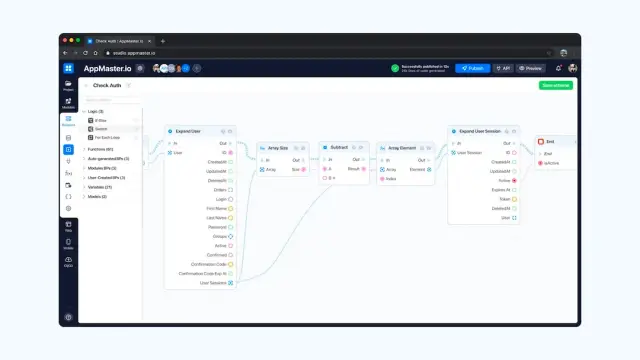
AppMaster offers API management capabilities, including authentication, rate limiting, and auditing, to safeguard your APIs from security threats. This is essential for ensuring secure data exchange between your applications and external systems. It also provides regular security patches and updates to keep your applications protected against emerging vulnerabilities. By keeping your applications' security up-to-date, you reduce the risk of data breaches and cyberattacks.
AppMaster is committed to compliance with major data protection regulations, helping your organization adhere to legal requirements and avoid penalties associated with non-compliance. By leveraging these features and best practices, AppMaster empowers citizen developers to create secure applications while minimizing data security risks.
Citizen development has opened up new possibilities for creating applications and automating processes, offering a cost-effective and agile approach to software development. However, data security must not be overlooked in the pursuit of innovation and productivity. Implementing best practices for data security, choosing reliable no-code platforms with built-in security features, and educating citizen developers about security risks and precautions are necessary steps for ensuring data integrity and protection.
By embracing citizen development responsibly, organizations can empower their non-technical users to create secure and scalable applications that benefit both the enterprise and its end-users. With the right tools, like AppMaster's no-code platform, data security becomes accessible to citizen developers, enabling them to contribute effectively to their organization's growth while minimizing potential risks.
 What is citizen development?
Citizen development is an approach that empowers non-technical users to create applications or solutions using no-code and low-code platforms without needing specialized programming skills.
How can data security be compromised in citizen development?Data security can be compromised when non-technical users don't fully understand the potential risks associated with data management or neglect essential security measures due to lack of knowledge or oversight.
What are some best practices for ensuring data security in citizen development?Best practices include promoting security awareness, following the principle of least privilege, choosing secure no-code platforms, enforcing strong authentication and encryption, and conducting regular security reviews and audits.
How can no-code platforms help with data security?No-code platforms can help by providing built-in security features, such as role-based access control, data encryption, and secure API management, as well as offering guidance and best practices for building secure applications.
Can AppMaster's no-code platform ensure data security?Yes, AppMaster is built with security in mind, providing features like role-based access control, data encryption, secure API management, and regular security updates, enabling users to create secure applications with minimal effort.
What are some measures to protect sensitive data in citizen development?Measures to protect sensitive data include using strong authentication and encryption, implementing role-based access control, conducting regular security audits, and educating users about security best practices.
How can organizations support citizen developers while maintaining data security?Organizations can support citizen developers by offering training and resources on data security best practices, implementing proper oversight and governance, and leveraging secure no-code platforms like AppMaster.
Why is it important to address data security concerns in the no-code era?Addressing data security concerns in the no-code era is crucial because of the increasing reliance on technology and the risks associated with data breaches. Ensuring data security can protect sensitive information, maintain customer trust, and avoid costly cyberattacks.
Experiment with AppMaster with free plan.
When you will be ready you can choose the proper subscription.
 Jul 14, 20268 min
 Jul 13, 20268 min
 Jul 08, 20268 min