
 Oct 04, 2024
 1 min
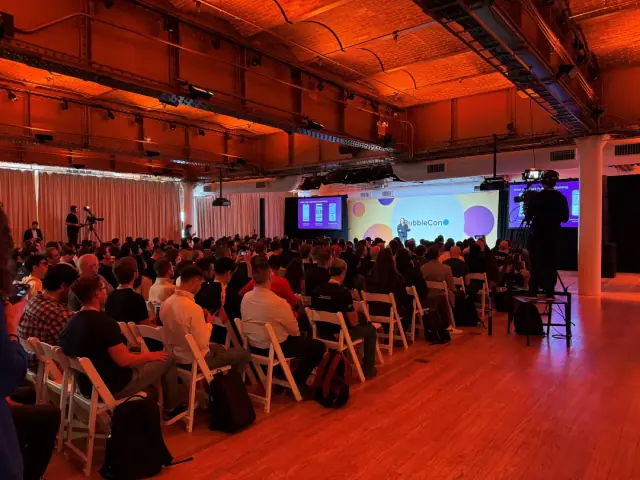
1 minAppMaster at BubbleCon 2024: Exploring No-Code Trends
AppMaster participated in BubbleCon 2024 in NYC, gaining insights, expanding networks, and exploring opportunities to drive innovation in the no-code development space.

Low-code development platforms continue to gain popularity, bridging the gap between professional developers and non-developers. This article explores the history, current trends, and the role of AI and machine learning in low-code development, emphasizing the importance of collaboration for successful application development.

Automation anxiety has been prevalent since the 16th century, and it continues to manifest in our increasingly digitized world. As low-code and no-code development solutions become more sophisticated, even software developers are concerned about job security. However, low-code development has proven to be a valuable tool for creating efficient, customer-centric business processes. The question is, will these tools render developers obsolete, or will they play a crucial role in the future of application development?
Low-code development platforms (LCDPs) prioritize simplicity, allowing users to build applications with minimal coding effort. Platforms like these often feature drag-and-drop interfaces to develop web or mobile applications. In recent years, Agile and DevOps have popularized rapid software development and deployment methodologies. Fusion teams - comprising both technical and business-savvy members - have formed to optimize these processes.
Low-code platforms have served as the glue, uniting diverse team members and enabling seamless collaboration. As these platforms evolve, new features catering to fusion teams have emerged. From rudimentary problem-solving to tackling complex challenges, low-code development platforms are pushing boundaries.
One of the earliest commercial no-code/low-code tools, Microsoft Access, allowed users to create databases using forms and graphical tools. This innovation meant users could build small personal databases without SQL knowledge. However, the growth in popularity of Access-created databases necessitated the involvement of skilled software developers and database administrators to ensure data security and compliance with regulations such as HIPAA and GDPR.
Ultimately, tools like Microsoft Access provided a starting point for business users before developers stepped in to refine and optimize the core ideas.
The current landscape of low-code platforms supports a wide range of application development, including desktop and mobile applications. Empowered by cloud-native SaaS applications, LCDPs create scalable architectures suitable for various use cases, from payment processing to content access control.
Gartner's research revealed that over 41% of non-IT professionals customize or build software solutions to address business problems, highlighting the growing prominence of the “citizen developers” movement. However, despite the expanding involvement of non-technical staff, professional developers still play a crucial role in the application development process.
Artificial Intelligence (AI) and Machine Learning (ML) are set to play influential roles in the future of low-code and no-code technology. Platforms like Microsoft's AI Builder already offer a low-code approach to develop ML-powered automated software, which can integrate into broader business solutions.
Furthermore, Machine Learning can enhance the efficacy of low-code platforms. For example, ML-powered data mining can identify solutions to business problems and provide more customized guidance. In the future, it may be possible to create automation processes or applications by providing specifications through text, UML use-case diagrams, or speech, allowing for flexible project composition.
While low-code platforms enable non-technical users to create applications, some problems remain unsolvable without the expertise of professional developers. Regardless of advancements in AI and ML, businesses will still need skilled developers for complex application development.
As the citizen developer movement gains momentum, security concerns become increasingly significant. Professional developers are essential for building secure applications and preventing data breaches, which are beyond the scope of low-code tools. The collaborative role of professional developers remains indispensable in application development.
Future low-code and no-code platforms must encourage collaboration between professional developers and non-developers. Developers should have easy and secure access to code, allowing them to extend and modify it as needed. To meet the demands of current Agile and DevOps methodologies, low-code platforms should interface with existing development environments and tools, providing flexibility and enabling smooth, cross-functional teamwork.
As low-code platforms continue to mature, their primary focus in the coming years will be on facilitating collaboration between citizen developers and professional software developers. By creating a space for mutual growth and learning, low-code development is destined to have a long-lasting impact on the future of application development.
 Oct 04, 20241 min
 Sep 23, 20241 min
 Aug 08, 20241 min
Experiment with AppMaster with free plan.
When you will be ready you can choose the proper subscription.


