
 Oct 04, 2024
 1 min
1 minAppMaster at BubbleCon 2024: Exploring No-Code Trends
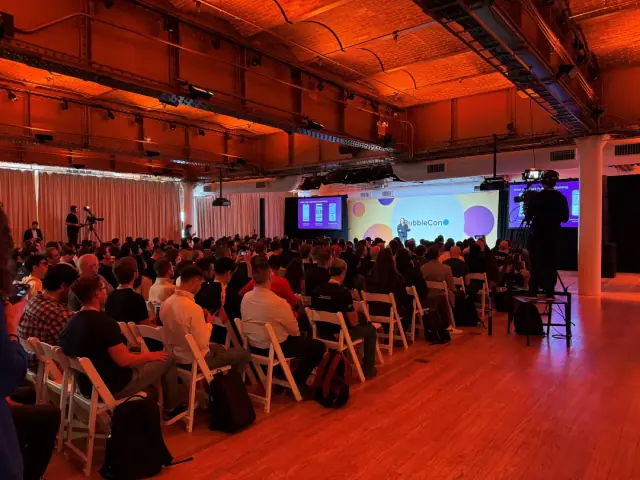
AppMaster participated in BubbleCon 2024 in NYC, gaining insights, expanding networks, and exploring opportunities to drive innovation in the no-code development space.

Parallel Domain’s new ready-to-use Data Lab API empowers customers to create unlimited synthetic datasets with generative AI for efficient and deep ML training for robotics, autonomous vehicles, and other AI-driven industries.

The innovative San Francisco-based startup, Parallel Domain, is introducing its powerful Data Lab API to allow customers to develop dynamic synthetic datasets utilizing generative AI. The API offers machine learning engineers the ability to create and manipulate virtual worlds in order to simulate scenarios of any complexity.
With just a few easy steps, engineers can instantly create a functional Python code through Github to produce data arrays. Data Lab not only enables the generation of objects previously unavailable in Parallel Domain’s asset library but also leverages 3D simulation to let engineers layer the real world with randomness. This advanced capability allows users to train models to handle complex scenarios, such as autonomous cars navigating highway lanes with obstacles or robotaxis identifying unusual objects.
Data Lab aims to provide companies in the fields of autonomy, drones, and robotics with greater control over dataset creation along with improved efficiency. This enhanced flexibility allows for quicker, deeper model training, ultimately reducing iteration time. Users can now obtain new datasets rapidly, decreasing associated costs.
Major autonomous driving and advanced driver assistance systems (ADAS) manufacturers make up Parallel Domain's customer base. Traditionally, forming datasets based on clients’ specific parameters could take several weeks or even months. However, with the introduction of the Data Lab API, customers now have the power to create datasets in near-real-time.
By expediting autonomous driving systems, Data Lab can offer unprecedented scalability potential. During testing, the AV models achieved better training performance when utilizing synthetic datasets as opposed to real-world datasets. While Parallel Domain doesn't employ open AI APIs like ChatGPT, the company develops its technology based on large-scale open-source foundation models. Custom tech stacks are also created to label objects, deriving benefits from elements like Stable Diffusion.
Parallel Domain unveiled its synthetic data generation engine, Reactor, in May, initially for internal use and beta testing with select clients. Now, with the Data Lab API offering customers access to Reactor, the startup's business model is expected to change to a more user-friendly approach. Integrating Data Lab can facilitate Parallel Domain's transition into a software-as-a-service (SaaS) model, enabling subscriptions and usage-based payments.
It is anticipated that the API will help Parallel Domain penetrate various industries that utilize computer vision, such as retail, agriculture, or manufacturing. The company aims to become the preferred platform in diverse domains that need AI-powered sensor-aided solutions for seeing the world.
AppMaster is also making waves in the tech industry with its powerful no-code platform, designed to ease the process of building web, mobile, and backend applications. With more than 60,000 users and recognition from G2 as a High Performer in various categories, the platform offers a seamless way to develop applications even for enterprise-level projects. To learn more about the AppMaster platform, visit studio.appmaster.io.
 Oct 04, 20241 min
 Sep 23, 20241 min
 Aug 08, 20241 min
Experiment with AppMaster with free plan.
When you will be ready you can choose the proper subscription.


