
 Oct 04, 2024
 1 min
1 minAppMaster at BubbleCon 2024: Exploring No-Code Trends
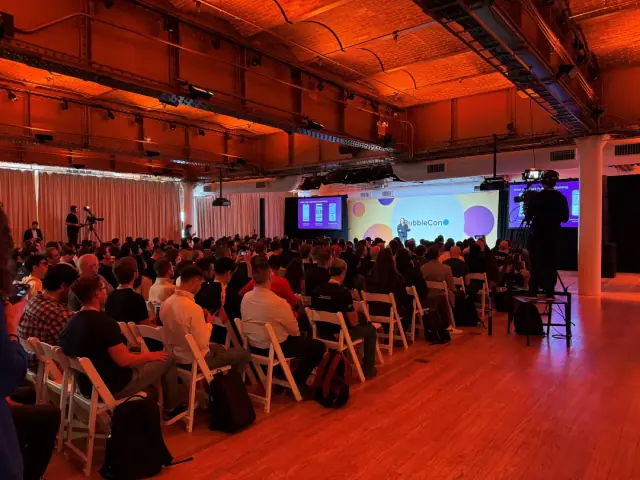
AppMaster participated in BubbleCon 2024 in NYC, gaining insights, expanding networks, and exploring opportunities to drive innovation in the no-code development space.

Low-code development platforms and AI-driven solutions coexist, opening new possibilities for AI advancement and democratization. Low-code solutions make AI accessible to non-technical users, while AI techniques can automate and speed up low-code development processes.

In the world of software development, low-code solutions have risen to prominence by broadening programming accessibility and filling development gaps. Gartner projects that the low-code development market will reach $26.9 billion by 2023, with 65% of applications being developed using these platforms by 2024. Simultaneously, AI-based code generation tools, such as GitHub's Copilot and OpenAI's ChatGPT, are gaining traction by offering advanced auto-completion and AI-powered coding assistants.
Given this new paradigm, do low-code development platforms still hold relevance in the software industry? Can they coexist with the emerging AI-driven technology? The answer lies in understanding the complementary nature of low-code and AI-driven solutions, and how collaboration between the two can lead to unique and innovative applications addressing real-world business challenges.
While generic algorithms can produce impressive results, they are not always sufficient for tackling complex business use cases. Many programmers lack the skills to train machine learning (ML) or deep learning models from their datasets. In such scenarios, low-code solutions can help users tag unstructured data, generate models, run simulations, and promote reusable AI across departments. This opens up a world of possibilities in AI advancements and democratization.
AI has seen widespread adoption across various industries, from advanced image and text processing to voice recognition and synthesis. Johanna Pingel, MathWorks AI product marketing manager, sees AI as a key factor in managing battery life in electric vehicles and consumer electronics. Moreover, AI-powered visual inspection tools can enhance safety and efficiency in sectors such as pharmaceuticals and automotive manufacturing.
ChatGPT, another AI application gaining prominence these days, is not only useful for content creators but also for scientific research. It can generate MATLAB code, functions, and unit tests that can be copied and pasted into IDEs. However, the code generated by ChatGPT should still be reviewed and verified by experienced engineers and scientists.
Low-code platforms, such as AppMaster.io and MATLAB, can streamline incorporating AI-driven functionality into applications while enabling the generation of unique AI algorithms based on specific datasets. They can speed up tedious tasks and help engineers with different levels of coding skills, which is essential to implement AI effectively within business systems.
Pingel explains that businesses usually start with simple AI use cases, like facial recognition or text detection from handwritten letters. However, as their requirements become more intricate, companies need to use their own data and specialized settings for creating bespoke AI algorithms. This is where low-code solutions can play a vital role, making the process of cleaning, cropping, and structuring data more manageable and efficient.
Low-code platforms offer several advantages in lowering the barriers to custom AI creation. Structuring and labeling data, generating ML models, and bridging different programming languages become much more accessible using low-code platforms like MATLAB and Simulink. By providing a unified development environment, these platforms encourage collaboration among users and help them learn to be better programmers.
While AI-based tools are disrupting conventional development processes, low-code platforms still have a crucial role in empowering non-technical users and lowering the barrier to creating unique AI-driven capabilities. By coexisting and collaborating, low-code development platforms and AI can pave the way for innovative applications, advancing both fields and unlocking new opportunities in software development.
 Oct 04, 20241 min
 Sep 23, 20241 min
 Aug 08, 20241 min
Experiment with AppMaster with free plan.
When you will be ready you can choose the proper subscription.


