
 Oct 04, 2024
 1 min
1 minAppMaster at BubbleCon 2024: Exploring No-Code Trends
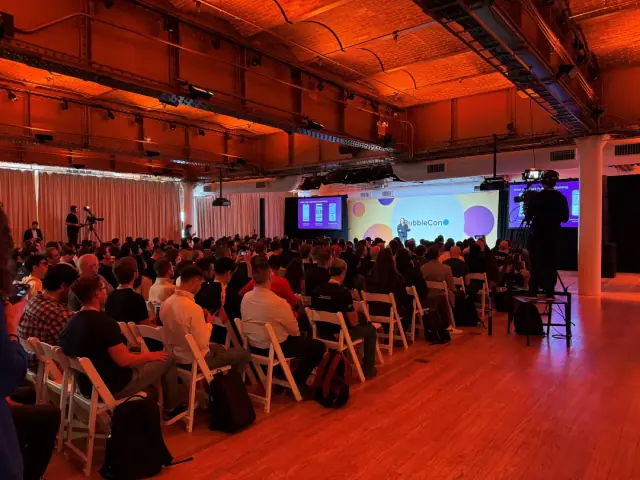
AppMaster participated in BubbleCon 2024 in NYC, gaining insights, expanding networks, and exploring opportunities to drive innovation in the no-code development space.

Slack is enhancing its automation capabilities with new features, including conditional logic for workflows. This comes as no-code development tools continue to gain popularity, allowing users to create complex flows without programming knowledge.

Slack is enhancing its automation capabilities with new features, including conditional logic for workflows, in an effort to stay competitive in the increasingly crowded workplace chat app market. The company is expanding its Workflow Builder tool, launched in 2019, to enable users to share workflows with others and utilize 'if-then' statements for creating more complex flows.
Slack's focus on automation comes as the popularity of no-code development tools, which allow users to build apps and pipelines without programming knowledge, continues to rise. According to a survey by 451 Research and FileMaker, nearly 60% of all custom apps, which include automations, are built outside the IT department. Furthermore, 30% of these apps are created by employees with limited or no technical development skills.
Steve Wood, Slack SVP of Product Management, highlighted the importance of low-code and no-code automation in changing the way people work. He mentioned that the software-as-a-service model has transformed the work landscape, and now companies rely on numerous tools and services, making it challenging for the average employee to keep up. Wood stated that the company re-engineered its platform last year to ensure that everyone has the necessary tools to make work simpler and more productive, regardless of technical experience or coding proficiency.
Soon, Slack users will be able to share workflows via links in channels and direct messages by copying and pasting the links across the platform. These workflow links will expand with a rich preview, allowing users to execute the workflow with a single click. More significantly, Workflow Builder will support conditional logic, or if-then statements that direct users down different paths based on their responses to a workflow, early next year. This will enable users to create more sophisticated workflows without needing multiple separate flows.
Slack also plans to expand its library of Workflow Builder steps with new tasks, such as automatically creating channels and alerting users once they start a workflow. The company will also provide integrations for additional third-party apps and tools. More details will be announced at Salesforce's Dreamforce conference in late September, according to Wood.
Wood emphasized that the goal is for Slack to become a productivity booster for users, with Workflow Builder playing a central role in automation. He noted that employees and businesses are under increasing pressure to complete tasks and control costs, so there is a significant opportunity to apply automation in a way that enhances efficiency and productivity while making work more enjoyable and productive for everyone.
Wood shared insights on Slack's overall direction more than a year after its acquisition, stating that revenue remains strong, with the company reporting $381 million in Q2 2022. He also said that Salesforce is committed to integrating Slack more closely with its broader portfolio. As an example, he mentioned that anyone who uses Salesforce can utilize Workflow Builder to create and customize workflows that distribute leads or generate proposals and contracts.
With the recent launch of the Salesforce Platform for Slack, a low-code software development toolkit allowing Salesforce developers to build custom Slack apps, the company appears to be making progress toward seamlessly integrating Slack with its extensive product family. The potential for Workflow Builder to expand across Salesforce's cloud offerings in the future offers exciting possibilities for customers looking to thrive in today's work environment.
As no-code platforms like AppMaster and others continue to gain traction, it is essential for companies like Slack to innovate and adapt their offerings to remain competitive. The introduction of these new automation features and the potential for further expansion within the Salesforce ecosystem will undoubtedly play a crucial role in helping Slack stay ahead in the workplace chat app market.
 Oct 04, 20241 min
 Sep 23, 20241 min
 Aug 08, 20241 min
Experiment with AppMaster with free plan.
When you will be ready you can choose the proper subscription.


