
 Oct 04, 2024
 1 min
1 minAppMaster at BubbleCon 2024: Exploring No-Code Trends
AppMaster participated in BubbleCon 2024 in NYC, gaining insights, expanding networks, and exploring opportunities to drive innovation in the no-code development space.

Discover the benefits, drawbacks, and challenges of rule-based access control (RuBAC) for organizations. Learn why granularity, clarity, and control make RuBAC an essential aspect of network security and resource management.
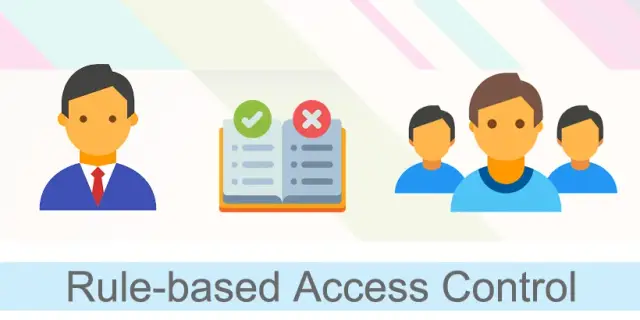
Role-based access control (RBAC) enables network administrators to tailor users' access levels according to their roles within the organization, whereas rule-based access control (RuBAC) permits access contingent on individuals adhering to specific conditions. By employing a predefined rule-based access control system, system administrators can, for instance, grant access to particular network resources only during standard business hours.
Often referred to as attribute-based control, RuBAC grants users varying levels of access to systems based on set criteria, irrespective of their role or position in the organization. This explanation comes from Joe Dowling, vice president of cybersecurity, identity, and access management at Dell Technologies.
Besides network access control, RuBAC can be used in various contexts, such as file and directory access control or application access control, states Alaa Negeda, senior solution architect, and CTO at AlxTel, a telecommunication service provider. He adds that RuBAC can also be integrated with other security measures like firewalls, intrusion detection systems, and password protection.
RuBAC settings are defined by the extent of control provided to users based on their specific roles within an organization. Alexander Marquardt, global head of identity and access management at analytics software provider SAS, points out that RuBAC enables access control based on discrete criteria, conditions, or constraints. The approach is explicit, very granular, and focuses on individual attributes or characteristics of a subject, object, or operating environment.
Jay Silberkleit, CIO at XPO, a freight and logistics services provider, believes RuBAC is the optimal choice for organizations seeking a network access method that offers maximum customization and flexibility. He notes that rules can be swiftly altered without modifying the overall definition of the organizational structure.
Granularity and clarity are the primary benefits of using RuBAC, Marquardt observes. There is no ambiguity when examining a rule, as it explicitly permits or denies access to a specific object or operation.
Increased control and adaptability are also reasons why many organizations opt for RuBAC. According to Marquardt, rule-based access control is an ideal model for enterprises that require steadfast, explicit rules.
RuBAC provides adopters with virtually limitless user access flexibility, with minimal overhead. As Silberkleit explains, a small set of rules can be adjusted to facilitate a large user base. The approach enables various network access levels to be tested or experimented with among a subset of users. Having such fine-grained control over access helps organizations remain agile and secure, he adds.
The main disadvantage of RuBAC is the level of supervision and management needed to establish, configure, set up, and test rules. Companies also face the challenge of ensuring permissions remain accurate and reliable as users' roles evolve. Organizations need to start with a clear strategy for setting up and managing RuBAC, cautions Dell’s Dowling.
Marquardt points out that adopters may struggle with writing single-subject or single-object exceptions for broadly applied rules, tracking those exceptions, and accurately reporting effective rights and permissions.
W. Curtis Preston, chief technical evangelist at Druva, identifies the tedious setup process and ongoing maintenance duties of RuBAC as its primary drawbacks, especially if multi-factor authentication (MFA) is involved. However, he argues that, based on current knowledge about cyberattacks and breaches, it is a small price to pay for an organization's peace of mind and data protection.
Customizing RuBAC rules can be challenging, acknowledges Negeda. For example, exact permissions required for specific roles may need to be defined, or the username or group name associated with a certain role may need to be specified.
Negeda also mentions that scaling RuBAC can be difficult. Creating and maintaining rules for a large number of resources can be a challenge, as can determining which users or groups should have access to which resources.
There are numerous methods for deploying RuBAC, with using a database to store rules being the most popular strategy, according to Negeda. Once rules are created, they can be easily added or updated by administrators.
To minimize confusion and disruption, Dowling recommends that organizations considering a transition to RuBAC start by analyzing their ongoing business requirements and existing network access classification system to determine whether rule- or role-based access is the most suitable model. If RuBAC is the ideal choice for your organization, comprehensive interviews should be conducted with the system's business owners to establish the least complex ruleset to follow.
With the rise of low-code and no-code development platforms like AppMaster, implementing access control systems has become even more critical for securing applications and data. Whether it is role-based, rule-based, or a hybrid approach, finding the right access control method for your organization will help you maintain a secure and functional network environment.
 Oct 04, 20241 min
 Sep 23, 20241 min
 Aug 08, 20241 min
Experiment with AppMaster with free plan.
When you will be ready you can choose the proper subscription.


