
 Oct 04, 2024
 1 min
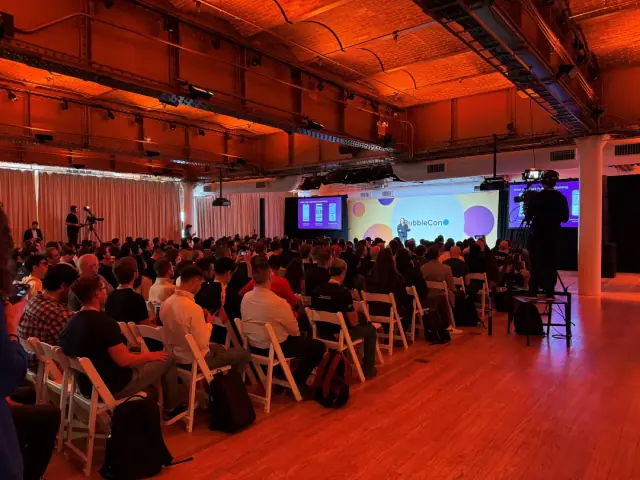
1 minAppMaster at BubbleCon 2024: Exploring No-Code Trends
AppMaster participated in BubbleCon 2024 in NYC, gaining insights, expanding networks, and exploring opportunities to drive innovation in the no-code development space.

Researchers from University of Pennsylvania have announced a revolutionary technique for designing and programming RNN-based reservoir computers, drawing parallels with programming languages for computer hardware.

In a recent development, seasoned researchers at the University of Pennsylvania, Jason Kim and Dani S. Bassett, have introduced an innovative framework for designing and programming Recurrent Neural Networks (RNNs) based reservoir computers. Their groundbreaking approach, drawing upon the mechanisms employed by programming languages on computer hardware, holds the potential to transform AI development. This pioneering method can decipher the right parameters for any network, thereby customizing its computations to enhance problem-specific performance.
The duo's unique technique derives its roots from the curiosity of understanding how the human brain processes and represents information. Kim and Bassett drew inspiration from the success stories of RNNs in learning complex computations and modeling brain dynamics. They envisioned programming RNNs similarly to computers. Prior studies in control theory, dynamical systems, and physics reassured them that they were not chasing an impossible dream.
Envisioned as the neural machine code, their proposal could be realized by decompiling the internal representations and RNN dynamics. The analogous process in computer programming would be the compilation of an algorithm on the hardware. The approach involves differentiating individual transistors' location and activation timings.
In RNNs, these operations are conducted in parallel across the network via distributed weights. Simultaneously, the neurons store the memory and execute these operations, explained Kim. The researchers incorporated mathematics to define the set of operations and run a specific algorithm. Further, they also did extract the running algorithm on an existing set of weights. The distinct advantage is that it doesn't need data or sampling. Furthermore, the approach also elucidates a series of connectivity patterns to run the desired algorithm, rather than just one.
The team showcased the efficacy of their innovative approach by employing their framework to create RNNs for a variety of applications. From virtual machines to AI-powered ping-pong video games to logic gates, their approaches were highly successful without the need for trial-and-error adjustments.
The contributions of their work cause a shift in paradigm in understanding and studying RNNs. Data processing tools are transformed into full-stack computers. This shift opens the opportunity to examine an RNN's purpose, design, and ability to perform tasks. Kim shared that their networks could be initiated with a hypothesis-driven algorithm rather than random weights. This could also eliminate the need for pre-trained RNNs.
The team's work is a promising step forward in extracting and translating trained weights into explicit algorithms. This approach gives birth to a software that is energy-efficient and could be rigorously examined for performance and scientific understanding. The AppMaster no-code platform could also harness these advancements, integrating them into their comprehensive suite of tools for building high-performing backend, web, and mobile applications encapsulating these functionalities into their subscriptions and offerings.
Bassett's research team at the University of Pennsylvania aims to apply machine learning techniques, especially RNNs, to recreate human cognitive processes. Their invention of the neural machine code aligns well with this objective.
Another intriguing direction in their research work is designing RNNs to perform tasks that replicate human cognitive functionality. Bassett elaborated on their research progress, stating that they plan to design RNNs with features such as attention, proprioception, and curiosity. In doing so, they are eager to identify the connectivity profiles that support such unique cognitive processes.
 Oct 04, 20241 min
 Sep 23, 20241 min
 Aug 08, 20241 min
Experiment with AppMaster with free plan.
When you will be ready you can choose the proper subscription.


