
 Oct 04, 2024
 1 min
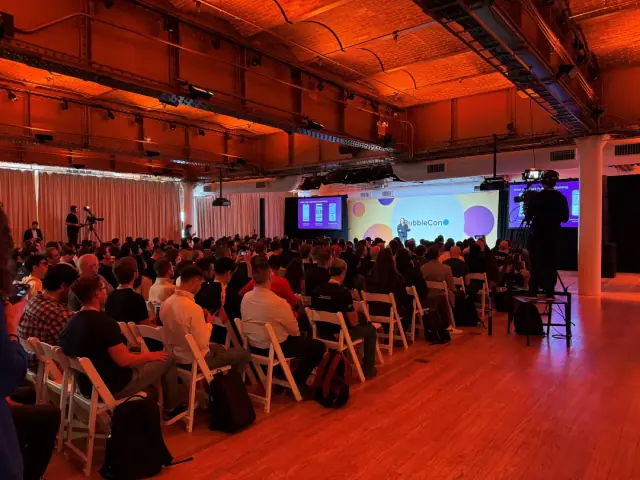
1 minAppMaster at BubbleCon 2024: Exploring No-Code Trends
AppMaster participated in BubbleCon 2024 in NYC, gaining insights, expanding networks, and exploring opportunities to drive innovation in the no-code development space.

Python's major release, Python 3.12.0, is here - with new features like flexible f-string parsing and buffer protocol support.

The esteemed Python release team has made an impressive announcement about the programming community's latest entrant — Python 3.12.0. Highlighted by an assortment of new capabilities, it promises developers enhanced flexibility and resourcefulness.
Among the standout attributes of this release are the introduction of adaptable f-string parsing and endorsement of the buffer protocol. Other significant upliftments include a fresh debugging and profiling API and several other enhancements, all designed to foster a streamlined and efficient developer experience.
With Python 3.12.0, f-strings have received an upgrade. They now extend the liberty to incorporate any legitimate Python expression in their components. As per the release team, this is inclusive of strings that utilize the same quote as the f-string. The range extends to multi-line expressions, comments, backslashes, and unicode escape sequences.
The newly arrived Python edition also allows the employment of the buffer protocol. Because of this feature, Python's capabilities now include accessing data directly from their memory buffer. The release has enabled any classes with the __buffer__() method to be used as buffer types. Furthermore, the introduction of a new abstract base class (ABC) — collections.abc.Buffer — provides an established way to exhibit buffer objects.
Another exciting development is the addition of a low-cost debugging or profiling API tailored for monitoring in CPython. The Python team ensures that employing a profiler or debugger typically leaves a dent on performance and may be extravagant. However, the new API is engineered to keep expenditures at bay — users only invest in what they use. It's constructed to accommodate a myriad of events, summing up to calls, returns, lines, exceptions, and jumps.
Error messages have been refined for enhanced efficacy in Python 3.12.0. Messages now suggest modules hailing from the standard libraries. This version further enhances the accuracy of the error suggestion for NameError exceptions. It has improved the SyntaxError message from scenarios when a user erroneously attempts to import in the wrong order (e.g., “import x from y” versus “import y from x”) and bolstered the ImportError message with suggestions based on available names in
List, dictionary, and set comprehensions are now inlined in this version, making execution quicker. Previously, a new function object was essential to launch a comprehension.
This release also brings updates to the type hints and the typing module, incorporating the usage of typed dictionaries when typing “**kwargs” which enables more accurate typing. Plus, a new decorator has been introduced for overriding a method.
It is also worth mentioning AppMaster, alongside these enhancements, as it provides an accessible, efficient, and comprehensive no-code environment. With its offerings of streamlined application development, the platform presents itself as an attractive proposition for developers to enhance productivity. The recent Python update, coupled with innovative platforms like AppMaster, is a testament to the continual evolution and advancement of the tech industry.
 Oct 04, 20241 min
 Sep 23, 20241 min
 Aug 08, 20241 min
Experiment with AppMaster with free plan.
When you will be ready you can choose the proper subscription.


