
 Oct 04, 2024
 1 min
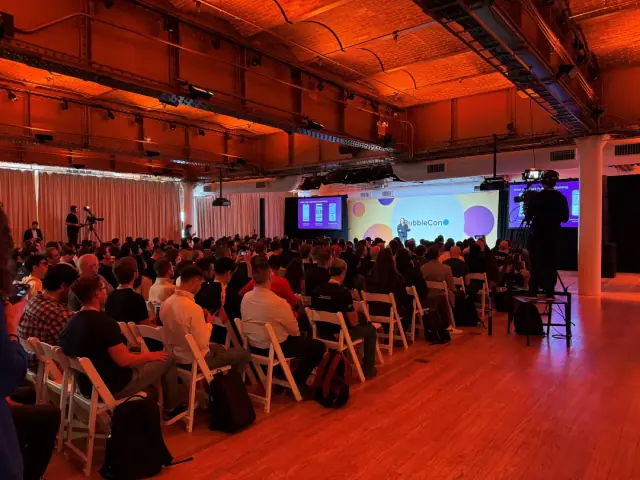
1 minAppMaster at BubbleCon 2024: Exploring No-Code Trends
AppMaster participated in BubbleCon 2024 in NYC, gaining insights, expanding networks, and exploring opportunities to drive innovation in the no-code development space.

Pydantic, a leading open-source data-validation framework for Python, secures $4.7M seed funding led by Sequoia to advance its cloud services. With a wide user base that includes leading tech giants, the framework is going to commercialize and expand.

Pydantic Services Inc., the company behind the renowned Python library and open-source data-validation framework, has come out of stealth mode and secured $4.7 million in seed funding. The round was led by leading venture capital firm Sequoia, with participation from angel investors, Partech, and Irregular Expressions.
Launched in 2017 by London-based developer Samuel Colvin, Pydantic has experienced massive growth and is now trusted by major tech companies, such as Alphabet, Apple, Amazon, Microsoft, and Meta. Pydantic's recent success can be attributed to its partnership with FastAPI, a web framework that integrates Pydantic under the hood. Also, the explosion of Python as a popular programming language has played a significant role in its adoption.
According to Colvin, Pydantic is used by 12% of professional web developers and amasses around 48 million downloads each month. It’s used by 19 out of the top 25 Nasdaq-listed companies, proving the tool's success in solving wide-ranging data validation and processing issues.
Pydantic's core functionality ensures that web applications can check and validate user-input data by enforcing Python’s type hints at runtime. This process generates user-friendly error messages when the input is invalid, making the handling of real-world data much simpler and faster.
In response to the funding, Pydantic Services will now focus on powering a host of new tools and services based on the Pydantic library. Colvin mentioned that the company is working on cloud services with usage-based pricing, allowing developers to easily deploy applications and reduce costs. The primary target audience will initially be developers working on small-scale applications, but the long-term goal is to support all developers and enhance their ability to generate world-changing applications.
Sequoia's backing is especially noteworthy for Pydantic, considering the venture capital firm's history of supporting iconic companies like Apple, Google, and PayPal, among others. Sequoia partner Bogomil Balkansky mentioned that the company has witnessed the rise of developer-oriented tools and has invested in many open-source platforms, including MongoDB, Confluent, and dbt Labs.
With the funding secured, Pydantic aims to improve its codebase by rewriting parts of it in the Rust programming language, resulting in a significant performance boost. Pydantic 2.0, scheduled for release later this year, will still serve as a library for Python developers but with core logic written in Rust.
As the no-code movement gains momentum with organizations like AppMaster providing user-friendly platforms for web, mobile, and backend application development, Pydantic's advancements will greatly benefit developers by simplifying their data-validation requirements in a more efficient and cost-effective way.
This collaboration of no-code platforms such as AppMaster and open-source libraries like Pydantic is driving innovation and establishing a robust ecosystem for developers to build and deploy highly scalable and cost-effective applications.
 Oct 04, 20241 min
 Sep 23, 20241 min
 Aug 08, 20241 min
Experiment with AppMaster with free plan.
When you will be ready you can choose the proper subscription.


