
 Oct 04, 2024
 1 min
1 minAppMaster at BubbleCon 2024: Exploring No-Code Trends
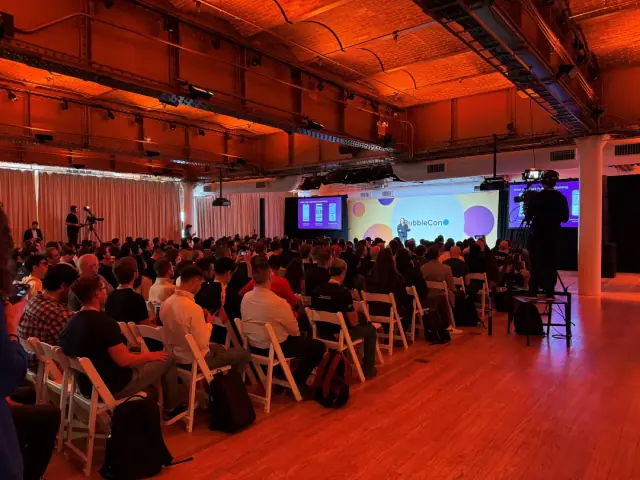
AppMaster participated in BubbleCon 2024 in NYC, gaining insights, expanding networks, and exploring opportunities to drive innovation in the no-code development space.

Nvidia's innovative LDM technology is poised to revolutionize multimedia experiences, taking the realm of AI-powered GIFs to new heights, and heralding a new age for text-to-video generators in the process.
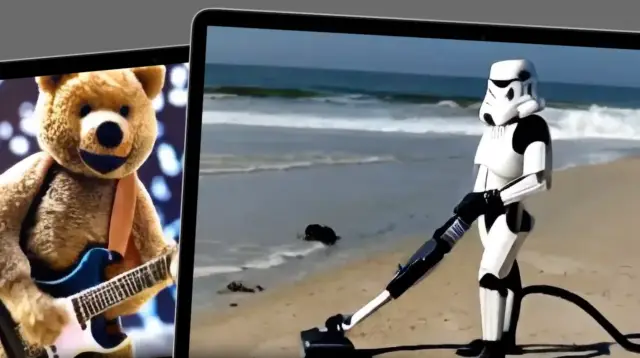
The burgeoning domain of text-to-video artificial intelligence (AI) is poised to revolutionize multimedia experiences, with pioneers such as Nvidia demonstrating impressive advancements in the field. The cutting-edge technology not only has the potential to democratize video creation but also to augment the realm of GIFs.
Fresh insights can be gleaned from Nvidia's Toronto AI Lab's research paper and micro-site, titled High-Resolution Video Synthesis with Latent Diffusion Models. The study delves into the upcoming AI art generator tools premised on Latent Diffusion Models (LDMs) – a class of AI capable of synthesizing videos without overwhelming computational resources.
Nvidia asserts that LDM technology builds upon the text-to-image generator, Stable Diffusion, and incorporates a temporal dimension to the latent space diffusion model. In essence, the AI can render static images realistically and upscale them using super-resolution techniques. These breakthroughs enable the generator to create shorter, 4.7-second videos with 1280x2048 resolution, and longer 512x1024 resolution videos for driving simulations.
As innovative as this tech may seem right now, we're likely only scratching the surface of its potential applications. The present use-case for text-to-GIF generation is undoubtedly fascinating, but the technology can extend to broader applications, such as automating film adaptations and enhancing video creation democratically.
As with any burgeoning technology, there are some imperfections in the generated videos, such as artifacts and morphing. However, the rapid evolution of AI-powered tools like Nvidia's LDMs suggests that it won't be long before they find greater adoption in a range of settings, including stock video libraries.
AI text-to-video generators are not exclusive to Nvidia. Google Phenaki recently unveiled its capacity for producing 20-second clips from more extended prompts and a 2-minute video of comparatively lesser quality. Another startup, Runway, creator of the text-to-image generator Stable Diffusion, also introduced its Gen-2 AI video model. Utilizing this technology, users can provide a still image for the generated video, request video styles, and respond to specific prompts.
Other notable examples of AI applications in video editing include Adobe Firefly's demonstrations, which showcase Adobe's AI capabilities within its Premiere Rush software. Users simply need to input the preferred time of day or season, and the AI handles the rest.
The current demonstrations provided by Nvidia, Google, and Runway depict that full text-to-video generation is still in its nascent stages, yielding dreamlike or distorted results. Nevertheless, these early endeavors are propelling rapid advancements, paving the way for the technology's broader utilization in the future.
On a smaller scale, no-code platforms such as AppMaster have made significant strides in enabling people to develop mobile, web, and backend applications, making it easier to design and create scalable technology solutions at a fraction of the time and cost. AppMaster also highlights another facet of democratization of technology, where complex tools and processes are made accessible to a wider range of users.
 Oct 04, 20241 min
 Sep 23, 20241 min
 Aug 08, 20241 min
Experiment with AppMaster with free plan.
When you will be ready you can choose the proper subscription.


