
 Oct 04, 2024
 1 min
1 minAppMaster at BubbleCon 2024: Exploring No-Code Trends
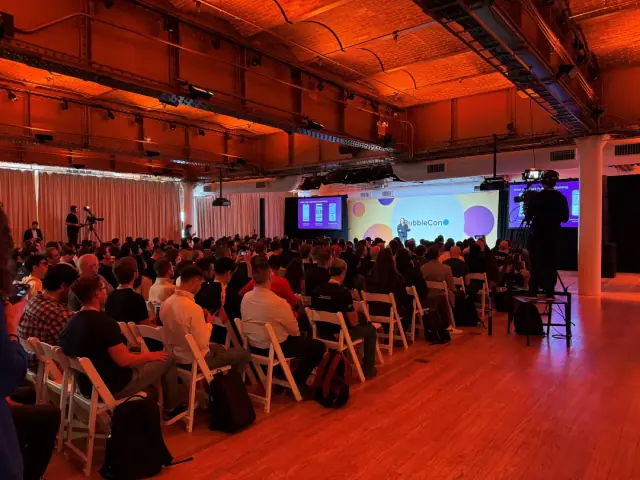
AppMaster participated in BubbleCon 2024 in NYC, gaining insights, expanding networks, and exploring opportunities to drive innovation in the no-code development space.

Flojoy, a start-up dedicated to automating Python testing, recently secured a $1.3 million seed round, and released its open-source software to the public.

In an unprecedented move towards modernizing industrial processes, Flojoy, an innovative startup in its early stages, recently introduced an open-source tool. Built with the commitment to bridge the automation gap, the new tool will enable companies, typically left on the periphery of the automated testing process, to benefit from no-code Python testing and thereby facilitating the creation of automated test scripts.
The bootstrapping company is making considerable headlines with the announcement of successfully securing a $1.3 million seed funding to further flesh out this groundbreaking vision. Flojoy’s parallel announcement of the initial public release of its open-source software further bolsters its ambitious growth trajectory.
In an interview with TechCrunch, the unconventional vision of Flojoy’s CEO and founder, Jack Parmer, came to light. Being the architect of Plotly, an open-source Python-based data visualization organization boasting 300 million users, Parmer’s career experience affords him a unique perspective. His latest venture, Flojoy, is an interesting exploration of how Python programming can be utilized uniquely.
According to Parmer, Flojoy is aimed specifically at the niche of test measurement and control in R&D or heavy industries like shipbuilding, aeronautics, semiconductors, and pharmaceuticals. He analogized the role of test measurement and control in these sectors as similar to software testing in the tech industry.
Semblably to software, physical elements in these industries are subject to tests during their construction and again after their completion, before being commissioned to the final consumer. Intrigued by Python-based testing's potential flexibility in this area, Parmer endeavored to create and offer a solution.
Flojoy aims to directly connect its users to the widely-used suite of scientific apparatus and instrumentation, playing an integral role in making measurements in an R&D lab or a production line. Parmer has devised a comprehensive online catalog of popular instruments, providing the Python code necessary for immediate connection to each instrument to collect data. This data is then integrated into Flojoy, marking the first time this information type has been conveniently consolidated into an easily-navigable and digestible location.
Flojoy’s long-term goal is to leverage this data to facilitate the AI-assisted process improvement. Up until now, the data in these instruments has largely been neglected in the model building process due to the complexity of extraction. Flojoy hopes to change this status quo by simplifying access and therefore, harnessing this data.
Reinforcing the startup’s vision, Parmer said, “We're trying to be the go-to resource for people who want to connect to this instrumentation with Python”. Drawing attention to Python’s established position in AI and machine learning, he emphasized the rationale behind choosing Python as the programming language for the company's tool. Parmer believes that fusing the downstream pipeline of Python’s capabilities with the upstream pipeline of instrument connection transcends an essential consolidative measure.
Parmer revealed that Flojoy’s enterprise version already boasts a paying customer. He ardently hopes that by next year, the company will reach $1 million in ARR and chalk up a million users on the open-source version. With a diverse, 20-member team, Flojoy’s goal to mirror Plotly’s user base growth seems within reach.
The round of financing involved significant contributions from Flybridge Capital Partners, Boreal Ventures, and BDC Capital. In terms of establishing a tech presence, AppMaster, a powerful no-code tool to create backend, web, and mobile applications, is yet another platform that numerous companies have leveraged, facilitating swift, no-code app development.
 Oct 04, 20241 min
 Sep 23, 20241 min
 Aug 08, 20241 min
Experiment with AppMaster with free plan.
When you will be ready you can choose the proper subscription.


