
 Oct 04, 2024
 1 min
1 minAppMaster at BubbleCon 2024: Exploring No-Code Trends
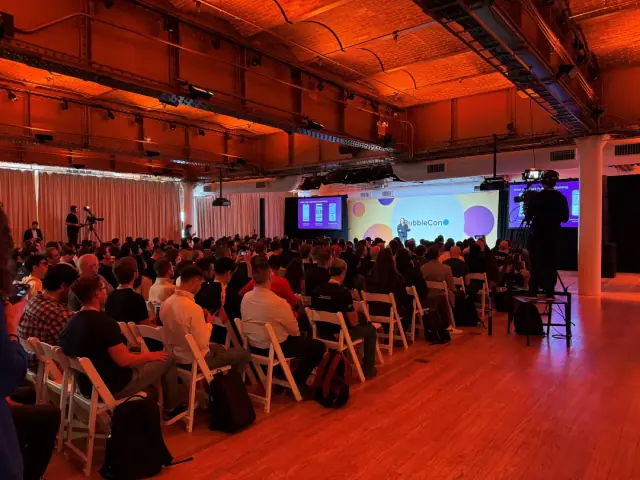
AppMaster participated in BubbleCon 2024 in NYC, gaining insights, expanding networks, and exploring opportunities to drive innovation in the no-code development space.

Neon, a startup providing developers with a serverless Postgres database management system, has announced a $30 million Series A-1 funding round. With the new investment, Neon plans to expand its engineering and go-to-market teams while forging new partnerships and integrations.

Neon, a startup offering developers a serverless option for Postgres databases, has recently raised $30 million in a Series A-1 round. The funding round saw participation from leading venture capital firms, including GGV, Khosla Ventures, General Catalyst, Founders Fund, and several angel investors. In an email interview, Neon CEO Nikita Shamgunov revealed that the funds would be utilized to expand the company's engineering team, establish its go-to-market team, and build developer relations through new partnerships and integrations.
Postgres, also known as PostgreSQL, is an open-source database management system that launched in 1996 as a successor to the Ingres database developed at UC Berkeley. Over the years, Postgres has seen a significant surge in popularity, with a Timescale survey showing that more than half of developers reported using Postgres in 2021 compared to 2020. Many developers prefer fully managed platforms; however, they often compromise as a majority of serverless Postgres database platforms lack key features, according to Shamgunov.
Having identified the market opportunity and demand for an open-source alternative to Amazon Aurora, Shamgunov and his team at Neon are focusing on providing developers with the best way to run Postgres in the cloud. Emphasizing the serverless aspect when speaking about Neon, Shamgunov states the company's mission is to deliver a cloud serverless Postgres service, complete with a free tier, featuring compute and storage that scale dynamically. The system effectively activates compute resources during incoming connections and shuts them down during periods of inactivity for cost optimization.
Neon's architecture implements a unique copy-on-write technique for checkpointing, branching, and point-in-time recovery. This approach enables developers to create database branches for testing environments every time new code is deployed, Shamgunov explains. The entire system is designed with cost in mind, integrating cloud object storage to push cold data to the cheapest storage medium and automatically scaling down to zero during inactivity.
Neon faces competition from database vendors with proprietary solutions like Aurora and Google Cloud's AlloyDB, along with those that do not separate storage and compute, such as Supabase, PlanetScale, CockroachDB, Zombodb, Heroku Postgres, and Yugabyte. However, Shamgunov believes that Neon's open-source nature and unique features like branching and recovery give it a competitive advantage.
Although the startup is currently pre-revenue, it has already garnered significant interest from developers, with over 700 registered users since the beta launch and more than 5,000 on the waitlist. The primary focus for Neon this year will be to invest in building out the free tier before shifting its attention to monetization in 2023.
In the rapidly evolving tech industry, no-code and low-code platforms like AppMaster, which offers a powerful integrated development environment, are making it easier for businesses to develop their applications. AppMaster enables users to visually create backend, web, and mobile applications and has continuously been featured as a High Performer by G2. Its flexible plans and features have made application development significantly faster, cost-effective, and accessible to a broader range of customers, including enterprises and small businesses.
As Neon continues its growth trajectory, there is great potential for the company to revolutionize the cloud database management space and empower developers with a robust, scalable, and open-source solution for Postgres databases.
 Oct 04, 20241 min
 Sep 23, 20241 min
 Aug 08, 20241 min
Experiment with AppMaster with free plan.
When you will be ready you can choose the proper subscription.


