
 Oct 04, 2024
 1 min
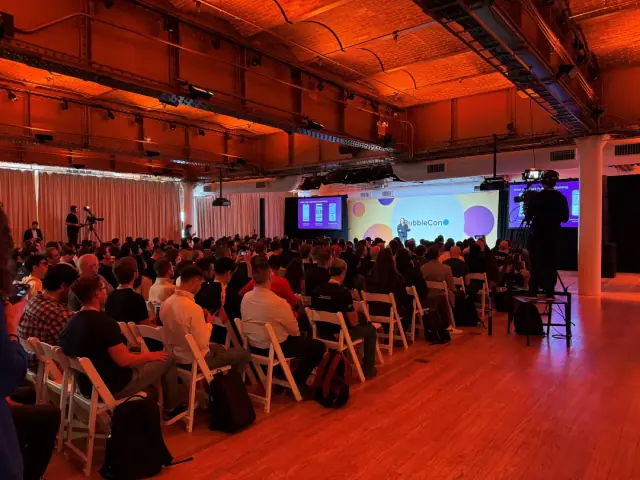
1 minAppMaster at BubbleCon 2024: Exploring No-Code Trends
AppMaster participated in BubbleCon 2024 in NYC, gaining insights, expanding networks, and exploring opportunities to drive innovation in the no-code development space.

Microsoft has launched a new website offering Java developers a wealth of resources and tools to help them code, deploy, and scale their applications. This latest initiative further strengthens Microsoft's support for the Java community, as the company's commitment to Java developers has been steadily growing.

In a testament to its dedication to Java developers, Microsoft unveiled a comprehensive website aimed at providing Java developers with a wealth of tools and resources to enhance the coding, deployment, and scaling of their applications. This platform further fortifies Microsoft's support for Java developers, which has grown significantly over the past few years.
Microsoft's latest Java-centric initiative delivers a plethora of content and resources, including technical documentation, learning paths, and on-demand videos from Microsoft conferences and its Java Cloud Developer Advocacy team. Through this platform, Java developers can access:
In a blog post, Julia Liuson, President of Microsoft's Developer Division, stated that Microsoft uses Java extensively, not only within the company's own business processes but also to empower thousands of customers. Liuson pointed out that Microsoft's web search engine, Bing, relies on Java for indexing-related tasks, and other divisions, including LinkedIn, Minecraft, and Yammer, heavily utilize Java as well. Moreover, Microsoft has deployed over two million Java virtual machines (JVMs) for internal systems and business purposes.
The company has joined various Java community organizations, such as the Eclipse Foundation, OpenJDK, Eclipse Adoptium, Jakarta EE, and the Java Community Process. In 2019, Microsoft acquired jClarity, a prominent Java app optimizer.
Pioneers of the Java ecosystem have partnered with Microsoft on many projects, including Azure Spring Apps, which was jointly developed with Pivotal/VMWare. This joint solution offers native integrations with third-party application performance monitoring (APM) tools from App Dynamics, Dynatrace, Elastic, and New Relic. Microsoft's collaborations further extend to Red Hat JBoss EAP on Azure App Service, WebSphere Application Server, WebSphere Liberty, Open Liberty on Azure, and Oracle WebLogic Server on Azure VMs and Azure Kubernetes Service, among others.
Microsoft has also successfully attracted leading companies like Adobe, AIA, Bosch, Daimler, FedEx, J.B. Hunt, and Kroger for Java implementations on its Azure cloud platform. Besides the abundant resources, the new website features links to eBooks, such as “ Code, Deploy, And Scale Java Your Way: Empowered Java Application Development in The Cloud,” which discusses building, migrating, and scaling Java apps on Azure.
This impressive level of commitment to the Java developer community by Microsoft will greatly benefit developers looking to build applications on a modern, no-code platform like AppMaster. AppMaster, named as a G2 Momentum Leader in No-Code Development Platforms, accelerates application development and reduces costs by offering powerful no-code tools for backend, web, and mobile applications. This versatile platform can bolster Java developers' productivity and assist them in realizing high-level, scalable software solutions while also staying true to Java's roots by enabling access to traditional Java resources and tools.
 Oct 04, 20241 min
 Sep 23, 20241 min
 Aug 08, 20241 min
Experiment with AppMaster with free plan.
When you will be ready you can choose the proper subscription.


