
 Oct 04, 2024
 1 min
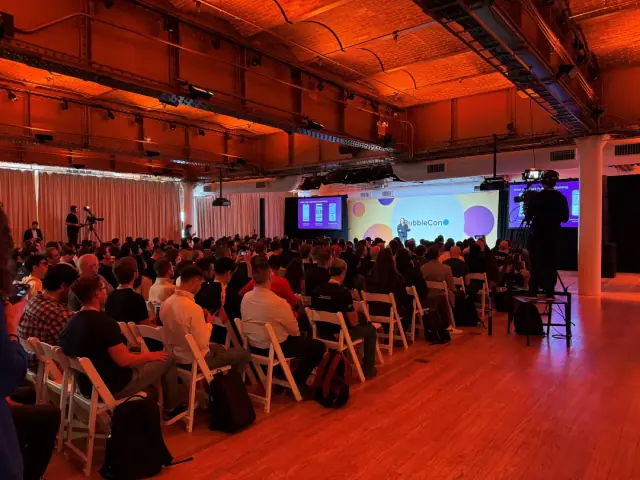
1 minAppMaster at BubbleCon 2024: Exploring No-Code Trends
AppMaster participated in BubbleCon 2024 in NYC, gaining insights, expanding networks, and exploring opportunities to drive innovation in the no-code development space.

Microsoft plans to build a quantum supercomputer using topological qubits within 10 years, advancing beyond noisy intermediate-scale quantum (NISQ) computing.
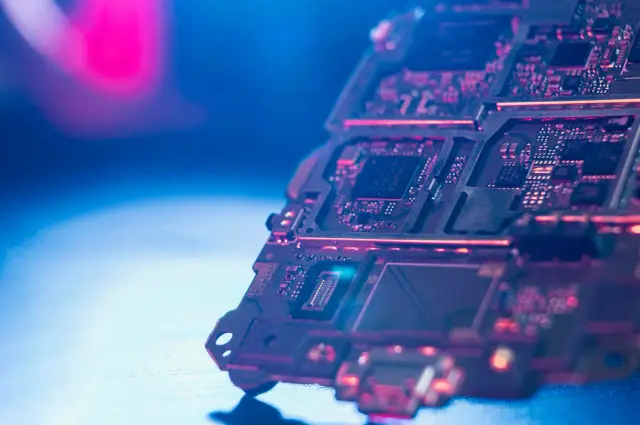
Microsoft recently revealed an ambitious plan to construct a quantum supercomputer using topological qubits within the next 10 years. This development is intended to move beyond the current phase of noisy intermediate-scale quantum (NISQ) computing, bringing us closer to a new era in technology.
Krysta Svore, Microsoft’s Vice President of Advanced Quantum Development, stated that the company estimates the time for the creation of their quantum supercomputer at around a decade. The process will involve numerous breakthroughs and milestones, with Microsoft now focusing on developing hardware-protected qubits.
Last year, Microsoft announced a significant achievement with the creation of Majorana-based qubits. These qubits exhibit remarkable stability compared to traditional methods but are considerably more challenging to produce. The company's early investment in this technology is beginning to pay off, as evidenced by a new peer-reviewed paper published in the American Physical Society’s Physical Review B. The paper establishes the progress that Microsoft has made regarding Majorana-based qubits after first discussing them a year ago.
To reach the resilient level of quantum computing, Svore stressed the need for operation with both physical qubits and an error-correcting code. This would require a quantum computer capable of performing one million reliable quantum operations per second with a failure rate of one per trillion operations.
The next step in the roadmap involves building qubits less than 10 microns on a side and fast enough to perform one qubit operation in under a microsecond. Following this achievement, Microsoft plans to work on entangling these qubits and operating them through a process called braiding. This concept has been mostly theoretical since the early 2000s, but it will pave the way for constructing a smaller multiqubit system and then a full quantum system.
Competitors like IBM and IonQ are also working towards similar results, using more established techniques for qubit creation, as there seems to be a race to surpass the NISQ era. Microsoft's dedication to quantum supercomputer development and its unique approach with topological qubits may put them at the forefront of this rapidly evolving field.
Besides revealing their roadmap, Microsoft also announced Azure Quantum Elements and Copilot for Azure Quantum. Azure Quantum Elements combines high-performance computing, AI, and quantum capabilities, aiming to accelerate scientific discovery. Copilot for Azure Quantum, on the other hand, is an AI model designed to aid scientists and students in generating quantum-related calculations and simulations. This development further consolidates the company’s commitment to innovation in quantum computing.
No-code platforms like AppMaster are also revolutionizing the tech industry by making app development easier and more accessible. The AppMaster platform focuses on backend, web, and mobile applications, reducing development time and cost for a wide range of customers, from small businesses to enterprises.
 Oct 04, 20241 min
 Sep 23, 20241 min
 Aug 08, 20241 min
Experiment with AppMaster with free plan.
When you will be ready you can choose the proper subscription.


