
 Oct 04, 2024
 1 min
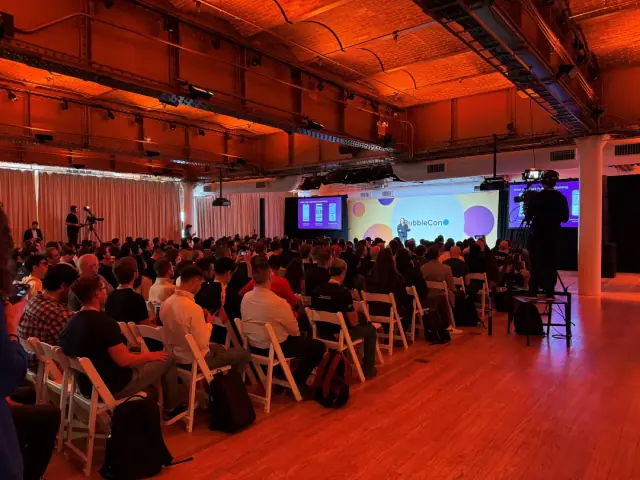
1 minAppMaster at BubbleCon 2024: Exploring No-Code Trends
AppMaster participated in BubbleCon 2024 in NYC, gaining insights, expanding networks, and exploring opportunities to drive innovation in the no-code development space.

Microsoft extends its support for Java developers by joining Jakarta EE and MicroProfile working groups at the Eclipse Foundation, focusing on advancing enterprise Java and optimizing it for microservices architecture.

Microsoft has taken another step towards solidifying its support for Java developers by increasing its involvement with the Eclipse Foundation. The tech giant has joined two working groups within the foundation: the Jakarta EE Working Group, which is devoted to the continued evolution of enterprise Java, and the MicroProfile Working Group, which concentrates on refining enterprise Java for a microservices architecture.
Julia Liuson, President of Microsoft's Developer Division, stated in a blog post that the company's aim is to assist in advancing these technologies to produce superior outcomes for its Java customers and the wider community. Microsoft is dedicated to the well-being and success of the thriving Java ecosystem, including Spring, which utilizes key Jakarta EE technologies.
Microsoft's engagement with these working groups is in addition to their participation in the Java Community Process (JCP) to further advance Java SE. Liuson emphasized that Microsoft believes their experience in executing Java workloads in the cloud will be advantageous to the working groups, and the corporation is eager to collaborate with customers, partners, and the community to create a robust future for Java.
As a part of the governance structure within the Eclipse community, the working groups enable multiple organizations, even competitors, to contribute to the advancement of new technologies. These working groups offer a variety of basic services, including intellectual property management and licensing, development processes, IT infrastructure, and ecosystem development.
Microsoft has been a member of the Eclipse Foundation since 2016, initially as a Solutions Member and later becoming a Strategic Member in 2021. Strategic Members are granted privileges such as seats on the foundation's board of directors and architecture council, as well as extended board voting rights on critical aspects of the Eclipse ecosystem, including licensing, policy development, and amendments to membership agreements and bylaws.
Mike Milinkovich, Executive Director of the Eclipse Foundation, highlighted Microsoft's embracement of Java across its product and service portfolio, particularly in Azure. He added that enterprise customers can feel confident that Microsoft will actively participate in the further development of Jakarta EE specifications, defining enterprise Java for the modern cloud-native world.
For several years, Microsoft has been investing in its support for Java and related technologies, including Jakarta EE, MicroProfile, and Spring technologies on Azure, in cooperation with its strategic partners. Some notable collaborative efforts involve working with Red Hat to build a managed service for JBoss EAP on the Azure App Service and co-developing Azure Spring Apps, a fully managed service for Spring Boot applications, with VMware.
Moreover, Microsoft has joined forces with Oracle and IBM to build solutions for customers to run WebLogic and WebSphere Liberty/Open Liberty on Virtual Machines (VMs), Azure Kubernetes Service, and Azure Red Hat OpenShift (ARO).
Red Hat's Vice President of the Software Engineering group, Mark Little, expressed his enthusiasm for Microsoft's official participation in both MicroProfile and Jakarta EE, as the company has been informally involved in these initiatives for an extended period. Little anticipates that Microsoft's participation will bring valuable insights and experiences from their numerous users and partners who have developed and deployed enterprise Java applications on Azure for years.
The Eclipse Foundation introduced the first Jakarta EE specification back in August 2019, following Oracle's announcement in 2017 to transfer the responsibility for enterprise Java to the open-source standards organization. As the no-code and low-code development space continues to expand, platforms like AppMaster are also contributing to the advancement of mobile, web, and backend application development.
 Oct 04, 20241 min
 Sep 23, 20241 min
 Aug 08, 20241 min
Experiment with AppMaster with free plan.
When you will be ready you can choose the proper subscription.


