
 Oct 04, 2024
 1 min
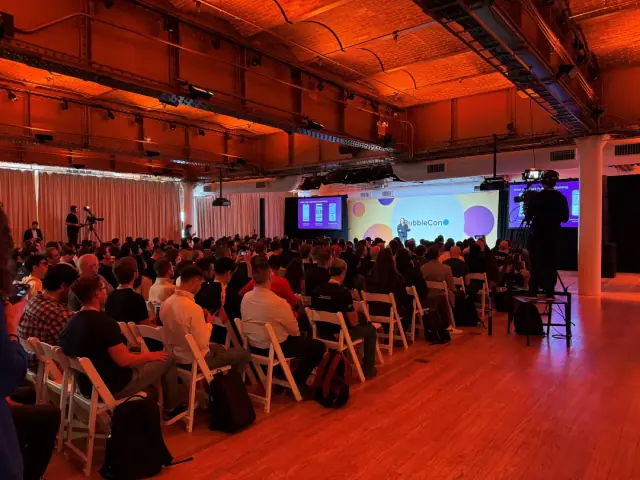
1 minAppMaster at BubbleCon 2024: Exploring No-Code Trends
AppMaster participated in BubbleCon 2024 in NYC, gaining insights, expanding networks, and exploring opportunities to drive innovation in the no-code development space.

How can engineering leaders drive growth and competitiveness in a downturn?

In the face of economic downturns, engineering teams are often under pressure to deliver results and drive growth. Leaders need to adapt their strategies to prioritize their product roadmap, optimize their team structures, and make achievements measurable in order to continue growing despite the challenges.
In uncertain economic times, a well-defined product roadmap is crucial for companies to maintain growth. However, the previously well-established roadmap may no longer fit the current environment. Reprioritization is essential, with the first order of business focusing on the core product. Continual investment in your foundation is vital for retaining customer satisfaction and maintaining market competitiveness.
It's important to avoid hastily expanding into new markets without thorough planning. Expansion can result in costly and distracting missteps; thus, investments in new product development should only be carried out when the necessary resources and staffing are available. Engineering teams must focus on addressing customer problems and ensuring user retention.
Now more than ever, critical projects that solve customer challenges should be prioritized over speculative bets on the 'next big thing'. It's essential for engineering teams to gather user feedback regularly and quickly adjust their focus on investments that are yielding positive outcomes.
Leaders must enable their teams to achieve more with less, optimizing efficiency within their current workforce. This entails restructuring and allocating resources appropriately, epitomizing the 'work smarter, not harder' approach.
Many organizations, especially smaller ones, have separate functional teams for front-end and back-end engineering and product management. Aligning teams by product or pillar-based structures, known as full-stack teams, can lead to greater efficiency. This structure results in increased visibility, goal-oriented collaboration, and individual accountability.
Engineering leaders can also boost company-wide efficiency by empowering and enabling non-technical teams to problem-solve and self-serve. This approach helps engineers avoid bottlenecks and concentrate on building innovative solutions.
Assigning metrics to product investments fosters intentional development. Setting measurable goals helps the team gauge the effectiveness of experiments and adjust their strategies accordingly. Agile engineering teams can quickly pivot to new plans when initial efforts fail to generate the desired outcomes.
For instance, a metric to track could be weekly learning users (WLUs), defined as users who share insights consumed by two people within seven days. This metric signifies an important user group – those who share context and drive decisions. Supporting metrics like weekly collaborative users (WCU) can guide investment in integrations with top collaboration tools, ensuring these integrations are reaching their intended goals.
In this economized climate, the leaders who prioritize product, organization, and measurement-based decisions will enable their teams to grow efficiently and sustainably. By fostering an environment where team members feel energized, empowered, and capable of delivering their best work, engineering leaders can ensure long-term growth and resilience.
Moreover, platforms such as AppMaster.io provide no-code tools that can help engineering teams build their backend applications, web applications, and mobile applications at a faster and more cost-effective pace, perfect for achieving growth in challenging times.
 Oct 04, 20241 min
 Sep 23, 20241 min
 Aug 08, 20241 min
Experiment with AppMaster with free plan.
When you will be ready you can choose the proper subscription.


