
 Oct 04, 2024
 1 min
1 minAppMaster at BubbleCon 2024: Exploring No-Code Trends
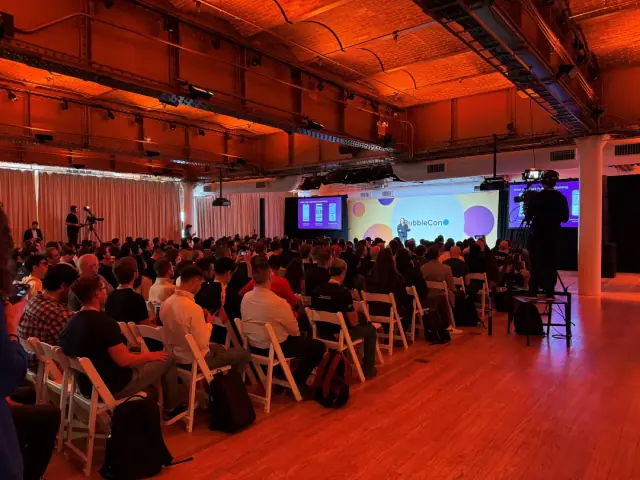
AppMaster participated in BubbleCon 2024 in NYC, gaining insights, expanding networks, and exploring opportunities to drive innovation in the no-code development space.

Low-code and no-code platforms are projected to experience a 25% growth in 2023, reaching $10 billion, and $12.3 billion in 2024. Gartner anticipates that 70% of new enterprise applications will use low-code or no-code technologies by 2025.
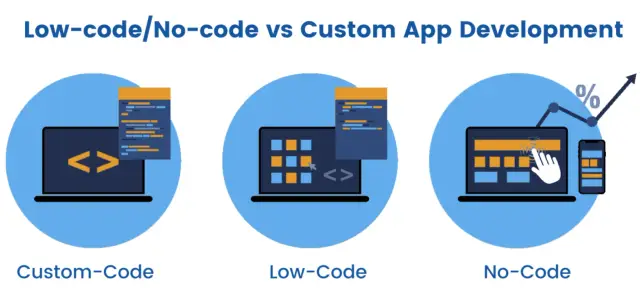
Organizations seeking improved agility, business process automation, as well as new web and mobile app development solutions are increasingly turning to low-code and no-code platforms. This trend is further driven by the ongoing IT skills gap and rising demand for immediate application delivery and customized automation workflows.
A recent study unveiled that low-code and no-code application platforms (LCAP) sales grew by over $1 billion annually in the last four years, jumping from $3.47 billion in 2019 to an estimated $8 billion in 2022. Gartner research firm anticipates the LCAP market to become the fastest-growing segment in the hyperautomation technology market, with a projected market value of $10 billion in 2023 (a 25% increase) and $12.3 billion in 2024.
Low-code and no-code platforms, alongside other hyperautomation technologies such as business process automation, robotic process automation, and citizen automation and development platforms (CAPD), are expected to reach nearly $32 billion in 2024, up from $18.5 billion in 2021.
A lack of adequate tech talent and the rise of remote or hybrid workforce models create a driving force for low-code technology adoption, according to Jason Wong, a distinguished vice president analyst at Gartner. The IT talent gap is expected to widen, with a Morgan Stanley report estimating a global demand for 38 million developers by 2024, up from 26 million.
To address this mounting gap, low-code technology enables anyone to become a developer. Gartner forecasts that by 2025, 70% of all new enterprise applications will leverage low-code or no-code technologies, a significant increase from the mere 25% in 2020.
A recent Salesforce study revealed that 72% of IT leaders say project backlogs are now hindering them from working on strategic projects. Consequently, IT departments face even greater pressure for skilled IT talent amidst the Great Resignation and the ongoing digitization of multiple industries.
Both business technologists and citizen technologists are using low-code and no-code applications to address increasing business requirements for enhanced productivity, efficiency, and agility. Gartner found that 74% of technology purchases are at least partially funded by business units (BUs) outside of IT, while only 26% are completely funded by IT organizations. LCAP represents the largest market segment, but citizen automation development platforms are set to experience the highest growth rate, with a 30.2% growth forecast for 2023.
By 2026, Gartner predicts that developers outside formal IT departments will make up at least 80% of the user base for low-code development tools, up from 60% in 2021.
A study conducted by IDC in January has shown that roughly a third of professional developers are also using low-code and no-code platforms to simplify the development process and accelerate build times. This reflects a shift toward in-house innovation and transformation.
Popular low-code platforms include Zoho Creator, Microsoft PowerApps, Visual LANSA, Retool, m-Power, Appian, Mendix, OutSystems, Google App Maker, and AppMaster. Some low-code tools are also pre-integrated to work with platforms such as Salesforce, QuickBooks, or Oracle. However, these platforms also come with certain security risks, scalability challenges, and integration concerns with existing CRM and ERP solutions.
AppMaster, an innovative no-code platform with a focus on backend, web, and mobile application development, demonstrates the potential for enterprises to harness low-code and no-code approaches in their projects. Among its many features, the platform offers a visual BP Designer that enables users to create data models, business logic, REST API, and WSS Endpoints. Furthermore, AppMaster eliminates technical debt by regenerating applications anew whenever adjustments are made, ensuring that projects remain agile and adaptive to evolving business needs.
Investments in low-code technologies that facilitate innovation and composable integration are predicted to increase as organizations move toward a composable enterprise. These technologies can contribute to agile and resilient software solutions, allowing organizations to compose and recompose modular components and packaged business capabilities while adapting to changing business demands.
 Oct 04, 20241 min
 Sep 23, 20241 min
 Aug 08, 20241 min
Experiment with AppMaster with free plan.
When you will be ready you can choose the proper subscription.


