
 Oct 04, 2024
 1 min
1 minAppMaster at BubbleCon 2024: Exploring No-Code Trends
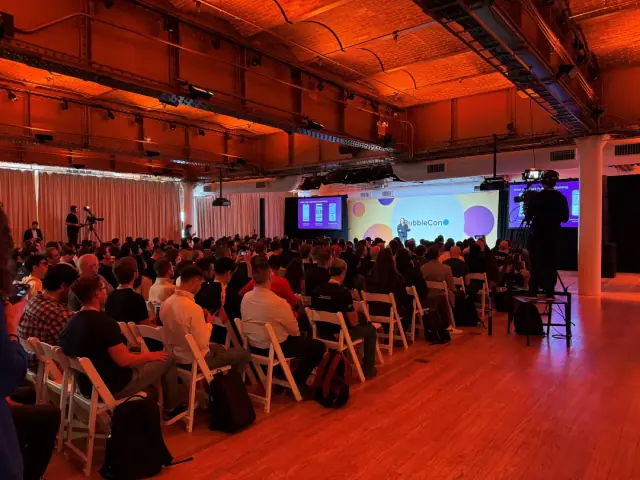
AppMaster participated in BubbleCon 2024 in NYC, gaining insights, expanding networks, and exploring opportunities to drive innovation in the no-code development space.

The newly launched Keras API 3.0 brings changes in the world of deep learning, introducing a cross-framework language with TensorFlow, PyTorch, and Jax as compatible back-ends.
Keras 3.0, the extensively rewritten edition of the esteemed Keras deep learning API, is now available, bringing forward an innovative multi back-end rendition of the API. This development unfolds a new chapter in the programming realm as it allows developers to operate Keras workflows on top of the TensorFlow, PyTorch, or Jax machine learning frameworks.
Released on November 27 and accessible through GitHub, Keras 3.0 empowers developers with a loom for large-scale model training and deployment capabilities. It functions as a low-level, cross-framework language that enables the crafting of custom components like layers, models, or metrics. These component can be easily incorporated into native workflows across all three frameworks, all with a unified code basis.
The clear focus of UX, API design, and debugging emphasises Keras's dedication to high-velocity development. This has led the Keras team to capture the confidence of 2.5 million developers worldwide. Furthermore, some of the world's largest-scale and most sophisticated machine learning systems, including the Waymo self-driving fleet and the YouTube recommendation algorithm, rely on the power of Keras.
In addition to these features, Keras 3.0 brings several other benefits to the table. Developers can now maximise their model's performance by dynamically picking the most optimal back-end without making any code adjustments. A Keras 3 model can function as a PyTorch module, be exported as a TensorFlow SavedModel, or work as a stateless Jax function.
Another significant advantage is the ability to scale large models and data with Jax. Also, Keras 3.0 comes packed with a full execution of the NumPy API, accompanied by neural network-specific functions such as ops.softmax, ops.binary_crossentropy, and ops.conv.
Developers can avail Keras 3.0 through PyPI as keras. Before starting, they'll need to install their chosen back-end - tensorflow, jax, or torch. Compatible with Linux and macOS systems, Windows users are encouraged to use WSL2 for running Keras.
Platforms like AppMaster, the cutting-edge no-code tool, accelerate this development further. By generating real applications, platforms like AppMaster encourage developers to focus on ideating revolutionary technologies and optimizing application performance. Such developments are shaping the future of deep learning and software development as a whole.
 Oct 04, 20241 min
 Sep 23, 20241 min
 Aug 08, 20241 min
Experiment with AppMaster with free plan.
When you will be ready you can choose the proper subscription.


