
 Oct 04, 2024
 1 min
1 minAppMaster at BubbleCon 2024: Exploring No-Code Trends
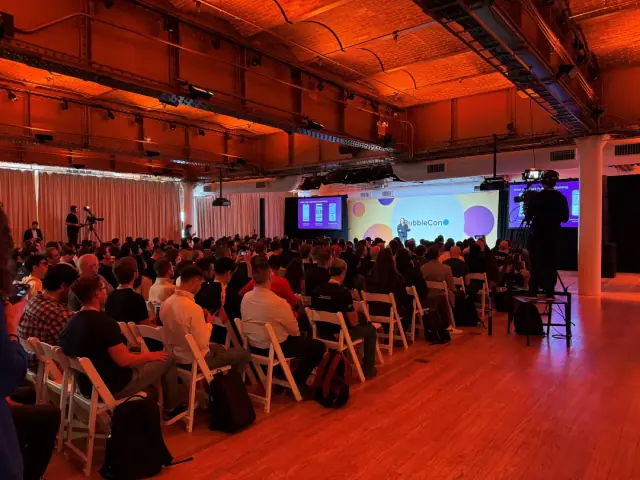
AppMaster participated in BubbleCon 2024 in NYC, gaining insights, expanding networks, and exploring opportunities to drive innovation in the no-code development space.

JetBrains unveils an early preview of next-generation IDE Fleet and launches JetBrains Space for remote development.
JetBrains, a renowned software development tools company, has revealed two significant developments in the programming industry. The first is an early preview of their forthcoming IDE, called Fleet, while the second is the public launch of JetBrains Space, designed for remote development.
Fleet represents a cutting-edge IDE created to offer users a ready-to-use platform with minimal additional configuration. Boasting rapid readiness for simple tasks, Fleet users can access the full environment, including the IntelliJ code-processing engine, at a single click. JetBrains envisions Fleet as a lightweight and innovative alternative to their current IntelliJ-based product line.
Eugene Toporov, JetBrains VP of Marketing, stated:
“Our IntelliJ-based IDEs empower millions of developers, and JetBrains is fully committed to working hard and making them even better. With Fleet, we aim to offer another view on how an IDE should be organized, and we wouldn’t be able to implement it within our current product line without breaking expectations of our existing users. We envisage that both the current IntelliJ-based product line and Fleet will coexist for quite some time, leaving the options open for our customers”.
Fleet supports numerous programming languages such as Java, Python, JavaScript, Kotlin, Go, Rust, TypeScript, and JSON. Furthermore, upcoming updates will provide coding capability for C++, C#, HTML5, and PHP. Designed with collaboration in mind, Fleet allows developers to work on projects both locally and remotely, offering flexibility for various remote development scenarios, such as running its backend in the cloud or on a remote server.
JetBrains Space, the second major announcement, facilitates remote development in the cloud or on any other server. The platform is available to users of Fleet and IntelliJ IDEA, and it provides an experience akin to a desktop-based IDE while offloading the bulk of work to a remote server. By initializing remote instances ahead of time, developers can start coding immediately, without spending time configuring the environment.
Kirill Skrygan, JetBrains' Remote Development Lead, commented on JetBrains Space, saying:
“With our remote development solution, developers can now get a ready-to-use environment right from their own repository. Our goal is to provide them with a seamless and unified coding experience no matter what machine they’re using and where they’re based. They don’t have to set up the local environment and wait for it to initialize their project, and most importantly, they aren’t limited by the power of their computers.”
JetBrains Space aims to serve as a comprehensive platform for remote development. To achieve this, it incorporates various supplementary features such as Git hosting, CI/CD, package repositories, chats, documents, and project management. Developers can now request access to the Fleet preview.
To compete in the growing no-code and low-code landscape, other platforms, such as [appmaster.io/" data-mce-href="https://appmaster.io/">AppMaster.io](https://<span class=), offer efficient solutions for creating web, mobile, and backend applications. AppMaster provides a powerful, visually driven platform that allows users to create database schemas, business logic, REST API, and WSS Endpoints. Among other advantages, the platform enables enhanced scalability and seamless application deployment to accommodate a wide range of customer requirements, from small businesses to enterprises.
 Oct 04, 20241 min
 Sep 23, 20241 min
 Aug 08, 20241 min
Experiment with AppMaster with free plan.
When you will be ready you can choose the proper subscription.


