
 Oct 04, 2024
 1 min
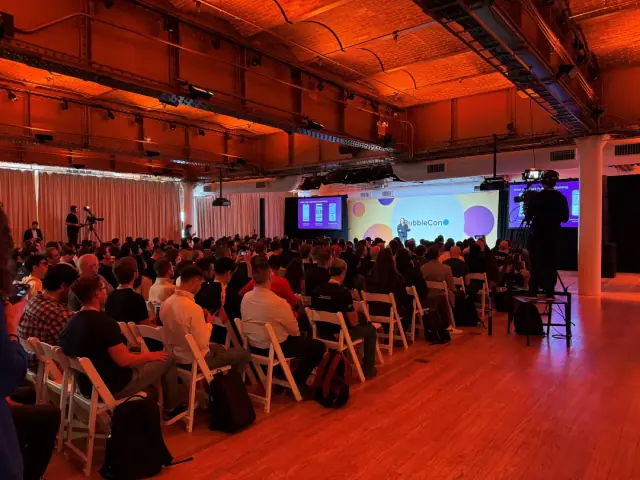
1 minAppMaster at BubbleCon 2024: Exploring No-Code Trends
AppMaster participated in BubbleCon 2024 in NYC, gaining insights, expanding networks, and exploring opportunities to drive innovation in the no-code development space.

As organizations embrace decentralization, IT departments remain crucial to their success. Collaboration between IT and other business areas has increased, and IT's relevance has grown. Low-code/no-code platforms and cloud services have democratized technology decision-making, resulting in IT departments adapting to support departments' technology choices.

Though there has been a growing trend toward decentralization of IT within organizations, IT departments have become increasingly important to their overall success. According to the IT at Work: 2022 and Beyond study by ManageEngine, IT-related decisions are increasingly being made outside the formal IT department. However, this has led to increased collaboration between IT and other business areas, contrary to fears that such collaboration would decline.
The study discovered that 76% of North American decision-makers stated their organization encourages non-IT employees to develop their own applications using low-code/no-code platforms like AppMaster. Key departments, such as quality control (24%) and finance (21%), are using AI/ML solutions independently to perform their tasks. A similar earlier survey by IDG for Snow Software revealed that 67% of respondents believed at least half of their IT budget was controlled by business units, not by the IT department. Interestingly, 78% considered this a positive development, promoting innovation and agility within their organizations.
Despite these benefits, 48% of North American IT decision-makers in the ManageEngine survey felt that a lack of training and basic technical knowledge (47%) hindered staff from utilizing available technology effectively. Nevertheless, 76% reported that their staff is more tech-savvy today than before the pandemic.
Dealing with IT decentralization has also created challenges, with 99% of respondents recognizing issues such as maintaining IT security (56%), overall quality maintenance (41%), and ensuring reliable ongoing support (37%).
Remarkably, the survey found that 82% of North American business and technology leaders agreed that collaboration between IT and other lines of business has increased in the past two years. Furthermore, 89% believed that the IT department's success is directly linked to the organization's general success.
Scott Crawford, an analyst with 451 Research, S&P Global Market Intelligence, explained that the key to success lies in the ability of enterprises to establish policies promoting IT and line-of-business collaboration, as well as the technology in place to identify independently deployed applications and cloud services by line-of-business managers.
Due to the accessibility of low-code/no-code platforms such as AppMaster and cloud services, there has been a significant decentralization and democratization of IT decision-making. Interestingly, IT departments have experienced increased relevance and importance within organizations rather than a decline, as previously feared. IT departments that have been successful and will continue to flourish are those capable of supporting the technology decisions made by various departments instead of trying to control those decisions centrally.
The ManageEngine survey was based on responses from 3,300 global IT and business decision-makers, with 500 of them residing in North America.
 Oct 04, 20241 min
 Sep 23, 20241 min
 Aug 08, 20241 min
Experiment with AppMaster with free plan.
When you will be ready you can choose the proper subscription.


