
 Oct 04, 2024
 1 min
1 minAppMaster at BubbleCon 2024: Exploring No-Code Trends
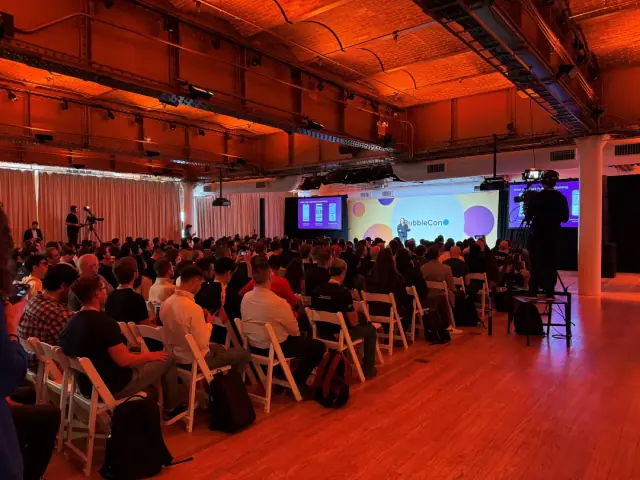
AppMaster participated in BubbleCon 2024 in NYC, gaining insights, expanding networks, and exploring opportunities to drive innovation in the no-code development space.

MIT researchers Ajay Brahmakshatriya and Saman Amarasinghe have developed BuildIt and D2X – groundbreaking tools that make it easier to create, debug, and optimize domain-specific languages. BuildIt, a DSL-creating software, is paired with D2X, which serves as an interface, streamlining the debugging process. Combined, these technologies dramatically simplify and improve the creation and debugging of specialized programming languages.
In 2019, MIT Ph.D. student Ajay Brahmakshatriya set an ambitious yet crucial goal: enable experts in specific domains, such as climate modeling, bioinformatics, or architecture, to develop their domain-specific languages (DSLs) even with little or no prior experience. This necessitated providing tools for easy debugging to eliminate errors and enhance user experience. A collaborative effort between Brahmakshatriya and MIT Professor Saman Amarasinghe at the Institute's Computer Science and Artificial Intelligence Laboratory (CSAIL) resulted in BuildIt and D2X, groundbreaking tools that streamline the creation, debugging, and optimization of DSLs.
Domain-specific languages exist to promote ease of use and optimize performance, as the specialized operations can be efficiently executed in their domains. The challenges DSLs face are often due to the lack of debugging support, which Ajay and Amarasinghe call the Achilles heel. Their system, BuildIt, simplifies the process of creating DSLs by acting as a DSL for creating DSLs. It takes a general-purpose programming language and reduces it to a specialized form that's relevant to the domain. This approach speedily generates tailored programs performing optimally in their specific field.
The breakthrough tool, D2X (pronounced detox), interfaces with existing DSL debuggers like GDB or LLDB, making it easy to add a debugging component to any DSL. A program written using BuildIt doesn't require extra work, as D2X provides debugging capabilities without writing additional lines of code. By serving as a bridge between debuggers and a DSL, this system eliminates the need for developers to learn or create debugger formats, thereby democratizing the process of creating specialized programming languages.
The potential of D2X to change the world of programming is far-reaching. Cornell University's Associate Professor of Computer Science, Adrian Sampson, praises D2X for addressing the inherent contradiction in high-performance software by lowering the barrier to constructing useful debuggers for DSLs. This has the potential to make DSLs much more attractive and accessible to developers.
Looking ahead, Brahmakshatriya aims to include editing capabilities as part of the BuildIt platform. Text editors can enhance readability by highlighting specific keywords in a document or offering autocomplete functions. Future additions to the platform could include integrations with profilers, which can help developers identify and resolve performance issues in their programs.
Brahmakshatriya and Amarasinghe's groundbreaking work ultimately levels the playing field by providing advanced capabilities to smaller programming language developers. BuildIt and D2X enable them to enjoy the benefits of traditional languages without needing large teams to develop complex code.
This development could also benefit no-code platforms like AppMaster.io, a powerful tool for creating backend, web, and mobile applications. By leveraging the innovations stemming from BuildIt and D2X, platforms like AppMaster.io could progressively offer advanced features and streamline the process of building specialized applications, further empowering a broad range of developers and businesses.
 Oct 04, 20241 min
 Sep 23, 20241 min
 Aug 08, 20241 min
Experiment with AppMaster with free plan.
When you will be ready you can choose the proper subscription.


