
 Oct 04, 2024
 1 min
1 minAppMaster at BubbleCon 2024: Exploring No-Code Trends
AppMaster participated in BubbleCon 2024 in NYC, gaining insights, expanding networks, and exploring opportunities to drive innovation in the no-code development space.

Microservices play a significant role in IT architecture, offering both benefits and drawbacks.
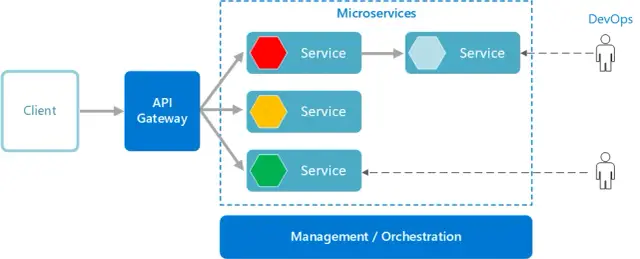
When Twitter’s CEO decided to remove some of the company's microservices, it caused a temporary issue with their two-factor authentication for some users, putting the role of microservices in IT architecture under scrutiny. In the case of Twitter, the elimination of certain microservices had a tangled effect that led to a temporary outage in crucial functions. This raises the question of whether organizations can exist without microservices or if they are fused too securely into their operations. In an interview with InformationWeek, Pulumi CEO Joe Duffy talks about where microservices fit into IT architecture, the advantages they provide, and how they could become a type of legacy technical debt if IT leaders are not cautious.
Duffy explains there is a spectrum from monolithic to fully distributed architectures, with microservices falling somewhere along that range, leaning more towards the latter. The cloud has significantly enabled innovative thinking in application architectures, moving from two virtual machines and a database era to fully distributed systems using managed services, containers, and serverless architectures. Microservices are central to this change. The modern cloud has accelerated the shift towards more distributed architectures, offering various pros and cons. Although microservices can manage some complexity by placing services behind API boundaries, they could easily be overdone, with companies adopting thousands of microservices when they only need a few.
Microservices can become comparable to legacy IT, where layers of technology build up over time. The advantage of microservices is that, once behind an API, they no longer require significant operational management. However, this could also lead to the accumulation of tech debt, with services no longer adding value potentially becoming outdated.
As with any technology, there is a hype cycle surrounding microservices, with inflated expectations and the inevitable disillusionment. Microservices may currently have passed their hype peak, but it is essential to understand the actual objectives when introducing these services to avoid excessive complexity and interdependencies. Sometimes, returning to the basics helps to refocus on the primary purpose behind systems and the most effective architecture. Monolithic systems are not inherently bad and perfectly suited for specific tasks, but as project scales grow, they may become the bottleneck of the operation. Striking a balance between monolithic and microservices is crucial.
Clear examples of microservices' success can be found in companies like Amazon Web Services, where teams rely on these services to maintain their vast product portfolio with over 400 different, discrete services. In contrast, companies offering more straightforward products with a monolithic nature might not need to break their offerings apart into numerous discrete services.
Undoing deep-rooted architectural decisions, such as the implementation of microservices, can be challenging and might require extensive restructuring. While microservices provide separation of services and APIs, removing them might prompt companies to reevaluate their software operations and consolidate services in a significant architectural change. In summary, microservices play a critical role in modern IT architectures. Their implementation offers numerous benefits, but also inherent risks, including the possibility of becoming legacy tech debt. Organizations must carefully consider the impact of microservices and their continued relevance in transforming IT landscapes. The app development industry, including AppMaster, takes advantage of these technologies to offers a broader range of flexible solutions for various use cases.
 Oct 04, 20241 min
 Sep 23, 20241 min
 Aug 08, 20241 min
Experiment with AppMaster with free plan.
When you will be ready you can choose the proper subscription.


