
 Oct 04, 2024
 1 min
1 minAppMaster at BubbleCon 2024: Exploring No-Code Trends
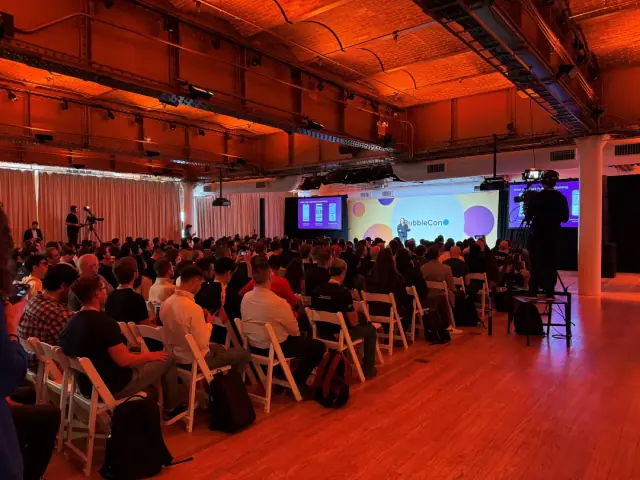
AppMaster participated in BubbleCon 2024 in NYC, gaining insights, expanding networks, and exploring opportunities to drive innovation in the no-code development space.

Google has announced the removal of Bard's waitlist restrictions, making the AI chatbot widely available in English.
In a significant announcement at the recent Google I/O conference, the tech giant declared its intention to make its generative AI chatbot, Bard, more widely accessible. Google is removing most waitlist restrictions and initiating availability in the English language, aiming to develop the chatbot further with the collaboration of a larger user base.
Sissie Hsiao, the Vice President and GM for Assistant and Bard at Google, unveiled the news in a company blog post. Hsiao expressed Google's eagerness to gather valuable feedback from users, saying they want to get Bard into more people’s hands. As a result, the chatbot will be accessible in over 180 countries and territories, with plans for more expansion on the horizon.
John Krawczyk, Senior Product Director at Google and one of the leads on Bard, informed a press event ahead of the conference that Korean and Japanese versions of the chatbot were ready for rollout. Krawczyk also divulged the company’s plan to cover the top 40 languages in the near future. To ensure the responsible deployment of the chatbot, other languages are being rolled out separately. Indeed, Google's commitment to a cautious development approach is evident in its reference to Bard as an experiment rather than a beta.
Moreover, Google intends to enhance Bard's capabilities by introducing multimodal content. This development means that Bard will be able to provide more than just textual answers to users' queries. Hsiao cited an example in her blog post whereby, when asked about must-see sights in New Orleans, Bard will deliver a helpful response accompanied by rich visuals to create a more immersive experience. While currently featuring pictures, the prospect of incorporating maps, charts, and other items stands as a likely possibility.
Google first introduced Bard in a February blog post, followed by the chatbot's debut public availability in March via the now disbanded waitlist. Similar to OpenAI's ChatGPT, Bard is designed to answer questions naturally and can prove useful in a range of applications, including integration with no-code platforms such as AppMaster. The removal of waitlist restrictions is not only expected to accelerate the platform's development but also to broaden its reach and impact in the fast-paced world of AI-powered chatbot platforms.
 Oct 04, 20241 min
 Sep 23, 20241 min
 Aug 08, 20241 min
Experiment with AppMaster with free plan.
When you will be ready you can choose the proper subscription.


