
 Oct 04, 2024
 1 min
1 minAppMaster at BubbleCon 2024: Exploring No-Code Trends
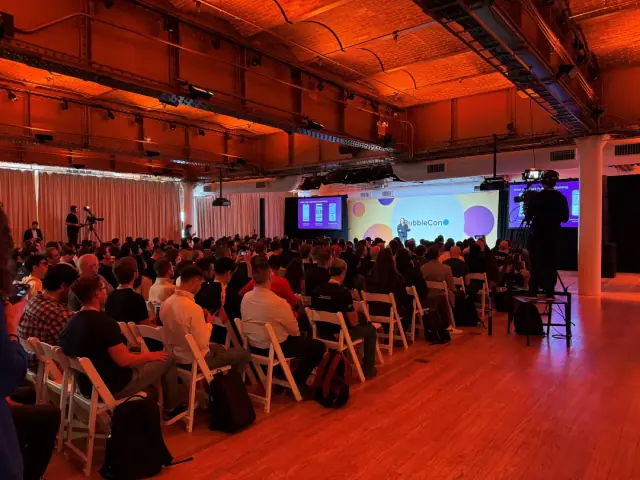
AppMaster participated in BubbleCon 2024 in NYC, gaining insights, expanding networks, and exploring opportunities to drive innovation in the no-code development space.

Google has been testing its AI-powered medical chatbot, Med-PaLM 2 at establishments like Mayo Clinic. With potential to revolutionize healthcare interactions, the tool's effectiveness when compared to actual physicians sparks insightful conversations.

Healthcare communications are about to experience a technological revolution as the artificial intelligence (AI) tool, Med-PaLM 2 by Google, is now under trial at renowned institutions including Mayo Clinic. This promising innovation, designed specifically to decode medical information queries, is an aspect of Google’s latest AI developments, The Wall Street Journal sheds light on.
An extension of the PaLM 2 tool that was unveiled in Google’s recent I/O event, Med-PaLM 2 forms the foundation of Google’s Bard. The latter highlights Google's commitment to improving existing language models with AI integrations.
In a briefing made to WSJ, Google elucidated on its aspirations that the revised model could prove to be indispensable in nations facing a deprivation of doctors. For refining Med-PaLM 2, Google incorporated a range of demonstrations by medical experts, surpassing generic chatbots such as Bard, Bing, and ChatGPT, in the provision of reliable healthcare exchange of dialogue.
Areas of concern are still under acknowledgment, with the AI tool continuing to grapple with challenges linked to precision, as highlighted in a Google research expose in May. From the physician’s perspective, there were consistent discrepancies and unrelated instances in responses derived from using Med-PaLM alongside its updated version, when compared alongside actual doctor consultations.
Addressing these findings, the WSJ indicated that despite a few obstacles, the AI tool stood its ground on almost all other scales. Against doctors, Google's Med-PaLM 2 showcased reliable reasoning evidence, consensus-backed solutions, and displayed virtually no instances of misconception.
Ensuring stringent data protection norms, Google confirms that those evaluating Med-PaLM 2 shall independently manage their data. Enforced with encryption, Google will not gain access to such information. This protects the privacy of the adopters and maintains their trust in the platform.
Greg Corrado, Senior Research Director at Google, pointed out to WSJ that Med-PaLM 2 is presently in its nascent phase, and while he personally would not want it to be part of his family's healthcare journey, we can't overlook its potential influence. Corrado is confident that by tenfold, Med-PaLM 2 is impacting those facets of healthcare where AI's benefits are notable.
In the no-code world, platforms like AppMaster are continuously rooting for such technological advancements. As a prominent no-code platform, AppMaster is showing how businesses, startups, and innovators can leverage technology, enhancing efficiency and speed of development, much like what we see in Med-PaLM 2.
 Oct 04, 20241 min
 Sep 23, 20241 min
 Aug 08, 20241 min
Experiment with AppMaster with free plan.
When you will be ready you can choose the proper subscription.


