
 Oct 04, 2024
 1 min
1 minAppMaster at BubbleCon 2024: Exploring No-Code Trends
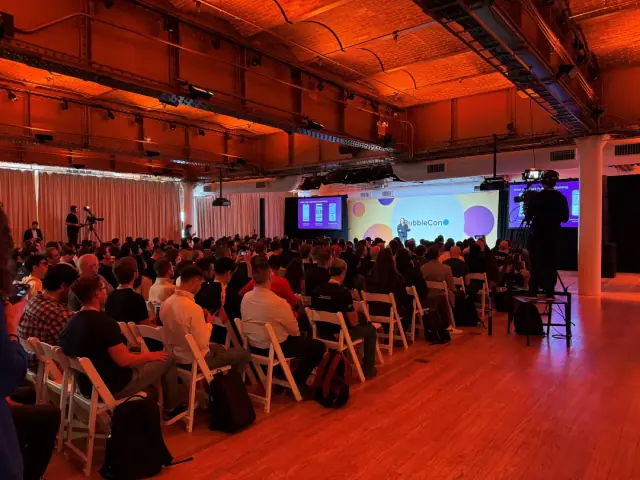
AppMaster participated in BubbleCon 2024 in NYC, gaining insights, expanding networks, and exploring opportunities to drive innovation in the no-code development space.

Google has introduced its ARCore Geospatial API at the I/O 2022 event, enabling developers to create more immersive and practical augmented reality experiences.
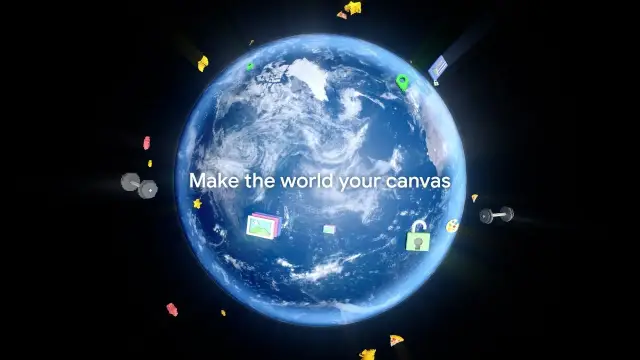
Google has unveiled its ARCore Geospatial API during the I/O 2022 event, providing developers with the tools to create more immersive, richer, and practical augmented reality (AR) experiences. This innovation aims to establish AR's significance beyond gaming applications like Pokémon Go and broaden its applicability to diverse domains such as floorplan creation, interior decoration, real-time night sky data provision among others.
Google showcased the capabilities of Lens, its own AR technology, during the I/O 2022 keynote. By scanning a store shelf using their devices, users can view overlaid, customizable information, including product ratings, sugar content, and calorie count. To facilitate developers in building next-generation AR applications, Google is utilizing its nearly 15 years of expertise in Google Maps.
With the ARCore Geospatial API, developers gain access to global localization technology, responsible for powering Live View in Google Maps since 2019. The API allows for content anchoring by latitude, longitude, and altitude across over 87 countries, eliminating the need for physical scanning or on-site presence. This approach significantly saves time and conserves resources for developers.
Google explains in a blog post that AR discovery and interaction have become faster and more precise as the scanned environment's images are rapidly matched against a world model. This model utilizes sophisticated machine learning techniques to extract trillions of 3D points from Street View images, which are then employed to calculate device position and orientation in under a second.
Various industries have successfully implemented the API for next-generation AR applications, with partners like the NBA, Snap, Lyft, and more. For example, micromobility company Lime has utilized the API to help users determine if their vehicles are parked correctly through a pilot experience in multiple cities, including London, Paris, Tel Aviv, Bordeaux, Madrid, and San Diego. Additionally, Telstra and Accenture have collaborated on a project for Marvel Stadium in Melbourne, Australia, enhancing navigation for sports fans and concert attendees searching for their seats and amenities. Telecommunication company DOCOMO and Curiosity have also developed an interactive game featuring robots and dragons set in Tokyo's landmark sites.
In order to guide developers and reduce learning curve, Google has offered two open-source demos: Balloon Pop, where users position balloons as targets around the globe, and Pocket Garden, an interactive experience allowing individuals to beautify their neighborhoods with virtual gardens. The ARCore Geospatial API is available in ARCore SDKs on Android and iOS platforms, and is compatible with all preexisting ARCore-supported devices.
It is important to note that low-code and no-code platforms like [appmaster.io/blog/full-guide-on-no-code-low-code-app-development-for-2022" data-mce-href="https://appmaster.io/blog/full-guide-on-no-code-low-code-app-development-for-2022">AppMaster.io](https://<span class=) also play a significant role in simplifying app development processes, allowing citizen developers and enterprises to bring their project ideas to life rapidly and cost-effectively. With the rise of AR adoption in different industries, integrating advanced AR experiences into no-code platforms is not far fetched.
 Oct 04, 20241 min
 Sep 23, 20241 min
 Aug 08, 20241 min
Experiment with AppMaster with free plan.
When you will be ready you can choose the proper subscription.


