
 Oct 04, 2024
 1 min
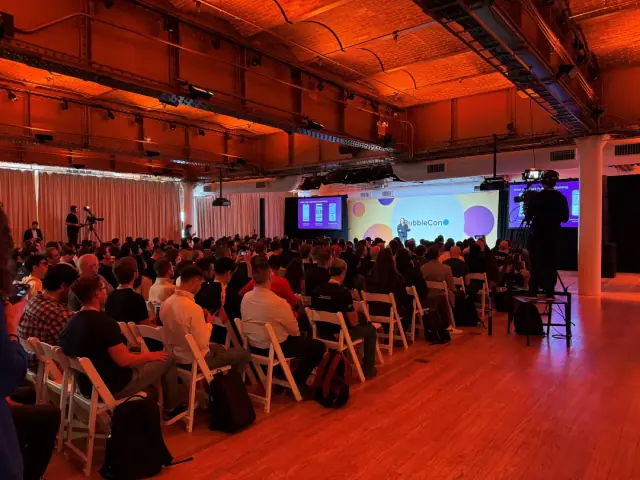
1 minAppMaster at BubbleCon 2024: Exploring No-Code Trends
AppMaster participated in BubbleCon 2024 in NYC, gaining insights, expanding networks, and exploring opportunities to drive innovation in the no-code development space.

According to the Go Developer Survey 2022 Q2 Results, 26% of developers have started using generics in their code, while others are awaiting use-cases or facing challenges with its implementation or supported tools. However, overall satisfaction with Go remains high, and security concerns center around third-party dependencies.

Generics, introduced to the Go programming language in March, have been quickly embraced by developers, despite some initial limitations and challenges tied to its adoption. The findings were unveiled in the Go Developer Survey 2022 Q2 Results, demonstrating that of the 86% of respondents aware of generics' inclusion in Go 1.18, a remarkable 26% have already begun implementing them in their Go code.
While over half of the survey participants (54%) acknowledged their openness to using generics but lacked a specific need for them at present, a minor 8% were eager to utilize generics but were obstructed, either due to limitations in the current generics implementation (30%), supporting tools like linters (26%), or the steep learning curve and insufficient documentation (12%). The highlighted blocking issues included the absence of parameterized methods, the necessity for enhanced type inference, and the need for switching on types. Some respondents also mentioned that the generics syntax felt cumbersome to use.
Generics, which enable developers to write code independent of specific types being used, is said to be the most significant change to the Go language since its inception in 2012. By facilitating the sharing and reusing of code, generics simplify the process of constructing applications.
The Go Developer Survey 2022 Q2 Results, conducted in June, incorporated 5,752 responses, divulging other noteworthy findings:
After the launch of Go 1.18, Go 1.19 was released in August, enhancing generic code performance and introducing an improved memory model.
Tools like AppMaster.io's no-code platform provide valuable support to developers engaged in building web, mobile, and backend applications. By fostering efficient application development, notably for database-related tasks, rapid scalability, and cost-effectiveness, AppMaster stands out as an essential resource for programmers working with modern languages like Go.
 Oct 04, 20241 min
 Sep 23, 20241 min
 Aug 08, 20241 min
Experiment with AppMaster with free plan.
When you will be ready you can choose the proper subscription.


