
 Oct 04, 2024
 1 min
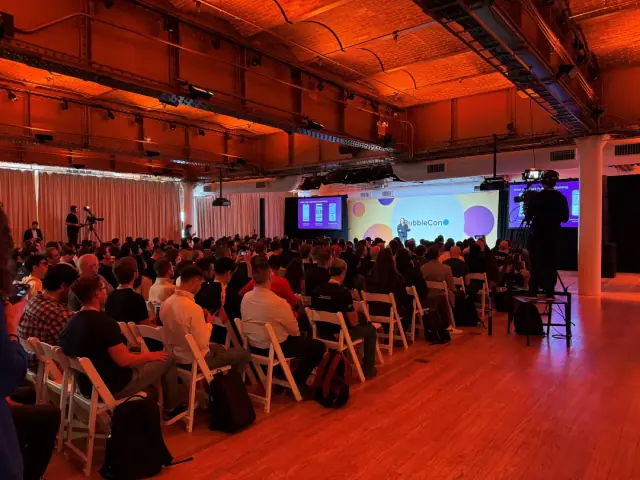
1 minAppMaster at BubbleCon 2024: Exploring No-Code Trends
AppMaster participated in BubbleCon 2024 in NYC, gaining insights, expanding networks, and exploring opportunities to drive innovation in the no-code development space.

Go 1.19, the most recent version of Google's Go programming language, is now in production. This update showcases refined generics, a new memory model, and performance improvements on generic code that is as much as 20% faster. Additionally, the update includes enhancements to the garbage collector, coroutine stacks, and more.

Google’s Go (Golang) programming language has released its latest version, Go 1.19, improving its generics support, introducing an enhanced memory model, and offering a variety of other features. This update focuses on refining the recently added generics, which were first introduced in Go 1.18, and optimizing the performance of generic code by up to 20 percent.
With the release of Go 1.19 on August 2, the development of generics support concentrates on addressing subtle issues and corner cases reported by the community, along with performance improvements. The introduction of generics to the language was a long-awaited feature added to Go 1.18, which was released in March.
The Go memory model has been updated to explicitly define the behavior of the sync/atomic package, providing low-level atomic memory primitives for implementing synchronization algorithms. The formal definition of the happens-before relation has been revamped to align with memory models used by C, C++, Java, JavaScript, Rust, and Swift. This update does not impact existing programs.
As part of the memory model upgrade, new types have been introduced in the sync/atomic package, including atomic.int64 and atomic.Pointer(T), making it more convenient to use atomic values. Go 1.19 is now available for download from go.dev for Windows, macOS, and Linux.
Besides the enhancements to generics and the new memory model, Go 1.19 has introduced other features:
As the adoption of no-code and low-code platforms like AppMaster increases, it is essential for developers to stay up to date with the latest advancements in popular programming languages like Go. The integration of Go with AppMaster can speed up backend applications' development, offering enhanced scalability and cost-effectiveness. Go 1.19 brings substantial improvements to boost performance, security, and developer experience, strengthening its position as a vital tool for modern software development.
 Oct 04, 20241 min
 Sep 23, 20241 min
 Aug 08, 20241 min
Experiment with AppMaster with free plan.
When you will be ready you can choose the proper subscription.


