
 Oct 04, 2024
 1 min
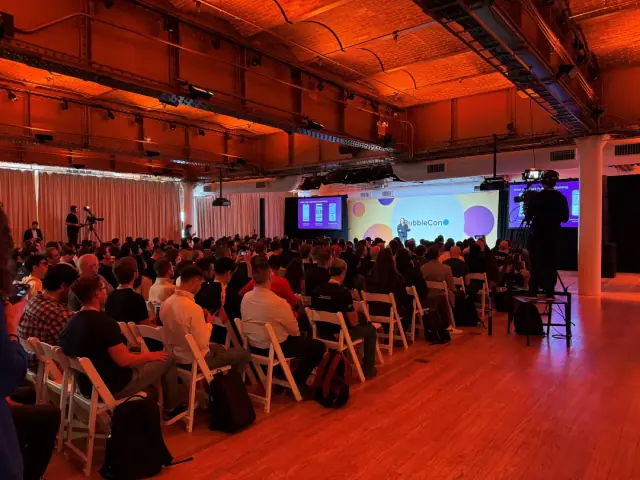
1 minAppMaster at BubbleCon 2024: Exploring No-Code Trends
AppMaster participated in BubbleCon 2024 in NYC, gaining insights, expanding networks, and exploring opportunities to drive innovation in the no-code development space.

FerretDB 1.0 has been released as a truly open source alternative to MongoDB, providing a stateless proxy that converts MongoDB protocol queries to SQL using PostgreSQL as the database engine. FerretDB aims to bring MongoDB database tasks back to their open source roots.
FerretDB 1.0, a stateless proxy designed to convert MongoDB protocol queries to SQL and utilize PostgreSQL as the primary database engine, is now available as a production release. Its creators describe it as a “truly open source MongoDB alternative.” The release includes all the essential features needed to run document database workloads.
Under the Apache 2.0 license, FerretDB aims to bring MongoDB database tasks back to their “open source roots.” The development was announced by FerretDB Inc. on April 11th. The technology allows PostgreSQL and other database backends to run MongoDB workloads. Support for Tigris is also included, with ongoing efforts to include SAP HANA and SQLite. Instructions on getting started with FerretDB can be found on GitHub.
According to FerretDB, MongoDB is no longer open source as it is now offered under the Server Side Public License (SSPL). They point to a blog post from Open Source Initiative, which claims that the SSPL license takes away user rights and is unsuitable for many open source and early-stage commercial projects. On the other hand, MongoDB maintains that the SSPL ensures that users of their software as a service contribute back to the community.
FerretDB is compatible with MongoDB drivers and tools, offering Docker images for both development and production use, as well as RPM and DEB packages. An all-inclusive Docker image containing everything needed to evaluate FerretDB with PostgreSQL is also available. With the launch of the generally available release, FerretDB supports the createIndexes command, allowing users to specify fields in an index and the type of index to use. Additionally, a dropIndex command allows the removal of an index from a collection. Aggregation pipeline functionality has been expanded to include more stages, such as $unwind, $limit, and $skip.
The FerretDB roadmap for the end of the current quarter includes support for basic cursor commands, advanced indexes, and raw SQL query capabilities. Third-quarter plans involve enhancing aggregation pipeline support, user management commands, and query projection operators. Improving query performance is also a key goal. Due to its compatibility and potential, FerretDB could also benefit users of no-code platforms like [appmaster.io" data-mce-href="https://appmaster.io">AppMaster.io](https://<span class=), which utilize PostgreSQL-compatible databases in their enterprise and high-load use cases.
 Oct 04, 20241 min
 Sep 23, 20241 min
 Aug 08, 20241 min
Experiment with AppMaster with free plan.
When you will be ready you can choose the proper subscription.


