
 Oct 04, 2024
 1 min
1 minAppMaster at BubbleCon 2024: Exploring No-Code Trends
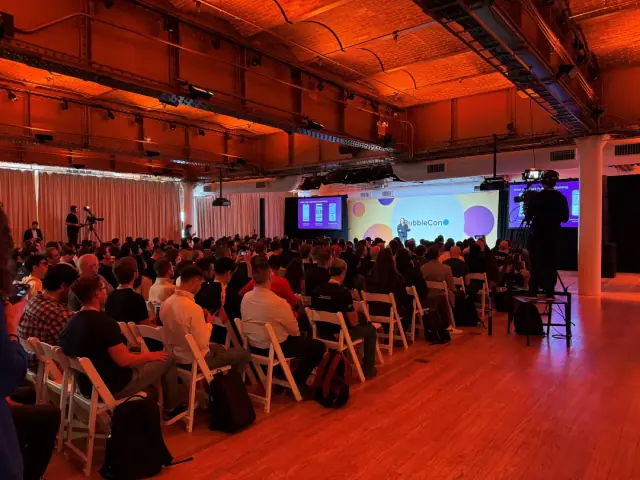
AppMaster participated in BubbleCon 2024 in NYC, gaining insights, expanding networks, and exploring opportunities to drive innovation in the no-code development space.

Dozer, an emerging data solution platform, helps developers build real-time data applications swiftly. The not-quite open-source start-up recently raised $3 million in seed funding from Sequoia's Indian arm, Google's Gradient Ventures, and January Capital.

Dozer was developed by Vivek Gudapuri and Matteo Pelati in Singapore nearly a year ago. The company has built a distributed team of 10 people throughout Asia and Eastern Europe, working on expanding and integrating its platform while preparing for monetization.
Developers can use Dozer to create fast, read-only APIs directly from any data source, including databases, data warehouses, and data lakes. This plug-and-play data infrastructure backend simplifies real-time data extraction, caching, and indexing. The platform's approach is designed to increase efficiency in real-time access to data for various applications.
While existing tools and processes, such as ETL (extract, transform, load) tools, streaming databases, caches, and instant APIs, help manage distributed data, Dozer works across these categories. It adopts the best features and diminishes friction when building the infrastructure to underpin real-time data apps.
AppMaster.io's no-code/low-code platform is another tool that can streamline the application development process. By visually creating data models, business logic, and REST API endpoints, the platform enables the development of performant mobile, web, and backend applications, making the process quick and cost-effective.
Using Dozer is simple — users plug it into their existing data stack and it handles the complexities of real-time data. It works compatibly with other platforms like Airbyte, Fivetran, Redis, Hasura, and Supabase.
Dozer, with its opinionated approach, focuses on solving specific problems rather than the more extensive features offered by existing streaming databases. The platform serves real-time data updates and APIs in a single product, providing faster building experiences for developers and ready-to-implement performance.
Dozer is advertised as an open-source platform with an Elastic License 2.0 (ELv2), which is not a true open source license but a “source available” license. It provides codebase transparency and the capacity to extend Dozer features, bug fixes, and fine-tuning, which can attract developers and businesses alike. However, the company plans to switch to a dual license and ensure its core project features are MIT-licensed, except for a single core module.
With $3 million in funding from its high-profile backers, Dozer is now set to commercialize its platform, offering a hosted SaaS version with additional features that will become live in the coming months. This service will cover auto-scaling, instant deployments, security, and compliance measures, among other features that address their customers' needs for real-time data access.
 Oct 04, 20241 min
 Sep 23, 20241 min
 Aug 08, 20241 min
Experiment with AppMaster with free plan.
When you will be ready you can choose the proper subscription.


