
 Oct 04, 2024
 1 min
1 minAppMaster at BubbleCon 2024: Exploring No-Code Trends
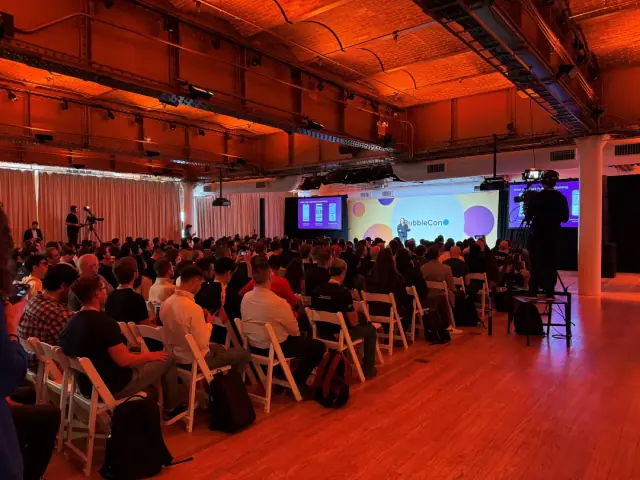
AppMaster participated in BubbleCon 2024 in NYC, gaining insights, expanding networks, and exploring opportunities to drive innovation in the no-code development space.

Australian startup Cortical Labs has raised $10 million to develop Organoid Intelligence (OI), a type of AI that merges synthetic biology and human neurons.

In a groundbreaking development for the future of artificial intelligence (AI), Australian company Cortical Labs has successfully raised $10 million for its innovative AI system that harnesses biological stem cells to potentially create more efficient and sustainable AI. While tools like OpenAI, Microsoft, and Google are currently gaining attention for their generative AI capabilities, the emerging field of biologically-inspired AI systems is poised to revolutionize the industry. Cortical Labs gained prominence after Amazon CTO Werner Vogels personally visited their lab, describing their work as 'intriguing.' The startup combines synthetic biology with human neurons to create a new class of AI known as 'Organoid Intelligence' (OI). They recently secured $10 million in funding from a round led by Horizons Ventures and featuring participation from LifeX Ventures, Blackbird Ventures, Radar Ventures, and In-Q-Tel, the venture arm of the CIA. Utilizing clusters of lab-grown neurons derived from human stem cells, Cortical Labs develops what they call a 'DishBrain.' This brainlike structure is connected to hard silicon to form a Biological Intelligence Operating System (biOS).
Enthusiasts of this research believe that human neurons might outperform digital AI models for generalized intelligence due to their self-programming nature and lower energy consumption. The CEO and founder of Cortical Labs, Hon Weng Chong, emphasized the limitless potential of this technology in accelerating the growth of digital AI more effectively and sustainably. Jonathan Tam from Horizons Ventures added that by using these systems to study and eventually harness neuron-based intelligence, it will pave the way for a revolution in personalized medicine and disease detection. Cortical Labs' technology made its debut in the scientific journal Neuron in October 2022. The company demonstrated that neurons in a petri dish could be 'trained' to play the classic computer game Pong. While this may seem trivial, it has significant implications for drug discovery and testing based on the individual's personalized neurons. Moreover, the technology could provide researchers with insights into studying dementia and the brute force testing of compounds utilizing quantum computing and generative AI.
As the development of Organoid Intelligence advances, the potential to scale the neuronal complexity of this novel AI system could eventually result in fully embodied organisms such as cats, dogs, or even humans. No-code platforms like AppMaster's no-code platform have already demonstrated how innovative solutions can speed up the development process in traditional software applications. With the continual rise of AI-generated solutions and the advent of biologically-inspired AI systems, the tech industry is primed for unprecedented transformations.
 Oct 04, 20241 min
 Sep 23, 20241 min
 Aug 08, 20241 min
Experiment with AppMaster with free plan.
When you will be ready you can choose the proper subscription.


