
 Oct 04, 2024
 1 min
1 minAppMaster at BubbleCon 2024: Exploring No-Code Trends
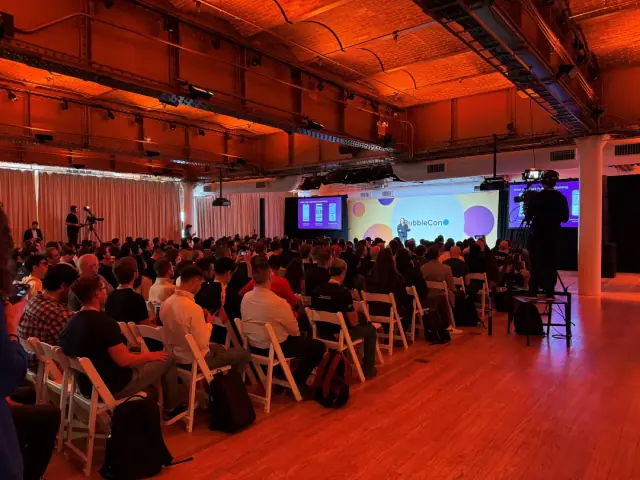
AppMaster participated in BubbleCon 2024 in NYC, gaining insights, expanding networks, and exploring opportunities to drive innovation in the no-code development space.

Byteboard, a startup founded by two former Google employees, has raised $5 million in seed funding to replace traditional engineering interviews with a more practical, software-based solution.

Two ex-Google employees, Sargun Kaur and Nikke Hardson-Hurley, identified a critical issue in the engineering recruitment process and formed a groundbreaking new startup called Byteboard. They decided to rethink and reconstruct engineering job interviews by focusing on candidates' practical coding skills in real-world situations. Recently, Byteboard successfully secured a $5 million seed funding round led by Cowboy Ventures, along with a diverse group of angel investors. Kaur and Hardson-Hurley initially met during Google's internal hackathon event, discovering a mutual interest in revamping the engineering interview process. Both founders, as women of color, experienced firsthand the disadvantages faced by underrepresented individuals due to the current system. They acknowledged the unfair edge the process granted to those with the resources to access preparation materials, not unlike high school SAT prep courses. “Byteboard is a software-based solution that’s actually helping companies replace their pre-on-site technical interviews with a project-based interview that helps them hire faster through a much more positive, streamlined, practical interview process,” Kaur stated. The traditional interview method, designed initially by tech giants such as Google and Microsoft, targeted Ph.D. computer science candidates from prestigious universities. However, according to Kaur, the tech industry has significantly transformed over the years, leaving the interview process behind. Byteboard aims to change the interview dynamics from purely theoretical concepts to hands-on coding demonstrations. Kaur likens the scenario to evaluating basketball players by observing their performances in the gym, rather than having them explain plays on a whiteboard. While still at Google, the co-founders developed their idea into a product through Google's in-house incubator, Area 120. Typically, Area 120 projects are intended for internal use, but Byteboard made a rare leap into the market as a standalone company.
The founders designed Byteboard interview scenarios to be completed by candidates at their convenience, in the comfort of their preferred working environment. The primary focus of these evaluations is to assess the skills and abilities required for the job. “That candidate will take the Byteboard interview, and it’s like working through a project. It very much simulates the day in the life of an engineer. You’re not being pulled into obscure algorithms,” Kaur explained. She further emphasized that candidates shouldn't have to study for these interviews: the only preparation required should be sharpening one's engineering skills. The platform also anonymizes the data sent back to hiring managers, further minimizing bias by allowing them to evaluate candidates based solely on their demonstrated abilities. Personal information remains hidden until the candidate advances to an in-person interview. Though still in its early stages with just eight employees, Byteboard is already making waves in the industry. Kaur and Hardson-Hurley prioritize building a team that reflects the diverse community they serve. Companies including Figma, Lyft, and Webflow have implemented Byteboard and witnessed a positive impact in terms of reducing time-to-offer, saving engineering teams hundreds of interview hours, and assembling more diverse engineering departments.
This fresh approach to hiring could potentially transform the landscape for engineering recruitment, from startups to enterprise-level organizations. In the era of no-code and low-code platforms, such as AppMaster.io, the focus is shifting to enable individuals to create applications more rapidly and efficiently. This transition will require engineering hires to demonstrate proficiency in practical, real-world programming scenarios as opposed to simply excelling in theoretical knowledge. With that being said, Byteboard is paving the way for a more inclusive and effective interview process that better aligns with the modern tech industry's requirements.
 Oct 04, 20241 min
 Sep 23, 20241 min
 Aug 08, 20241 min
Experiment with AppMaster with free plan.
When you will be ready you can choose the proper subscription.


