
 Oct 04, 2024
 1 min
1 minAppMaster at BubbleCon 2024: Exploring No-Code Trends
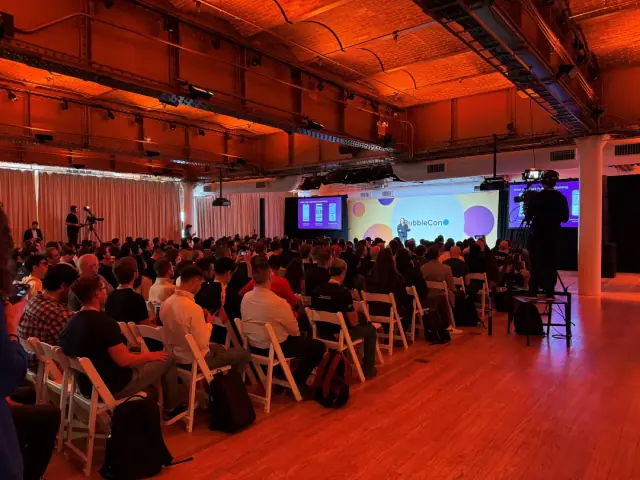
AppMaster participated in BubbleCon 2024 in NYC, gaining insights, expanding networks, and exploring opportunities to drive innovation in the no-code development space.

Anthropic takes a significant leap in large language model (LLM) repertoire with its latest revelation, the Claude 2.1 LLM.

Anthropic has set a new pedestal in the realm of large language models (LLMs), revealing the launch of Claude 2.1, capable of ingesting a substantial 200,000 tokens in its context window. To put this into perspective, that equates to over half a million words or upwards of 500 printed pages worth of data - a remarkable stride, Anthropic stated.
The recently launched model doesn't stop at expanding data accommodation. It surpasses its antecedent in accuracy, offering usage of beta tool, all at a cost cut, marking a considerable advancement in Anthropic's pioneering series.
Claude 2.1 comes equipped to empower the Claude generative AI chatbot, making his enhanced features accessible to both free and paying users. There's a catch, though! The expanded token context window is an exclusive perk for the paying Pro customers, whereas the free users remain capped at a 100,000 token limit. Nevertheless, this still exceeds GPT-3.5's token limit by a substantial margin.
The beta tool attribute in Claude 2.1 opens new doors for developers, enabling them to weave APIs and defined functions into the Claude model. This mirrors the capabilities present in OpenAI's models, offering similar flexibility and integration.
Prior to this, Claude already held a competitive edge over OpenAI in terms of token context window capacity, boasting a 100,000 token limit, until OpenAI revealed a preview version of GPT-4 Turbo with a 128,000 token context window. This model, however, remains limited to ChatGPT Plus users subscribing at $20/month and is only accessible in chatbot format. Developers wishing to utilize the GPT-4 API have to opt for a pay-per-use system.
Although an extensive context window - a representation of the data it can analyze simultaneously - might seem appealing for vast documents or diverse sets of information, it's not certain whether LLMs can process large volumes of data efficiently compared to smaller segments. AI entrepreneur and expert, Greg Kamradt, has been closely investigating this issue with a technique he refers to as the 'needle in a haystack' analysis.
By embedding random statements in various sections of a broad document fed into the LLM, he tests if small pieces of information within larger documents are retrieved when the LLM is queried. His analysis of Claude 2.1, for which he was given early access, concluded that 'at 200K tokens (approximately 470 pages), Claude 2.1 managed to recall facts at specific document depths.'
The recall performance started to deteriorate once the tokens breached the ~90K mark and was particularly impacted at the base of the document. This flaw isn't exclusive to Claude 2.1, GPT-4 demonstrated similar imperfect recall at its maximum context.
Kamradt's study incurs approximately $1,000 in API calls. (Anthropic did provide credits for the same tests performed on GPT-4). His takeaways highlighted the importance of crafting prompts with care, not to assume consistent data retrieval, and that lesser inputs generally ensure superior results.
Often, developers split data into smaller segments when mining information from broad datasets to improve the retrieval results, regardless of the context window's potential capacity.
An evaluation of Claude 2.1's accuracy using a comprehensive collection of intricate, factual queries designed to probe typical weak spots in the current models revealed a 50% drop in false statements compared to the previous version. The present iteration is more likely to confess ignorance rather than generate counterfeit information, per Anthropic's announcement. The report further highlights substantial progress in comprehension and summarization.
 Oct 04, 20241 min
 Sep 23, 20241 min
 Aug 08, 20241 min
Experiment with AppMaster with free plan.
When you will be ready you can choose the proper subscription.


