
 Oct 04, 2024
 1 min
1 minAppMaster at BubbleCon 2024: Exploring No-Code Trends
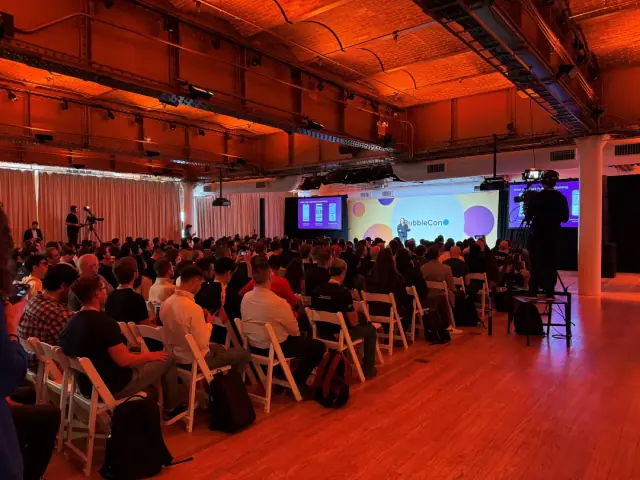
AppMaster participated in BubbleCon 2024 in NYC, gaining insights, expanding networks, and exploring opportunities to drive innovation in the no-code development space.

Alibaba has unveiled a ChatGPT rival called Tongyi Qianwen and a service to create custom LLMs for customers, demonstrating the company's commitment to advancing AI and ensuring its widespread adoption in various industries.
Chinese technology giant Alibaba has introduced a new language model rivaling ChatGPT, known as Tongyi Qianwen, along with a service for creating custom Large Language Models (LLMs) for clients. The unveiling demonstrates Alibaba’s commitment to advancing artificial intelligence (AI) and facilitating its adoption by various enterprises and sectors.
Alibaba plans to integrate Tongyi Qianwen across the company’s diverse businesses in the near future, though a specific rollout timeline has not been released. Speaking on the importance of AI and cloud computing in the current technological landscape, Daniel Zhang, Chairman and CEO of Alibaba Group and CEO of Alibaba Cloud Intelligence, stated that the company seeks to provide more accessible AI and computing services to enterprises and developers, equipping them with the tools to gain insights, formulate new business models, and create innovative products and services.
Tongyi Qianwen, which translates to 'seeking an answer by asking a thousand questions,' is set to support both English and Chinese languages. As one of its first integrations, the chatbot will be added to Alibaba's DingTalk, a workplace communication platform. Upon launch, Tongyi Qianwen will perform various tasks, such as taking meeting notes, composing emails, and creating business proposals. The chatbot is also expected to be integrated into Tmall Genie, Alibaba's smart speaker counterpart to Amazon's Echo line—a move that ensures Alibaba stays ahead of competitors like Google, who have not yet integrated similar language models into their smart devices.
The power behind Tongyi Qianwen lies in its LLM, which boasts ten trillion parameters, a significant leap from GPT-4's estimated one trillion parameters. This robust foundation allows Alibaba to provide a unique service—building custom LLMs for customers. Using clients’ proprietary knowledge and industry expertise, Alibaba can develop AI-infused apps without the need to create models from scratch. Chinese developers already have access to a beta version of the Tongyi Qianwen API.
Jingren Zhou, CTO of Alibaba Cloud Intelligence, envisions the latest advancements in generative AI, supported by LLMs, to play a vital role in a new AI development paradigm. In making this new paradigm more accessible, Alibaba aims to aid businesses across industries in their intelligence transformation and improve their productivity, expertise, and capabilities while unveiling new opportunities through innovation.
In contrast, some technology leaders have called for a pause in training powerful AI systems. High-profile figures such as Twitter CEO Elon Musk and Apple co-founder Steve Wozniak have signed an open letter warning of potential risks and asserting that the race to develop AI systems is spiraling out of control. Goldman Sachs' recent report estimated that AI could replace the equivalent of 300 million full-time jobs, while some AI think tanks have labeled GPT-4 as a public safety risk.
Alibaba disclosed the announcement during its Cloud Summit, which also featured three-month trials for its Infrastructure-as-a-Service (IaaS) and PolarDB services. In addition, the company is offering a 50 percent discount for its storage-as-a-service if users reserve capacity in a specific region for a year. However, the pricing for using Tongyi Qianwen remains undisclosed. With services like Alibaba's custom LLMs and platforms like AppMaster.io's [appmaster.io/blog/no-code-app-builder" data-mce-href="https://appmaster.io/blog/no-code-app-builder">no-code app builder](https://<span class=), businesses seeking efficiency and innovation have more high-tech options than ever before.
 Oct 04, 20241 min
 Sep 23, 20241 min
 Aug 08, 20241 min
Experiment with AppMaster with free plan.
When you will be ready you can choose the proper subscription.


