
 Oct 04, 2024
 1 min
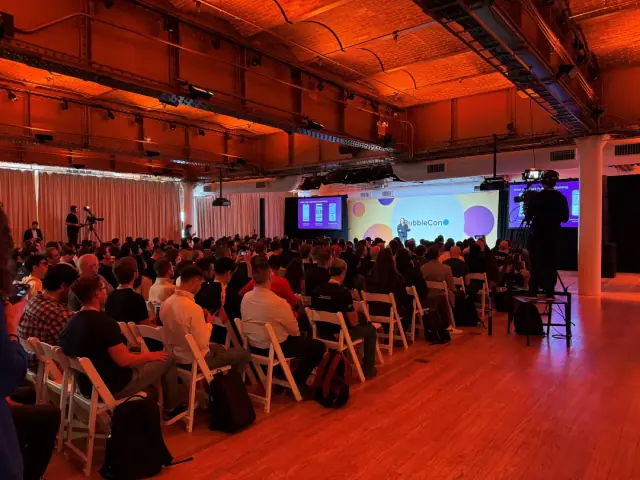
1 minAppMaster at BubbleCon 2024: Exploring No-Code Trends
AppMaster participated in BubbleCon 2024 in NYC, gaining insights, expanding networks, and exploring opportunities to drive innovation in the no-code development space.

Amazon brings advancement to Alexa's voice assistant with the introduction of enhanced AI-power mechanisms.
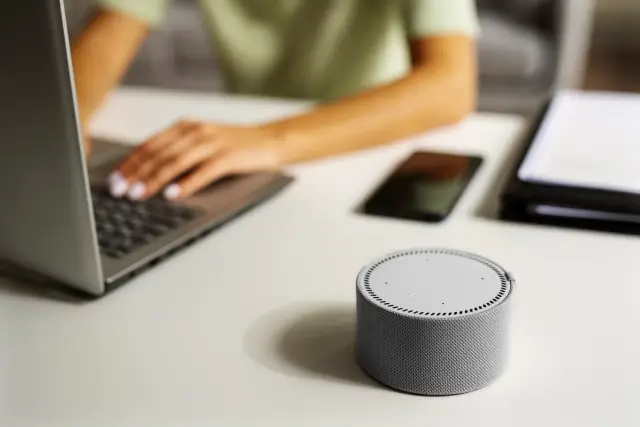
Amazon has embarked on a quest to endow their voice assistant Alexa, with a more human-like expressiveness. This recent upgrade bestows Alexa with an AI-powered capacity to respond to customers with an emotional variation in relation to the user's tone or phrase. Such an incremental approach aims to shift beyond the typical robotic-sounding responses into a more natural, engaging conversation.
These breakthroughs have come as part of updating the speech-to-speech engine that makes Alexa more sensitive to the user's emotions and voice intonation. The output is a mirror reflection of the user's tone, ensuring that the interactive experience feels more personalized and relatable.
The company offered a sneak peek into the less mechanic and more expressive voice of Alexa. The officials highlighted that the enhancements are due to large transformers trained on various accents and languages, thus powering the more expressive Alexa.
Users could anticipate a conversational twist where Alexa matches the user's mood. For instance, from relaying an exciting sports update about the user's favoured team's victory with an ebullient voice and conveying a defeated update with a softened empathetic tone. Dealing with these emotional undertones can provide an immersive conversational experience that can redefine users' interaction with their AI voice assistants.
Amazon's SVP of Alexa, Rohit Prasad, spoke about the under-progress model, codenamed speech-to-speech. This model works on huge transformers and intends to make a fundamental shift in the customer interaction process. Instead of relaying the message by converting the customer's voice into text, the model aims to amalgamate these actions which would result in a richer communication experience.
These innovations are leveraging Amazon's Large Text-to-Speech (LTTS) and Speech-to-Speech (S2S) mechanism. While LTTS acclimatizes Alexa's response according to the user's request, the S2S adds a new layer of audial input. This aids Alexa to manipulate its response with a more meaningful conversational richness, Amazon elucidates.
Once launched, Alexa will mimic attributes like laughter and surprise, and exhibit normal utterances like 'uh-huh', encouraging users to prolong the conversation just like a real-life dialogue. This exemplifies the continuous efforts by companies like Amazon to humanize AI-powered voice assistants, bringing more interactive and immersive UIs. It's an intriguing comparison with platforms like AppMaster that let customers visually create and enhance the UI and apps' business logic, proving how tech firms continually push the envelope to improve user interaction and engagement.
These enhancements made in Amazon's Alexa show how engineers are striving to improve the voice assistant's functionality and make it less robotic and more life-like. A more interactive Alexa may encourage users to use the voice assistant more frequently, generating valuable data for Amazon, and paving the way for AI technology to gain further traction in our daily lives.
 Oct 04, 20241 min
 Sep 23, 20241 min
 Aug 08, 20241 min
Experiment with AppMaster with free plan.
When you will be ready you can choose the proper subscription.


