
 Oct 04, 2024
 1 min
1 minAppMaster at BubbleCon 2024: Exploring No-Code Trends
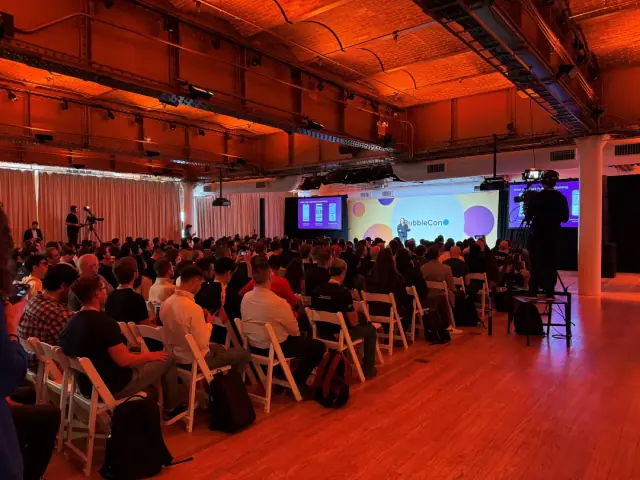
AppMaster participated in BubbleCon 2024 in NYC, gaining insights, expanding networks, and exploring opportunities to drive innovation in the no-code development space.

Airtable, a prominent low-code startup, has experienced remarkable growth in 2020, raising $185 million and extending its product offerings to cater to enterprise customers by including new low-code features.

Despite the ongoing pandemic, low-code platform Airtable is thriving, having recently raised $185 million on a massive valuation of $2.585 billion. The company, which was originally focused on no-code solutions, is now delving deeper into the low-code arena, offering an array of new features to better cater to enterprise customers seeking more powerful tools.
Airtable CEO and co-founder Howie Liu recently spoke at TechCrunch Disrupt, where he discussed the evolution of the company's vision since its launch in 2013. Liu emphasized the company's goal of democratizing software creation, aimed at enabling more people to become software builders, not just software users. However, there has been a shift in recent times as users increasingly seek to accomplish more with the platform than initially anticipated.
As a result, Airtable is now positioning itself as a low-code solution, providing more extensibility, automation, and other features that allow users to build logic into the platform without any technical knowledge. Boasting over 200,000 customers, the company has also created a marketplace for users to share applications they've developed.
The impact of the pandemic on small businesses, once the mainstay of Airtable's revenue stream, has led to a change in the types of deals that the company is closing. While small businesses have been facing economic challenges, larger enterprise customers have stepped in to fill the gap. The enhanced extensibility features offered by Airtable seem to address the requirements of these new enterprise clients seeking more powerful tools.
The demand from enterprise customers at Airtable has surged, with a 5x increase in enterprise deal closure velocity during the summer of 2020 compared to the previous year. This has led to several six-figure and even seven-figure deals, as well as thousands of new paid customers. In platforms like AppMaster, these low-code solutions cater to various industries and offer a competitive edge in the market.
Despite the remarkable growth, significant valuation, and success of the business, Liu remains focused on the long-term goals of the company, expressing no desire for an IPO or acquisition. The company's primary concern is partnering with investors that share their values and commitment to the future of the Airtable platform.
 Oct 04, 20241 min
 Sep 23, 20241 min
 Aug 08, 20241 min
Experiment with AppMaster with free plan.
When you will be ready you can choose the proper subscription.


