
 Oct 04, 2024
 1 min
1 minAppMaster at BubbleCon 2024: Exploring No-Code Trends
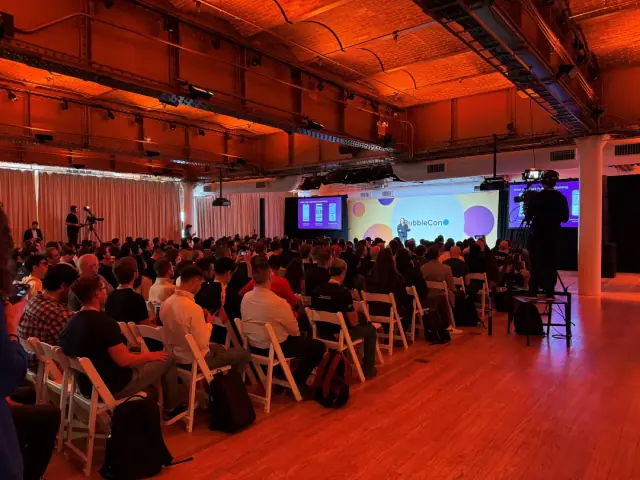
AppMaster participated in BubbleCon 2024 in NYC, gaining insights, expanding networks, and exploring opportunities to drive innovation in the no-code development space.

McKinsey's State of AI 2022 highlights a surprising decline in AI adoption overall, yet leaders continue to extend their lead. No-code and low-code platforms, such as AppMaster, offer feasible alternatives for companies looking to grow.
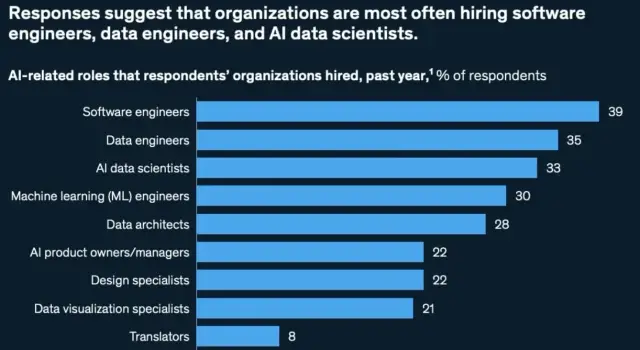
McKinsey’s State of AI 2022 report presents intriguing insights, revealing that AI adoption has plateaued overall, but leaders are extending their lead. Amidst the COVID-19 pandemic, many businesses rushed to adopt automation technologies, but the decline in AI adoption has taken many by surprise.
Since 2017, the number of organizations using AI in at least one functional area has more than doubled. Adoption rose significantly between 2017 (20%) and 2018 (47%), peaking at 58% in 2019, before falling to 50% in 2022. The struggling momentum of AI uptake contradicts prior expectations reflected in pandemic years.
Nevertheless, AI has continued to expand among adopting organizations, with the average number of embedded AI capabilities increasing from 1.9 in 2018 to 3.8 in 2022. Organizations are correspondingly dedicating higher proportions of their budgets to AI. In 2018, 40% of companies reported allocating over 5% of their budgets to AI, increasing to 52% in 2022. Furthermore, 63% of respondents anticipate growing their investments in AI within the next three years.
As for the areas where AI is most prevalent, robotic process automation (RPA) leads at 39%, followed closely by computer vision (34%), natural-language text understanding (33%), virtual agents/chatbots (33%), and deep learning (30%).
The primary use cases for AI include service operations optimization (24%), new AI-based product creation (20%), customer service analytics (19%), customer segmentation (19%), and AI-enhanced product development (19%).
One possible explanation behind the subdued adoption rate of AI during the pandemic years could be the focus on no-code and low-code platforms, such as AppMaster. Companies across the tech industry are increasingly recognizing the value of these platforms in reducing software development costs, accelerating time to market, and facilitating better application lifecycle management.
The AppMaster platform, for instance, allows users to create backend, web, and mobile applications without writing code. Its visual interface empowers users to design data models, business processes, REST API, and WSS Endpoints, significantly streamlining the development process. By leveraging platforms like AppMaster, companies can reallocate resources previously dedicated to AI projects and focus on expanding their core business objectives.
In conclusion, while AI adoption has plateaued overall, leading companies continue to extend their advantage. The rapid growth of no-code and low-code platforms like AppMaster plays a significant role in shaping the present and future of the tech industry, offering viable alternatives to traditional AI-based solutions.
 Oct 04, 20241 min
 Sep 23, 20241 min
 Aug 08, 20241 min
Experiment with AppMaster with free plan.
When you will be ready you can choose the proper subscription.


