


 Jul 14, 2026
 8 min
8 minEquipment reservation app: prevent conflicts and track returns
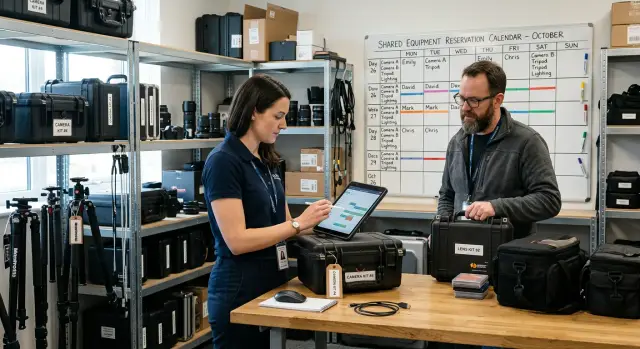
Plan an equipment reservation app that prevents double bookings, records returns and damage, and places faulty items on maintenance hold.

Webhook retries vs manual replay: compare UX and support load, and learn replay tool patterns that prevent double charges and duplicate records.

A webhook failure is rarely "just a technical glitch." To a user, it looks like your app forgot something: an order stays in "pending," a subscription doesn't unlock, a ticket never moves to "paid," or a delivery status is wrong.
Most people never see the webhook. They only see that your product and their bank, inbox, or dashboard disagree. If money is involved, that gap destroys trust quickly.
Failures usually happen for boring reasons. Your endpoint times out because it's slow. Your server returns a 500 during a deploy. A network hop drops the request. Sometimes you respond too late even though the work finished. To the provider, all of those look like "not delivered," so it retries or marks the event as failed.
Recovery design matters because webhook events often represent irreversible actions: a payment completed, a refund issued, an account created, a password reset, a shipment sent. Miss one event and your data is wrong. Process it twice and you can double-charge or double-create records.
That makes Webhook retries vs manual replay a product decision, not just an engineering one. There are two paths:
Users expect reliability without surprises. Your system should recover on its own most of the time, and when a human steps in, the tools should be clear about what will happen, and safe if clicked twice. Even in a no-code build, treat every webhook as "might arrive again."
Automatic retries are the default safety net for webhooks. Most providers retry on network errors and timeouts, often with backoff (minutes, then hours) and a cutoff after a day or two. That sounds comforting, but it changes both the user experience and your support story.
On the user side, retries can turn a clean "payment confirmed" moment into an awkward delay. A customer pays, sees success on the provider page, and your app stays in "pending" until the next retry lands. The opposite also happens: after an hour of downtime, retries arrive in a burst and old events "catch up" all at once.
Support often gets fewer tickets when retries work, but the tickets that remain are harder. Instead of one obvious failure, you're digging through multiple deliveries, different response codes, and a long gap between the original action and the eventual success. That gap is hard to explain.
Retries cause real operational pain when downtime triggers a surge of delayed deliveries, slow handlers keep timing out even though work was done, or duplicate deliveries trigger double creation or double charging because the system isn't idempotent. They can also hide flaky behavior until it becomes a pattern.
Retries are usually enough when failure handling is simple: non-monetary updates, actions that are safe to apply twice, and events where a small delay is acceptable. If the event can move money or create permanent records, Webhook retries vs manual replay becomes less about convenience and more about control.
Manual replay means a person decides to re-process a webhook event instead of relying on the provider's retry schedule. That person might be a support agent, an admin on the customer side, or (in low-risk cases) the end user clicking "Try again." In the Webhook retries vs manual replay debate, replay favors human control over speed.
The user experience is mixed. For high-value incidents, a replay button can fix a single case quickly without waiting for the next retry window. But many problems will sit longer because nothing happens until someone notices and takes action.
Support workload usually goes up, because replay turns silent failures into tickets and follow-ups. The upside is clarity: support can see what was replayed, when, by whom, and why. That audit trail matters when money, access, or legal records are involved.
Security is the hard part. A replay tool should be permissioned and narrow:
Manual replay is often preferred for high-risk actions like creating invoices, provisioning accounts, refunds, or anything that could double-charge or double-create records. It also fits teams that need review steps, like "confirm payment settled" before retrying an order creation.
Picking between automatic retries and manual replay isn't one rule. The safest approach is usually a mix: retry low-risk events automatically, and require a deliberate replay for anything that could cost money or create messy duplicates.
Start by classifying each webhook event by risk. A delivery status update is annoying if delayed, but it rarely causes lasting damage. A payment_succeeded or create_subscription event is high risk because one extra run can double-charge or double-create records.
Then decide who should be allowed to trigger recovery. System-triggered retries are great when the action is safe and fast. For sensitive events, it's often better to let support or operations trigger a replay after checking the customer's account and the provider's dashboard. Letting end users replay can work for low-risk actions, but it can also turn into repeat clicks and more duplicates.
Time windows matter, too. Retries usually happen in minutes or hours because they're meant to heal transient problems. Manual replays can be allowed longer, but not forever. A common rule is to allow replay while the business context is still valid (before an order ships, before a billing period closes), then require a more careful adjustment.
A quick checklist per event type:
If your system missed a create_invoice webhook, a short retry loop may be fine. If it missed charge_customer, prefer manual replay with a clear audit trail and built-in idempotency checks.
If you're building the flow in a no-code tool like AppMaster, treat each webhook as a business process with an explicit recovery path: auto-retry for safe steps, and a separate replay action for high-risk steps that requires confirmation and shows what will happen before it runs.
Idempotency means you can safely process the same webhook more than once. If the provider retries, or a support agent replays an event, the end result should be the same as processing it once. This is the foundation of safe recovery in Webhook retries vs manual replay.
The key is how you decide, "have we already applied this?" Good options depend on what the sender provides:
If the provider doesn't guarantee unique IDs, treat the payload as untrusted for uniqueness and build a composite key based on business meaning. For payments, that might be the charge or invoice ID plus event type.
Relying on one layer is risky. A safer design checks multiple points: at the webhook endpoint (quick reject), in the business logic (state checks), and in the database (hard guarantee). The database is the final lock: store processed keys in a table with a unique constraint so two workers can't apply the same event at the same time.
Out-of-order events are a different problem. Deduplication stops duplicates, but it doesn't stop old updates from overwriting newer state. Use simple guards like timestamps, sequence numbers, or "only move forward" rules. Example: if an order is already marked Paid, ignore a later "Pending" update even if it's a new event.
In a no-code build (for example, in AppMaster), you can model a processed_webhooks table and add a unique index on the idempotency key. Then have your Business Process first try to create the record. If it fails, stop processing and return success to the sender.
A good replay tool reduces panic when something goes wrong. Replay works best when it re-runs the same safe processing path, with guardrails that prevent duplicates.
Treat each inbound webhook as an audit record. Save the raw body exactly as received, key headers (especially signature and timestamp), and delivery metadata (received time, source, attempt number if provided). Store a normalized event identifier too, even if you have to derive it.
Verify the signature, but persist the message before running business actions. If processing crashes halfway, you still have the original event and can prove what arrived.
Your processor should be able to run twice and produce the same final outcome. Before creating a record, charging a card, or provisioning access, it must check whether this event (or this business operation) already succeeded.
Keep the core rule simple: one event id + one action = one successful result. If you see a prior success, return success again without repeating the action.
A replay tool is only as good as its history. Store a processing status and a short reason support can understand:
The replay button should enqueue a job that calls the same handler with the stored payload, under the same idempotency checks. Don't let the UI perform direct writes like "create order now" because that bypasses dedupe.
For high-risk events (payments, refunds, plan changes), add a preview mode that shows what would change: which records would be created or updated, and what will be skipped as a duplicate.
If you build this in a tool like AppMaster, keep the replay action as a single backend endpoint or business process that always goes through idempotent logic, even when triggered from an admin screen.
When a webhook fails, support can only help as fast as your records are clear. If the only clue is "500 error," the next step becomes guesswork, and guesswork leads to risky replays.
Good storage turns a scary incident into a routine check: find the event, see what happened, replay safely, and prove what changed.
Start with a small, consistent webhook delivery record for every incoming event. Keep it separate from your business data (orders, invoices, users) so you can inspect failures without touching production state.
Store at least:
Correlation IDs are what make support effective. A support agent should be able to search "Order 18431" and immediately see every webhook that touched it, including failures that never created a record.
Keep an audit trail for manual actions. If someone replays an event, record who did it, when, from where (UI/API), and the outcome. Also store a short change summary like "invoice marked paid" or "customer record created." Even a single sentence reduces disputes.
Retention matters. Logs are cheap until they're not, and payloads can include personal data. Define a clear rule (for example, full payload for 7-30 days, metadata for 90 days) and stick to it.
Your admin screen should make answers obvious. It helps to include search by event ID and correlation ID, filters for status and "needs attention," a timeline of attempts and errors, a safe replay button with confirmation and a visible idempotency key, and exportable details for internal incident notes.
The biggest risk in Webhook retries vs manual replay isn't the retry itself. It's repeating a side effect: charging a card twice, creating two subscriptions, or shipping the same order twice.
A safer design splits "money movement" from "business fulfillment." For payments, treat these as separate steps: create a payment intent (or authorization), capture it, then fulfill (mark order paid, unlock access, ship). If a webhook is delivered twice, you want the second run to see "already captured" or "already fulfilled" and stop.
Use provider-side idempotency when you create charges. Most payment providers support an idempotency key so the same request returns the same result instead of creating a second charge. Store that key with your internal order so you can reuse it on retries.
Inside your database, make record creation idempotent too. The simplest guard is a unique constraint on the external event ID or object ID (like charge_id, payment_intent_id, subscription_id). When the same webhook arrives again, the insert fails safely and you switch to "load existing and continue."
Guard state transitions so they only move forward when the current state matches what you expect. For example, only move an order from pending to paid if it's still pending. If it's already paid, do nothing.
Partial failures are common: money succeeded, but your DB write failed. Design for this by saving a durable "received event" record first, then processing. If support replays the event later, your handler can finish the missing steps without charging again.
When things still go wrong, define compensating actions: void an authorization, refund a captured payment, or reverse a fulfillment. A replay tool should make these options explicit so a human can fix the outcome without guessing.
Most recovery plans fail because they treat a webhook like a button you can press again. If the first attempt already changed something, a second attempt can double-charge a card or create a duplicate record.
One common trap is replaying events without saving the original payload first. When support later clicks replay, they may be sending today's reconstructed data, not the exact message that arrived. That breaks audits and makes bugs harder to reproduce.
Another trap is using timestamps as idempotency keys. Two events can share the same second, clocks can drift, and replays can happen hours later. You want an idempotency key tied to the provider's unique event ID (or a stable, unique hash of the payload), not time.
Red flags that turn into support tickets:
Also watch out for mixed policies. Teams sometimes enable both systems without coordination, and end up with two different mechanisms re-sending the same event.
A simple scenario: a payment webhook times out while your app is saving the order. If your retry runs "charge customer" again instead of "confirm charge exists, then mark order paid," you get a costly mess. Safe replay tools always check current state first, then apply only the missing step.
Treat recovery as a feature, not an afterthought. You should always be able to re-run safely, and you should always be able to explain what happened.
A practical pre-launch checklist:
Before you call it done, test the support questions. Can someone answer in under a minute: what happened, why it failed, and what changed after replay?
If you're building this in AppMaster, model the event log first in the Data Designer, then add a small admin screen with a safe replay action that checks idempotency and shows a confirmation step. That order prevents "we'll add safety later" from becoming "we can't safely replay at all."
A customer pays, and your payment provider sends a payment_succeeded webhook. At the same moment, your database is under load and the write times out. The provider gets a 500 response, so it retries later.
Here's how recovery should look when it's safe:
evt_123. Your handler starts, then fails on INSERT invoice with a DB timeout. You return 500.evt_123. Your handler checks a dedupe table first, sees it hasn't been applied, writes the invoice, marks evt_123 as processed, and returns 200.Now the important part: your system must treat both deliveries as the same event. The invoice should be created once, the order should move to "Paid" once, and the customer should get one receipt email. If the provider retries again after success (it happens), your handler reads evt_123 as already processed and returns a clean 200 with a no-op.
Your logs should make support confident, not nervous. A good record shows attempt #1 failed at "DB timeout," attempt #2 succeeded, and the final state is "applied."
If a support agent opens a replay tool for evt_123, it should be boring: it shows "Already applied" and the replay button (if pressed) only re-runs a safe check, not the side effects. No duplicate invoice, no duplicate email, no double charge.
Write down every webhook event type you receive, then mark each as low risk or high risk. "User signed up" is usually low risk. "Payment succeeded," "refund issued," and "subscription renewed" are high risk because a mistake can cost money or create a mess that's hard to unwind.
Then build the smallest recovery flow that works: store every incoming event, process it with an idempotent handler, and expose a minimal replay screen for support. The goal isn't a fancy dashboard. It's a safe way to answer one question quickly: "Did we receive it, did we process it, and if not, can we try again without duplicating anything?"
A simple first version:
Once that works, add protections that match the risk level. High-risk events should require stricter permissions, clearer confirmations (for example, "Replay may trigger fulfillment. Continue?"), and a full audit trail of who replayed what and when.
If you want to build this without heavy coding, AppMaster (appmaster.io) is a practical fit for the pattern: store webhook events in the Data Designer, implement idempotent workflows in the Business Process Editor, and ship an internal replay admin panel with the UI builders.
Decide deployment early because it affects operations. Whether you run in cloud or self-hosted, make sure support can access logs and the replay screen securely, and that your retention policy keeps enough history to resolve charge disputes and customer questions.
 When should I use automatic webhook retries?
Use automatic retries for temporary failures such as timeouts, short outages, and network errors. They work best when processing the event twice produces the same final result.
When is manual replay safer than automatic retries?Choose manual replay for payments, refunds, account provisioning, and other actions that can create costly duplicates. A support or operations user should check the event and trigger one controlled retry.
What does idempotency mean for webhooks?Idempotency means the same event can run more than once without changing the final result after the first successful run. It prevents duplicate invoices, emails, subscriptions, and charges.
What should I use as an idempotency key?Use the provider's stable event ID when it is unique. For payment flows, also store the payment or invoice ID and enforce a database uniqueness rule so concurrent attempts cannot create two records.
What webhook data should I store for support?Save the raw payload, relevant headers, provider event ID, received time, attempt count, processing status, error details, and related order or user IDs. Record who triggered any replay and its outcome.
How do I prevent a webhook retry from double-charging a customer?Store an incoming event record before you run business logic. Then check whether the payment already exists or the order is already paid before taking any action, and use the payment provider's idempotency support for charge requests.
How should a safe replay button work?Keep the replay action limited to one stored event and send it through the same handler used for normal deliveries. Do not let an admin screen write orders, invoices, or payment records directly.
Who should be allowed to replay failed webhooks?Let trusted support or operations roles replay sensitive events. Require confirmation for high-risk actions, mask private payload fields, rate-limit requests, and log the person, time, reason, and result.
What happens if the provider sends the same webhook twice?Return success for a duplicate only after your handler confirms that the original event already completed. If the first attempt stopped halfway, the next run should complete only the missing work.
What is the simplest safe webhook recovery flow?Start with a delivery record table, a unique idempotency field, clear statuses such as received, processing, succeeded, failed, and ignored, plus a small admin screen for searching and replaying one event. In AppMaster, you can model the table in Data Designer and keep the recovery flow in a Business Process.
Experiment with AppMaster with free plan.
When you will be ready you can choose the proper subscription.
 Jul 14, 20268 min
 Jul 13, 20268 min
 Jul 08, 20268 min