


 Jul 14, 2026
 8 min
8 minEquipment reservation app: prevent conflicts and track returns
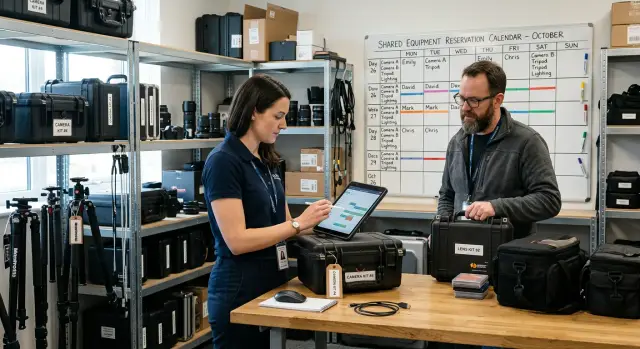
Plan an equipment reservation app that prevents double bookings, records returns and damage, and places faulty items on maintenance hold.

Design a unified audit timeline that shows who did what, when, and why across logins, data changes, and workflow steps with a practical schema and UI layout.

A unified audit timeline is a single, readable feed of events across your product, ordered by time. It lets you understand what happened without jumping between tools. Instead of separate login logs, database history tables, and workflow trackers, you get one place that tells the story.
Teams usually feel the pain when something goes wrong: a customer says they didn’t approve a change, a record “mysteriously” updates, or an account looks compromised. The data is often there, but it’s scattered, labeled differently, and missing the small details that turn raw logs into an explanation. Investigations slow down, and people start guessing.
A unified audit timeline should answer five questions:
Scope matters. For most products, you want events that cover logins and sessions, CRUD data changes, workflow steps (like approvals and status moves), and key system events (like permission changes or failed access attempts). If you can explain those well, you’ll resolve most day-to-day audit questions.
It also helps to be clear about what this isn’t. A unified audit timeline is not a full SIEM, and it’s not deep analytics. The goal is fast, trustworthy answers for support, security reviews, and internal accountability.
If you build apps in a no-code platform like AppMaster, a unified timeline becomes even more useful because backend logic, UI actions, and integrations can all emit the same event format. That makes the product’s “story” consistent for anyone who needs to read it.
A unified audit timeline only works if it pulls from the places where real actions happen. Most products have four main sources: authentication (logins and sessions), data changes (create, update, delete), workflow steps (approvals, assignments, status moves), and integrations (webhooks, imports, bots).
Start by defining a small set of event categories and stick to them. Categories should describe intent, not implementation. For example, a password reset and an API key rotation are both access events, even if they come from different systems. Use consistent naming like access.login.succeeded or data.customer.updated so people can scan the timeline quickly.
Not everything needs to be auditable. A practical rule: log actions that change state, change access, or trigger business outcomes. Skip noise like page views, autosaves, and repeated background retries unless they’re needed to explain an incident.
Make actor types explicit so “who” is never guessed. A timeline item should clearly say whether the action was done by a user, an admin, a service account, or an automation.
A simple set of event groups to start with:
If your app is multi-tenant, include the tenant identifier on every event. Also record the environment (prod, staging, dev) so you never mix timelines during investigations.
A timeline only feels unified when every line answers the same basic questions. If each system logs differently, you end up with a scroll of cryptic records instead of a clear story.
Standardize every event into one simple shape. You can store extra details later, but the timeline should always have a consistent headline.
These are the minimum fields that make a single row understandable without opening a details panel:
That alone makes the timeline readable. But investigations usually involve chains of events, not single lines.
Add a few identifiers that let you follow activity across screens, APIs, and background work:
Time is the last gotcha. Store timestamps in UTC, and keep a timezone field (or the actor’s locale) so the UI can show local time while still sorting correctly.
Example: a user clicks “Approve refund.” The timeline can show one visible action, while correlation_id groups the approval, the status change, the email to the customer, and any automated payout step into a single, coherent thread.
A unified audit timeline works best when you store one event per moment in time, then hang details off it. Keep the core row small and consistent, and let change details vary.
Four tables cover most products:
id, tenant_id, occurred_at, event_type (login, data_change, workflow), actor_id, target_type, target_id, summary, ip, user_agent, request_id, correlation_id, why_id (nullable)id, tenant_id, actor_type (user, api_key, system), user_id (nullable), display_name, role_snapshot (optional JSON)event_id, target_type, target_id, label (for example, “Invoice INV-1042”)event_id, field_path (for example, billing.address.city), old_value_json, new_value_json, value_type, redacted (bool)For targets, the simplest model is target_type + target_id on audit_event. If one event touches multiple records, add audit_target, and keep the primary target on audit_event for fast filtering.
For values, storing per-field rows in audit_change keeps the UI readable and searchable. If you also need full snapshots, you can add old_record_json and new_record_json to audit_event, but keep them optional to control storage.
For workflow steps, add columns on audit_event (only filled for event_type='workflow'): workflow_id, step_key, transition_key, from_status, to_status, result (success, blocked).
Most screens query “recent activity for a tenant,” “everything about a record,” or “everything by a person.” Index for those paths:
(tenant_id, occurred_at desc)(tenant_id, target_type, target_id, occurred_at desc)(tenant_id, actor_id, occurred_at desc)audit_change: (event_id), and (field_path) if you filter by fieldA timeline that only shows “who did what, when” still leaves the hardest question unanswered: why did they do it? Without a clear why, investigations turn into guesswork and people end up chasing chat threads and old tickets.
Free text helps, but it’s messy. People write different phrases for the same thing, or forget to write anything at all. A short, consistent reason_code gives you clean filtering, while optional reason_text adds human detail when it matters.
Put both on the event (or on the workflow transition) so every entry can carry context:
reason_code (required when the action changes data or status)reason_text (optional, short, and reviewed)A practical approach is to define 10 to 30 reason codes per domain area (billing, access, orders, support). Keep them stable, and add new ones slowly.
“Why” often means “because a policy said so” or “because someone approved it.” Capture approval context as structured fields so you can answer questions quickly without opening another system.
For any event that was approved, automated, or executed on behalf of someone else, store these fields when relevant:
approved_by_actor_id and approved_atapproval_rule_id (or policy_name) and decision (approved/denied)reference_id (ticket, case, or change request number)automation_rule_name and rule_versionautomation_inputs (safe, minimal parameters like threshold=5000)One caution: “why” fields are a common place where secrets leak. Don’t store passwords, API keys, full session tokens, or raw customer payment details in reason_text or automation_inputs. If a value is sensitive, store a redacted version (last 4 digits) or a pointer like token_present=true.
Example: a refund limit is raised. The timeline reads “Limit changed from 500 to 5000,” with reason_code=RISK_REVIEW, approved_by=Maria, policy=RefundLimitPolicy v3, reference_id=CASE-18422, and automation_rule_name blank (manual). That single entry explains the decision without extra detective work.
A good unified audit timeline feels like a search results page, a story, and a receipt in one. The goal is speed: you should be able to spot what happened in 10 seconds, then open one row and get enough context to act.
Put everything on one screen with three areas: a filter panel on the left, the timeline list in the center, and a details drawer on the right (or a slide-over panel). The list stays visible while you inspect details, so you never lose your place.
Keep filters few, but useful. Start with the ones people reach for during an incident or a support call:
In the center list, each row should answer “who did what, when, and why” without opening anything. Include timestamp (with timezone), actor name (and role if relevant), action verb, target label, and a short reason snippet when present. If there is no reason, show a clear placeholder like “No reason provided” instead of leaving it blank.
The details view is where you earn trust. Show full context: the actor’s IP and device for logins, the exact fields changed with before/after values for data edits, and the workflow step, assignee, and decision for approvals.
Add a compact “Related events” strip above the payload so you can jump to nearby steps like “Request created” -> “Manager approved” -> “Payment failed”. Include a raw payload toggle for auditors and engineers, but keep it hidden by default.
Make failure states obvious. Use clear styling for denied or failed outcomes, and show a message like “Permission denied” or “Validation failed” so users don’t have to guess.
Treat your audit timeline like a product feature, not a pile of logs. If support and compliance can’t answer “who did what, when, and why” in under a minute, it needs another pass.
A build order that works for most apps:
If you’re building this in AppMaster, you can model the audit tables in the Data Designer, emit events from the Business Process Editor at the points where decisions happen, and render the timeline and details side by side in the UI builders.
Before you call it done, run a real scenario: a manager reports an order total changed. Support should be able to see the exact field change, the user and IP, the workflow step that triggered it, and the stated reason (or “none provided”) without jumping across multiple screens.
A unified audit timeline only works if people can trust it and read it fast. Most timelines fail for predictable reasons.
Over-logging is the first. If every page view, hover, and autosave shows up as an event, the important moments disappear. Keep the timeline focused on actions that change access, data, or outcomes. If you need high-volume technical logs, keep them elsewhere and connect them internally with an event ID.
Under-logging is just as bad. An entry that says “Record updated” without the actor, the target, or a clear result doesn’t help anyone. Every event should include who did it, what they acted on, when it happened, and what changed. If your product asks for a reason (or requires approval), store that context on the event, not in a separate system people can’t see during an investigation.
Mutable logs destroy trust. If admins can edit or delete audit events, you no longer have an audit trail, you have notes. Treat audit events as append-only. If something was recorded incorrectly, write a correcting event that explains the fix.
Inconsistent verbs make filtering and scanning painful. “Updated”, “changed”, and “edited” shouldn’t be three different event types for the same action. Pick a small verb set and stick to it, for example: created, updated, deleted, approved, rejected, logged_in, permission_changed.
Finally, don’t leak sensitive data. Raw diffs often include passwords, tokens, personal data, or payment details. Store only what you need, mask sensitive fields, and restrict who can view certain event details. For example, show “Phone number changed” but hide the old and new values unless the viewer has a specific permission.
Test the timeline like a support person and a security reviewer would. Pick one sensitive record (like a customer payout setting) and try to explain what happened using only the timeline screen.
Questions to verify:
correlation_id ties the login, UI action, workflow steps, and database writes into one thread.A simple final test: hand the timeline to someone who didn’t build it and ask, “Why did this record change at 3:12 PM?” If they can’t answer in 60 seconds, you probably need more context fields (reason, request ID, approval, or error details).
A support manager pings you: “The customer record for Acme Corp looks wrong. Their billing email changed, and the customer says nobody on their team did it.” You open your unified audit timeline and search for the customer ID.
The timeline shows a clear chain because every related event shares the same correlation_id.
First, you see a login: Sam (sales rep) signed in at 09:12 from a new device and an unusual location. The session block includes the IP, user agent, and MFA status. Two minutes later, you see “View customer record,” followed by “Edit customer record.”
The record update event is easy to read. It lists the exact field changes (billing email from old to new) and the source (web app). Right under it, the “why” appears as a reason code: Customer requested update, but the note is blank.
Next, the workflow entries explain what happened after the edit. An automation rule ran: “If billing email changes, notify finance and require approval.” The timeline then shows a pending approval step, and finally an approval by Dana (team lead) at 09:18 with a short note: “Approved per ticket #4812.”
Support can resolve the case without guesswork:
correlation_id so future reviewers see the full story.A unified audit timeline is only useful if people trust it. Treat the first release as a safety system, not a nice-to-have screen.
Set clear targets for retention, search speed, and cost. Many teams use a simple approach like 90 days “hot” (fast), 1-2 years “warm” (slower), and longer-term archives.
Define what “fast” means before you ship. If the timeline should open in under 2 seconds for a typical record, plan for it: index by (target_type, target_id, occurred_at), keep payloads small, and archive old rows instead of letting one table grow forever.
Roll out in small steps so the view stays clean and the data stays consistent:
Export and reporting are tempting, but they amplify mistakes. Wait until the on-screen timeline is reliable and your event names and context are stable. Then add exports that match your access rules and include a clear timezone, the filters used, and a tamper-evident identifier (like an export ID).
Plan roles early, because audit data often contains sensitive details:
If you build this in AppMaster, a clean approach is to map the schema in the Data Designer, then emit timeline events from Business Processes at the same points where you already enforce rules (approvals, status changes, edits). That helps keep “who did what, when, and why” consistent across web and mobile, and it’s easier to maintain as workflows evolve.
 What exactly is a unified audit timeline?
A unified audit timeline is one chronological feed of important events across your product. It makes investigations faster because you can see who did what, when, where, and why without jumping between auth logs, database history, and workflow tools.
Which events should I include first to get value quickly?Default to logging actions that change state, change access, or trigger a business outcome. That usually means logins/sessions, create-update-delete changes, workflow transitions (approvals and status moves), and admin/security changes like roles and API keys.
What’s the minimum data model that makes the timeline readable?Keep one consistent event shape: event_id, timestamp, actor, action + target, and outcome. Then add identifiers like correlation_id, session_id, and request_id so you can follow one action end-to-end across UI, API, and background jobs.
How should I name and group event types so they’re easy to scan?Use stable, consistent names that describe intent, not implementation. A small taxonomy like access.login.succeeded or data.customer.updated helps people scan quickly and filter reliably without learning every subsystem’s quirks.
Should audit timestamps be stored in UTC or local time?Store timestamps in UTC for correct sorting and consistency, and convert to local time in the UI. Also keep a timezone field (or the actor’s locale) so readers understand the displayed time without breaking ordering.
How do I capture the “why” without messy free-text notes?Capture “why” as structured data: a required reason_code for meaningful changes, plus an optional short reason_text when needed. If approvals or policies are involved, store approver, decision time, and a reference ID so the timeline entry stands on its own.
Should audit logs be editable if someone makes a mistake?Default to append-only: never edit or delete audit events. If something needs correction, write a new correcting event that references the original event ID, so readers can see what changed and why the correction happened.
What UI layout works best for a unified audit timeline screen?Start with a simple three-part layout: filters on the left, the timeline list in the middle, and a details drawer on the right. The list should answer “who/what/when/why” at a glance, and the details view should show proof like IP, device, and before/after field values.
What are the most common mistakes that make audit timelines useless?Over-logging hides real actions in noise, while under-logging creates vague entries like “Record updated” with no actor or field changes. Other common failures are inconsistent verbs, missing correlation IDs, and leaking secrets in diffs or reason fields.
How would I build this in AppMaster without writing a lot of code?In AppMaster, model audit tables in the Data Designer, emit events from the Business Process Editor at key decision points, and build the timeline UI with the web/mobile builders. A unified event format is especially helpful when UI actions, backend logic, and integrations can all write the same event schema.
Experiment with AppMaster with free plan.
When you will be ready you can choose the proper subscription.
 Jul 14, 20268 min
 Jul 13, 20268 min
 Jul 08, 20268 min