


 Jul 14, 2026
 8 min
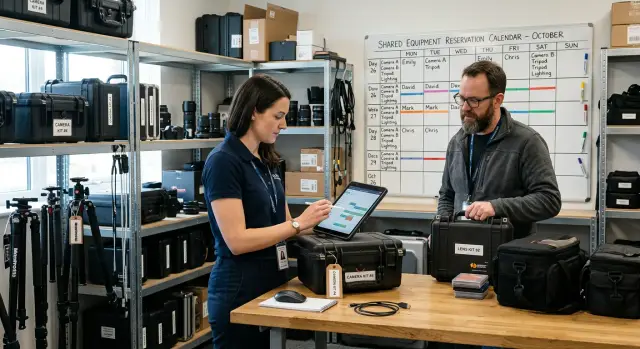
8 minEquipment reservation app: prevent conflicts and track returns
Plan an equipment reservation app that prevents double bookings, records returns and damage, and places faulty items on maintenance hold.

A shift swap and coverage requests app replaces messy group chats with clear requests, manager approval, and notifications that confirm who is on shift.

Group chats feel quick because everyone is already there. But when you use them as your shift swap system, small gaps turn into real problems: confusion, last-minute surprises, and managers spending their day asking, “So who’s actually working?”
Here’s what usually goes wrong in a chat thread:
The core problem is simple: there’s no single source of truth. In a chat, the “truth” is scattered across replies, screenshots, and people’s memory. If someone joins late or misses a message, the team can end up with two different versions of what was agreed.
A shift swap and coverage requests app fixes this by turning talk into a record. One request leads to one clear outcome. It shows who asked, who accepted, whether a manager approved it, and what the final schedule is.
Picture a small team where Jordan posts, “Can anyone cover my Saturday open?” Priya replies, “I can.” A few hours later, Priya realizes it clashes with an appointment and deletes her message. Jordan never sees the deletion. The manager shows up Saturday expecting Priya. Priya assumes Jordan found someone else.
The goal is straightforward: faster swaps, fewer no-shows, and less manager time spent chasing answers.
A good shift swap and coverage requests app replaces “Did you see my message?” with a clear yes or no that everyone can trust.
It also makes the request type obvious. A shift swap is when two people trade shifts. Example: Maya works Tuesday morning, Jonah works Tuesday evening, and they switch. A coverage request is when someone can’t work a shift and asks a coworker to take it. Example: Maya can’t work Tuesday morning and asks Jonah to cover it, but Jonah keeps his original evening shift too.
The roles are plain, but they must be explicit: the person asking (requester), the person taking the shift (coworker), and the person who makes it official (manager or scheduler). If those roles aren’t clear, teams fall back to “someone said it was fine,” and the schedule becomes guesswork.
Confirmation should mean one thing: the change is approved and visible to everyone who needs it. “Seen” is not approval. A thumbs up in chat is not approval. If a manager must approve shift changes, the app should show a clear status like Pending, Approved, or Declined, and it should update the schedule when approved.
To prevent confusion later, every request should capture the basics in one place: the exact date and start/end time, the location (if you have more than one), who is giving up the shift and who is taking it, any notes for handoff, and the approval status with a timestamp.
Notifications matter too. The coworker needs to confirm they accept, the manager needs to approve (if required), and the final result should reach anyone affected, like the team lead on duty.
A safe process doesn’t need dozens of screens. It needs one clear path that removes guessing and makes responsibility visible at every step.
Start with a request that already knows the shift. The employee should select the shift from the schedule so key details are prefilled: start and end time, location, role, and any requirements (like cashier-trained or forklift-certified). When people type these details into a chat, small errors turn into big problems.
Next, decide how the request is offered. Sometimes it’s direct (“Can you cover me?”). Other times it’s open, where only eligible staff can see and accept. Eligibility can be simple: same role, not already scheduled, and optional rules like minimum rest time.
Then comes the single safety gate: manager review. Even in trusted teams, a quick approve or deny prevents conflicts with labor rules, overtime, or missing skills. If you want flexibility, allow “ask for changes” so a manager can respond with something like, “Yes, but switch with Tuesday instead,” without restarting the whole thread.
A basic workflow that stays simple:
Finally, keep an audit trail. It should be effortless but complete: who requested, who accepted, who approved, and the timestamps. If there’s ever a dispute, you don’t want screenshots, you want a record.
A good shift swap and coverage requests app should make one thing unmistakable: who is responsible for the shift after the change.
An employee selects the exact shift from the schedule. They choose whether it’s a swap (trade) or coverage (someone takes it). If your workplace needs context, add an optional reason like “doctor appointment” so managers aren’t guessing.
Before anyone else is bothered, the system should block obvious problems: overlaps with another assigned shift, conflicts with approved time off, and role rules (for example, only trained closers can take a closing shift). This prevents “sure, I’ll take it” responses that fall apart later.
If it’s a swap, the chosen coworker accepts or declines. If it’s coverage, you can allow multiple people to offer, then select one. This is where the app replaces noisy back-and-forth with a clear decision.
Once someone accepts or offers to take the shift, the manager gets a single approval screen. Approval should update the schedule right away so there’s only one source of truth.
The final message matters most. It should state the shift, the date and time, and the person now responsible. Send it to the original employee, the new assignee, and the manager so nobody is relying on memory.
A shift swap and coverage requests app only works if everyone agrees on the rules before the first request. Otherwise people drift back to chat, managers guess, and nobody is sure who’s responsible.
Start by making the request “complete by default.” Don’t let it submit unless it includes what someone needs to confidently approve it.
Required fields usually include shift date, start/end time, location (store/site/department), role, and an optional notes box for context. It’s also smart to define a contact fallback (who to call if the app is down), so emergencies don’t turn into silence.
Next, decide who is allowed to accept coverage. “Anyone” sounds flexible, but it’s where compliance and safety issues start. Set eligibility rules like trained roles, weekly hour limits, and any restrictions for minors (for example, no late shifts). If someone isn’t eligible, they shouldn’t even see an “Accept” option.
Deadlines matter too. Many teams use a rule like “no swaps within X hours of start time” unless a manager overrides it. That gives managers time to react and avoids last-minute gaps.
Keep approval rules predictable. Some teams require manager approval for every change. Others auto-approve only when nothing risky changes, like same role, same location, and an eligible replacement.
Finally, define notifications so the right people get pinged at the right time: requester, accepter, manager, and any on-call lead. Confirm when approval is final, and send a reminder before the shift so it’s clear who is showing up.
A shift swap and coverage requests app only works if people understand it in seconds. The goal is fewer messages, fewer assumptions, and a clear answer to one question: who is responsible for this shift right now?
Staff should land on a simple “My shifts” view showing upcoming shifts with dates, times, and location. Next to each shift, include obvious actions like “Request swap” or “Request coverage” so the process starts from the schedule, not a chat thread.
A separate “My requests” area removes uncertainty. It should show the request type, shift details, and a plain status like Pending, Approved, Denied, or Cancelled. If someone else offered to take it, show that person’s name and when they accepted.
Managers need a “Pending approvals” queue that flags issues before they tap anything. Useful flags are specific: double-booked employee, overtime risk, missing role certification, or staffing below minimum.
The approval screen should show the original assignee and the proposed replacement side by side, with approve/deny actions. Make a note required only when denying.
The schedule view must make changes obvious. Show the current assigned person clearly, and optionally mark that the shift was changed so managers aren’t relying on memory.
Notifications should use plain language and always include a name. For example:
Most shift problems don’t come from bad intentions. They come from small gaps in how swaps and coverage are requested, approved, and recorded.
One common failure is treating “sure, I can do it” as approval. A chat yes isn’t the same as an updated schedule. If the schedule stays unchanged, people show up based on what they last saw, and managers can’t confidently answer, “Who is responsible?”
Another predictable issue is last-minute chaos. Without a clear cutoff time, requests appear right before the shift, when managers are busy and staff are already on their way. Even if a manager approves, there may not be enough time to notify the right people, confirm access, or adjust handover notes.
Approvals also fail when they ignore fit. A replacement may not be trained for that station, may be assigned to a different location, or may not have the role permission needed. The shift looks “covered,” but it still fails in practice.
Confusion multiplies when more than one person believes they took the same shift. In chat, multiple volunteers reply and nobody closes the loop. An app should prevent this by locking the assignment to one person and showing that status clearly.
Five problems to watch for:
Before you treat a shift as “covered,” take 30 seconds to confirm it’s real, not just agreed to in chat. Most no-shows happen when people assume “someone said yes” is the same as “someone is accountable.”
A good shift swap and coverage requests app should make these checks obvious, but it still helps to know what to look for.
If any of those items are missing, treat the shift as not covered yet. That matters most for early openings, single-person roles, or shifts that require a certification.
A small retail team has six staff members and one manager. Maya is scheduled for the Saturday closing shift (2 pm to 10 pm). On Friday afternoon, she learns she needs to handle a sudden family issue and can’t work.
Instead of posting in a group chat and hoping someone sees it, Maya opens the shift swap and coverage requests app and taps her Saturday shift. She chooses “Request coverage,” adds a short note (“Family emergency, need coverage”), and sets a response deadline for Saturday at 9 am. The app notifies only people who can realistically take the shift, like staff who aren’t already scheduled and who are trained on closing.
Within an hour, two coworkers respond. Jordan offers to cover but hits a rule conflict (new hire, not approved to close solo yet). Lina offers to cover and meets the requirements (closing trained, not over weekly hours).
The manager, Sam, gets one alert showing the request, the responders, and any conflicts. Sam selects Lina and taps Approve. Approval is a clear decision, not a “sounds good” message buried in chat.
After approval, everyone sees an unambiguous result:
If no one accepts by the deadline, the app escalates. Maya and Sam both get a “No coverage found” notification, and Sam can take the next step.
Rolling out a shift swap process should feel boring. If it forces everyone to change how they work overnight, people will fall back to group chats.
Start by writing down what happens today, in plain steps. Note where it breaks: missing details (date, role, location), unclear approval, and the moment when nobody is sure who is actually responsible.
Keep the first version small. Replace the messy parts, not your entire scheduling system on day one. Define the minimum info a request must include so a manager can approve or decline without follow-up.
A practical launch set usually includes: shift details (date, start/end time, location, role), request type (swap vs coverage), who’s offering and who’s taking (or “open request”), whether manager approval is required with a timestamp, and notifications when status changes.
Choose one location or one team that has regular swaps. Set a clear expectation: for two weeks, all swaps go through the new process, and group chat is only for emergencies.
Measure simple outcomes so it doesn’t turn into a “vibes” debate: fewer missed shifts, faster approvals (time from request to decision), fewer manager messages like “who’s on this now?”, and fewer back-and-forth questions per request.
If your rules are unique (multiple roles, unions, certifications, different approval levels), building your own shift swap and coverage requests app can be a good fit. AppMaster (appmaster.io) is a no-code platform you can use to build an internal request and approval flow with clear statuses and notifications, then adjust the rules as you learn what your team actually needs.
End the rollout with one rule everyone can repeat: “If it’s not approved in the app, it’s not a swap.” That single sentence prevents most no-shows.
 Why do shift swaps go wrong when we handle them in a group chat?
Group chats don’t provide a single, stable record. Messages get buried, people edit or delete replies, and “sure” can be mistaken for a final commitment even when the schedule never changes.
What’s the difference between a shift swap and a coverage request?A swap is a trade where two people exchange shifts, so both schedules change. Coverage is when someone else takes your shift, but they keep any other shifts they already had.
Who needs to be involved for a swap or coverage request to be reliable?A clear process has three roles: the requester, the coworker who accepts, and the manager or scheduler who makes it official. If any of those roles aren’t explicit, people assume and the schedule becomes unreliable.
What does “accepted” vs “approved” actually mean in a shift coverage app?“Accepted” means a coworker agreed to take it, but it can still fail if approval is required. “Approved” should mean the schedule is updated and the new owner of the shift is clearly named.
What’s the simplest workflow that still prevents no-shows?Start from the schedule so the request is tied to the exact shift and the key details are prefilled. The simplest safe flow is request, coworker acceptance, manager approval, and an automatic schedule update with a clear confirmation.
What information should every request include?At minimum, capture the date, start and end time, location, role, who is giving up the shift, and who is taking it. Add approval status and timestamps so there’s no debate later about what happened and when.
What automatic checks should the system run before a manager approves?Basic checks should catch overlaps with other shifts, approved time off, and role or training requirements. It’s also helpful to flag overtime risk or minimum rest-time rules before a manager approves.
How do we stop two people from thinking they both got the same shift?Set eligibility rules so only qualified people can accept, and require the system to assign the shift to exactly one person once approved. Avoid leaving multiple volunteers in limbo by forcing a clear selection and final confirmation.
Should we allow last-minute swaps and coverage requests?Use a clear cutoff window, like no requests within a set number of hours before the shift unless a manager overrides it. This reduces last-minute chaos and gives enough time to notify everyone affected.
How can we roll this out without disrupting daily work?Start with one team for a short trial and keep the rules simple: all requests must go through the app, and chat is only for true emergencies. If you need a custom approval flow, AppMaster can help you build a no-code request and approval system with clear statuses and notifications, then refine it as you learn.
Experiment with AppMaster with free plan.
When you will be ready you can choose the proper subscription.
 Jul 14, 20268 min
 Jul 13, 20268 min
 Jul 08, 20268 min