


 Jul 14, 2026
 8 min
8 minEquipment reservation app: prevent conflicts and track returns
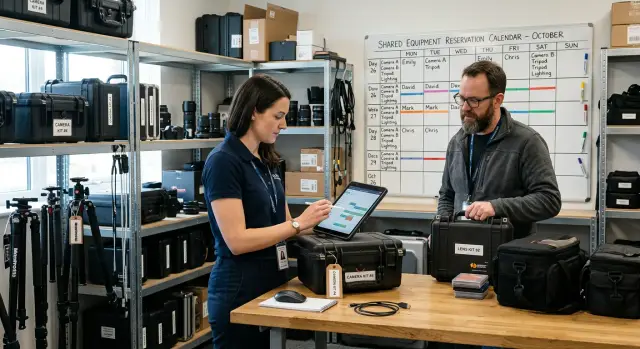
Plan an equipment reservation app that prevents double bookings, records returns and damage, and places faulty items on maintenance hold.

Build a one-on-one notes app with private coaching notes for managers and shared action items employees can see, plus simple workflows and permissions.

Most one-on-ones leave notes scattered. A manager has a doc, the employee has their own doc, action items end up in chat, and follow-ups live in email. A week later, it’s unclear what was agreed, what was just brainstorming, and what was meant to stay private.
What people actually need is simple: a safe place for private coaching notes, plus a shared plan you can both rely on. Private notes help a manager track patterns, prepare for tough conversations, and remember context. Shared action items help both people leave the meeting with the same understanding of what happens next.
When everything is shared, people stop writing the honest parts. Feedback turns vague and important context disappears. When everything is private, trust erodes. Employees feel like decisions are happening off-record, and action items can land like surprises.
This setup fits teams that want clarity without turning one-on-ones into paperwork: people managers running weekly or biweekly 1:1s, startup team leads who need lightweight structure, HR ops who want consistent records without reading private coaching, and anyone building a one-on-one notes app with clear permissions from day one.
A quick example: during a 1:1, a manager writes a private note like “coach on meeting prep and confidence.” In the shared section, both agree on “send agenda 24 hours before stakeholder review” and “practice a 2-minute update on Fridays.” Same meeting, two different purposes, and no awkward guessing later.
A one-on-one notes app only works if both people understand what’s private and what’s shared. Without clear lines, employees worry they’re being “graded,” and managers hold back on honest coaching.
Keep it to two sections for every meeting:
Set expectations for what belongs where. Private notes can include your observations (“seems overloaded”), questions to revisit (“ask about workload next week”), and drafts you’re not ready to commit to. Shared notes should stick to facts both sides recognize.
Ownership matters, too. The manager writes private notes. Shared action items should be agreed during the meeting and editable by either person, or at least confirmable by the employee. If something isn’t agreed, it stays private or doesn’t get written down.
Keep the structure consistent so nobody has to guess where to look. A simple pattern is: agenda, highlights, blockers, shared action items, then private coaching notes.
Example: you privately note “needs confidence presenting” and “pair with Alex next sprint.” What you share is “present project update on Friday; schedule one practice run by Wednesday.” Coaching stays safe, and commitments stay clear.
People write honestly only when they believe the boundaries are real. That means roles that match how one-on-ones work in real life, and permissions you can explain in a single sentence.
Start with three roles. Managers and employees are required. Admin (or HR) is optional, but useful for account recovery, audits, and policy needs. Keep “Admin/HR” separate from “Manager” so nobody gets extra access by accident.
A practical permission setup:
Exports are where trust breaks quickly, so make them explicit. Managers can export their own private notes. Employees can export only shared items. HR exports should require a logged reason and be limited to shared items unless a policy exception is approved.
Decide manager-change rules before launch. One simple approach: private coaching notes stay with the original manager (they reflect that manager’s observations), while shared action items follow the employee to the new manager. If you want continuity, carry forward only agreed actions, not private text.
HR visibility should be “break glass,” not everyday reading. If HR ever needs access to private notes, use two safeguards: a time-limited permission grant and a visible audit trail (who accessed what, and why).
A one-on-one notes app works best when the data model matches how people think: “this is my recurring 1:1 with this person,” “here’s what we discussed today,” and “these are the commitments we made.” Keep it small and clear and permissions get easier.
Start with a OneOnOnePair record that represents the relationship between two people. It only needs managerId, employeeId, and a status flag like active/inactive. That record anchors all meetings so you don’t lose history when someone changes teams or pauses 1:1s.
For each meeting, store a Meeting record tied to the pair. Typical fields: meeting date, a short agenda, a couple of tags (themes like performance, wellbeing, career), and an optional “next meeting date” to keep the cadence visible.
The key design choice is how you represent private vs shared notes. The simplest approach is two fields on the meeting: privateNotes and sharedNotes. If you expect richer features later (separate edit history or different owners), use two related tables instead.
Action items should be their own records, not buried in note text. A good ActionItem includes the meeting reference (so you know where it came from), an owner (manager, employee, or both), a due date and status (open, done, blocked), plus a short description and optional context.
Example: Maria (manager) and Dev (employee) have an active pair. Their meeting on Jan 12 has private notes about coaching on prioritization, and shared notes listing three agreed changes. From that meeting, two action items are created: “Dev: draft weekly priorities by Friday” and “Maria: introduce Dev to the analytics lead by Tuesday.”
If you want extras, add them as optional tables: attachments (file metadata), reminders (who and when), and a lightweight comment thread on shared action items.
If the tool gets big and complex, people avoid it. Start with a handful of screens that support the weekly habits: preparing for the 1:1, capturing what mattered, and following up.
This is the home base for managers. It should answer, in one glance, “What’s coming up and what’s slipping?” Keep it practical: upcoming 1:1s, overdue action items (owner and due date), and a small “recent notes” feed so it’s easy to pick up where you left off.
A good rule: anything you need during a busy day should be reachable in one click.
Employees shouldn’t have to hunt for what was agreed. Give them a simple view focused on shared action items, shared notes/decisions history, and a place to jot down topics for the next meeting.
Example: an employee opens the app Monday morning, sees two actions due this week, and adds “request training budget” as a topic for the next 1:1.
Use one meeting page that both sides recognize, but with clearly separated sections: agenda/topics, private coaching notes (manager-only, clearly labeled), and shared decisions and shared action items.
Make private and shared visually distinct so there’s no accidental “oops” moment. Even a small label like “Private: only you can see this” helps build trust.
Add a few fast actions where people naturally need them: create an action item from a note, mark done, and schedule the next meeting.
Don’t overbuild search, but make it useful. Filter by employee, date range, tag, and action item status (open/done/overdue). For managers, this is how you answer “What commitments are still open from the last month?” without digging through old meeting pages.
Build this in small, safe chunks. Week one isn’t about perfection. It’s about a working loop: create a meeting, write notes, publish shared actions, and prove privacy rules hold every time.
Start by writing the rules in plain language. One page is enough. Define what counts as private coaching notes (only the manager can read) and what counts as shared action items (manager and employee can read). Add one line about edits, for example: “Shared actions are visible only after the manager marks them as shared.”
Do permissions before screens. People will trust this app only if access rules are boring and predictable. Make permission checks part of every query: who is requesting, and which meeting it belongs to.
A simple week plan that keeps momentum:
Add notifications and reminders only after the basics work. Start with one trigger: when an action item is shared or its due date changes, notify the owner.
Finish the week with a tiny test group: 2 managers and 2 employees. Give them one scenario (like a missed deadline discussion) and watch for friction: confusion about visibility, accidental oversharing, or unclear editing rights. Fix those first.
The biggest risk in a one-on-one notes app isn’t the tech. It’s the moment someone says, “I didn’t know you wrote that,” or “I never agreed to that.” A few simple workflows make intent obvious.
Treat shared notes and shared action items like a small agreement, not a default. Draft privately during the meeting, then convert to shared only when you both say it’s accurate.
A flow that works well:
If you want extra clarity, add an optional “employee acknowledged” checkbox on each shared item. It’s not legal language. It’s a quick way to show, “Yes, I saw this and we aligned.”
Shared items shouldn’t silently change. Track edits on shared content: who edited, what changed, and when. Most teams don’t need a complex audit log. Even “last edited by” plus a short change note prevents misunderstandings.
Templates help more than people expect. Using the same headings each week (wins, blockers, feedback, growth, actions) reduces accidental omissions and keeps the meeting focused.
Also decide the rule for proposing action items. Either approach is fine, but make it explicit:
The biggest failure mode is trust breaking once. If an employee ever sees something meant to stay private, people stop writing honest notes and the system becomes pointless.
This usually happens when the UI uses one “meeting notes” screen and relies on a filter to hide private text. Filters get missed.
Avoid it by separating private and shared content at the data level and the UI level. Use different tables (or clearly different fields) and render them in separate sections. Add a simple test: log in as an employee and confirm private coaching notes never appear anywhere, including exports.
Many teams add an Admin role for support, then accidentally grant access to all private notes “just in case.” That becomes a silent surveillance tool.
Set a policy before you build: who can access private notes, under what conditions, and how it’s approved. Make that policy real by defaulting Admins to “manage users and settings,” not “read all content.” If you need a break-glass option, make it explicit and auditable.
If every meeting note can later be used in a review, the tone changes fast. Managers write less. Employees share less.
Keep performance review documentation separate. For example, use a “formal review” record type with stricter visibility and clearer language, and keep weekly notes focused on coaching, blockers, and growth.
Shared action items without an owner and due date turn into a graveyard. Close the loop by requiring the basics: a clear owner, a due date (even if it’s “next 1:1”), a simple status (Open/Done), and a short, testable description.
Complexity feels “powerful” until people stop using it. Start small and add only what you miss after two weeks.
One simple separation prevents a lot of problems: a manager’s private note might be “Coach on meeting prep.” The shared action is “Send agenda 24 hours before next 1:1 (Owner: Alex, Due: Friday).”
If people feel unsure about what’s visible to whom, they’ll stop writing useful notes. Do a fast trust check before you invite the first team.
Start with the screen itself. When a manager is typing, it should be obvious what’s private and what’s shared. Clear labels (Private, Shared with employee), a different background color, and a short helper line like “Only you can see this” prevent mistakes.
Permissions usually fail during org changes, not during normal weeks. Test these before rollout:
Maya (manager) meets Alex (employee) for a 30-minute 1:1. Alex wants to grow into a lead role, and Maya wants to coach on communication in team meetings. They agree: coaching observations stay private, while concrete commitments they both accept go into shared notes.
These notes are for Maya only. They’re specific, kind, and focused on patterns and experiments, not labels:
Maya avoids writing anything she wouldn’t want to explain later. Private doesn’t mean careless.
The shared section reads like a simple agreement:
Between meetings, Alex tracks progress by marking each action as Not started, In progress, or Done, and adding a short note like "Paused twice, got more input from Sam." If a due date slips, Alex edits it openly instead of letting it go stale.
Next week, the 1:1 starts with the shared items from last time: what got done, what didn’t, and what to change. Only then does Maya add new private coaching observations for her own follow-up.
Start with a pilot, not a company-wide launch. Pick one team, one meeting template, and a simple weekly cadence for 4 to 6 weeks. You’re trying to prove the boundaries work and the habit sticks.
Decide where the app will live before you build too much. If managers type during meetings, a web app is often enough. If people check actions right before the next 1:1, mobile access matters. Whatever you choose, make sign-in easy and consistent so people don’t fall back to scattered docs.
Write down a short policy that sets expectations. Keep it plain and specific:
If you’re building this as an internal tool, a no-code platform can help you move quickly without turning privacy rules into a pile of manual checks. For example, AppMaster (appmaster.io) lets you model a PostgreSQL database, enforce role-based access in backend logic, and generate real source code you can deploy to the cloud or export for self-hosting.
A good pilot test: after each meeting, the manager publishes 2 to 5 shared actions within 24 hours, and the employee confirms they look right. If that feels easy and predictable, you’re ready to expand.
 What should stay private in a one-on-one notes app?
Use private notes for a manager’s observations, sensitive context, and coaching ideas. Put only decisions, agreed action items, owners, and dates in the shared section.
What belongs in shared one-on-one notes?Keep shared items limited to things both people discussed and accepted. Read action items out loud before sharing them, then let the employee confirm the wording and owner.
Which roles does the app need?Give managers private-note access and shared-item editing rights. Give employees access to shared notes and their own action progress, while Admin or HR accounts manage users without reading private notes by default.
What is the simplest data model for this app?Store the relationship, meeting, notes, and action items separately. A small model with OneOnOnePair, Meeting, private notes, shared notes, and ActionItem records keeps permissions easier to enforce.
Which screens should I build first?Start with a manager dashboard, an employee shared-only view, and one meeting page. Add action creation, status updates, and next-meeting scheduling before building advanced features.
How do I prevent surprise action items?Treat sharing as a deliberate step. Draft during the meeting, then publish an item only after both people agree on its wording, owner, and due date.
How can I stop private notes from leaking?Keep private and shared content separate in both the database and the interface. Test every view and export while signed in as an employee to confirm private notes never appear.
How do I keep action items from being forgotten?Require an owner, a due date or an explicit no-date choice, and a simple status such as Open, Done, or Blocked. Review open items at the start of the next one-on-one.
What happens when an employee changes managers?Keep private coaching notes with the original manager because they reflect that person’s observations. Move agreed shared action items with the employee so the new manager can continue the work.
How should I roll out the app?Pilot the app with a small team for four to six weeks. Ask participants whether visibility feels clear, shared actions feel accurate, and the meeting flow stays lightweight, then fix those issues before a wider rollout.
Experiment with AppMaster with free plan.
When you will be ready you can choose the proper subscription.
 Jul 14, 20268 min
 Jul 13, 20268 min
 Jul 08, 20268 min