


 Jul 14, 2026
 8 min
8 minEquipment reservation app: prevent conflicts and track returns
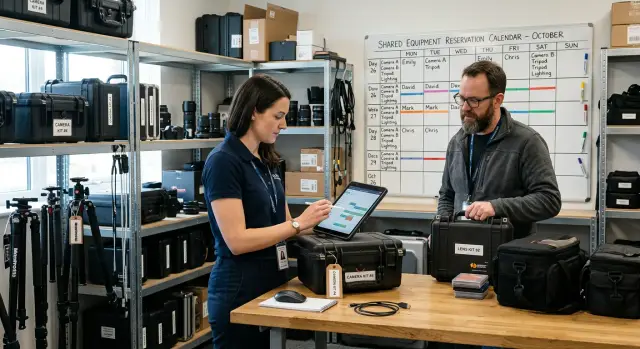
Plan an equipment reservation app that prevents double bookings, records returns and damage, and places faulty items on maintenance hold.

Use a pricing experiment log to capture hypotheses, variants, dates, and results so your team can repeat wins and stop rerunning failed tests.

Pricing tests fail more often because teams forget what they did than because the idea was bad. A team changes a plan, sees a bump (or a dip), and moves on. Six months later, someone asks the same question again. The test gets rerun because the details are scattered across slides, chat threads, analytics screenshots, and half-finished docs.
A pricing experiment log is a shared record of every plan and feature test you run. It captures the hypothesis, what you changed, when it ran, what you measured, and what happened. It’s a lab notebook for pricing, written in plain language so anyone on the team can understand it.
The payoff is simple: when new questions come up, you can quickly see what you already tried, under what conditions, and why it worked (or didn’t). That means faster decisions, fewer repeated mistakes, and less time arguing over what “really happened.”
It also helps you compare tests that look similar but aren’t. “Raised price by 10%” is a different experiment if it applies only to new users, only to one region, or during a seasonal spike.
This isn’t about writing a dissertation after every test. It’s about leaving a clear trail: what you believed, what you changed, what you saw, and what you’d do differently next time.
A pricing test is any controlled change that could alter what people pay, how they choose a plan, or when they upgrade. If it can move revenue, conversion, or retention, it belongs in your pricing experiment log.
That includes changes to the offer, not just the number on the price tag. A price change is obvious: $29 becomes $39. But value-perception changes matter too: you keep the same price, rename a plan, reframe benefits, change what’s included, or introduce a “most popular” option. Customers react to both.
Common pricing experiments worth logging include price points (monthly/annual rates, discounts, trials, setup fees), packaging (tiers and what features sit in each tier), limits (seats, usage caps, quotas, overages), add-ons (paid extras, bundles, premium support), and upgrade paths (when and how upgrade prompts appear).
What doesn’t count: fixing a checkout bug, correcting a typo on the plan page, or updating onboarding copy when it doesn’t change what’s included or paid. Those are product or marketing changes, not pricing experiments.
Most pricing experiments show up in a few places: the pricing page, checkout, and in-app upgrade screens. Before you run any test, ask one question: “Who could be surprised by this?” If customers might feel tricked, confused, or locked out, the test needs clearer messaging and careful rollout.
Plan tests change how you package and present your offer: tiers, bundles, plan names, and what each tier includes. You’re testing how people choose between options, not whether a single capability is worth paying for.
Feature tests change access to one capability. That might mean gating a feature behind a higher tier, adding a usage limit, offering a paid add-on, or showing a paywall when someone tries to use it. You’re testing willingness to pay (or upgrade) for a specific piece of value.
In your pricing experiment log, capture a few details in a way that makes the test easy to compare later:
Avoid mixing plan and feature changes in one test. If you rename tiers, move features between tiers, and add a new limit at the same time, results are hard to read. A lift in upgrades could be packaging, or it could be limit pressure.
A quick example: moving “Exports” from Basic to Pro is a feature test. Renaming “Basic” to “Starter” and adding a third tier is a plan test. Run them separately (or at least log them as separate variants) so you can reuse what worked without repeating confusion.
A pricing experiment log only becomes reusable when the hypothesis is clear and the metrics are consistent. If the entry reads like a vague hope, the next person can’t compare it to a new test.
Write hypotheses as cause and effect. Use one sentence that ties a change to a behavior change, then to a measurable outcome. Example: “If we move feature X from Pro to Business, more teams will choose Business because they need X at rollout, increasing Business upgrades without increasing refunds.”
Add the reason behind the change in plain words. “Because users hit the limit in week one” is more useful than “Improve monetization.” The reason helps you spot patterns across plan and feature experiments.
For metrics, pick one primary success metric that answers, “Did this work?” Then add 1 to 2 guardrails so you don’t win the metric while hurting the business.
A common setup that stays comparable across tests:
Decide the decision rule before you start. Write the exact thresholds for ship, rollback, or retest. Example: “Ship if upgrades increase by 8%+ and refunds don’t rise by more than 1 percentage point. Retest if results are mixed. Roll back if churn rises.”
If you build the log as a small internal tool, you can make these fields required so entries stay clean and comparable.
A pricing experiment log is only as useful as the details you can trust later. Someone new to the test should understand what happened in two minutes, without hunting through old chats.
Start with identity and timeline so multiple tests don’t get mixed up:
Then capture enough setup detail to compare results over time. Note who saw the test (new vs existing users), where they saw it (pricing page, checkout, in-app prompt), and how traffic was split. Include device and platform when it can affect behavior (mobile web vs desktop, iOS vs Android).
For variants, write the control and each variant in plain language. Be specific about what changed: plan names, included features, limits, price points, billing period, and any wording on the page. If visuals mattered, describe what the screenshot would show (for example: “Variant B moved the annual toggle above the plan cards and changed the button text to ‘Start free trial’”).
Results need more than a winner label. Store the numbers, the timeframe, and what you believe about them:
Finally, add context that explains surprises: nearby releases, seasonality (holidays, end-of-quarter), marketing campaigns, and support incidents. A checkout outage during week two can make a “bad” variant look worse than it was.
A pricing experiment log only saves time if people can find the right entry later. Nobody will remember “Test #12.” They’ll remember the screen, the change, and who it affected.
Use a naming pattern that stays the same across the team:
Example names:
Then add a few tags so filtering is fast. Keep tags small and predictable. A short controlled list beats creative wording.
A practical starter set:
Assign ownership for every entry. One “owner” (one name) should be responsible for keeping it updated and for answering questions later. The entry should also tell readers where the data lives and whether the test is safe to repeat.
Pick a single home for your pricing experiment log. A shared spreadsheet works for early teams. If you already have a database or internal admin, use that. The point is one source of truth everyone can find quickly.
Create a one-page template with only the fields you truly need to decide later whether to repeat the test. If the form feels like homework, people will skip it.
A setup that tends to stick:
Make the rules enforceable. For example: “No experiment gets a release ticket without a log entry ID.” That habit prevents missing start dates, unclear variants, and “we think we tested that” debates.
A pricing test is easiest to learn from when your notes match reality. The key is capturing small changes as they happen without turning the log into a second job.
Start with exact timestamps. Write the start and stop time (with timezone), not just the date. If you later compare results to ads spend, email sends, or a release, “Tuesday morning” isn’t precise enough.
Keep a short change diary for anything that could affect outcomes. Pricing tests rarely run in a perfectly still product. Track copy changes, bug fixes (especially checkout or trial flow), targeting updates (geo, segments, traffic mix), eligibility rules (who sees A vs B), and sales/support process changes (new pitch, discount rules).
Also capture anomalies that can distort the numbers. An outage, a payment provider hiccup, or a spike from an unusual traffic source can swing conversion and refunds. Note what happened, when, how long it lasted, and whether you excluded that period from analysis.
Customer feedback is part of the data. Add quick notes like “top 3 ticket themes” or “most common sales objection” so later readers understand why a variant worked (or failed) beyond the chart.
Decide who can stop a test early and how that decision is recorded. Put one name on the hook (usually the experiment owner), list allowed reasons (safety, legal, severe revenue drop, broken checkout), and record the stop decision with time, reason, and approval.
Many pricing tests don’t end with a clean win. Decide ahead of time what you’ll do if results are mixed so you can still make a call (ship, roll back, iterate) without rewriting the rules after you see the data.
Compare outcomes to the decision rule you set before launch, not a new rule you invent now. If your rule was “ship if trial-to-paid increases by 8% with no more than a 2% drop in activation,” write the actual numbers next to that rule and mark it pass or fail.
Segment results carefully, and record why you chose those cuts. A price change might help new customers but hurt renewals. It might work for small teams but fail for larger accounts. Common segments include new vs returning customers, small vs large customers, self-serve vs sales-assisted, and region or currency.
Close the entry with a short conclusion people can skim: what worked, what didn’t, and what you’d test next. Example: “Annual plan anchor improved upgrades for new customers, but increased refunds for returning customers. Next test: keep the anchor, add clearer cancellation messaging for renewals.”
Add one reusable takeaway sentence. Example: “Anchoring with annual pricing helped acquisition, but only when in-app value proof was shown before the price.”
A pricing experiment log only helps if it answers one basic question later: “What did we try, and should we do it again?” Most failed learning comes from missing basics, not from fancy analysis.
The most common mistakes:
A simple example: a team runs a 10% price increase, sees a conversion dip in week one, and stops. Six months later, someone proposes the same increase again because the old entry only says “price increase failed.” If the log had noted “stopped early due to a payment page bug and heavy Black Friday discounting,” the team wouldn’t repeat the same messy setup.
Treat your pricing log like lab notes: what you changed, what you expected, what you measured, and what else was happening.
A pricing experiment log is only useful if it’s fast to fill out and consistent.
Before launch, check that the entry exists before the first user sees the change, the hypothesis is one sentence, success metrics and data sources are clear, variants are described in plain words (who sees what, and where), and the start date/time/timezone is recorded. If you’re planning a new test, make “read 3 related past entries” part of the kickoff. It prevents repeat work and helps you reuse proven variants.
After you stop the test, record the stop date/time and reason, fill in results with numbers (not vibes), state the decision (ship, roll back, rerun, or park), write the key learning in one sentence, and assign a follow-up to a specific person with a due date.
Here’s a mini template you can copy into a doc, spreadsheet, Notion page, or an internal tool (some teams build this quickly in a no-code platform like AppMaster).
Experiment name:
Owner:
Date created:
Status: planned / running / stopped

Hypothesis (one sentence):
Type: plan test / feature test
Audience + location (where shown):
Variants (A, B, C):
Start (date/time/timezone):
Stop (date/time/timezone) + reason:

Primary metric(s):
Guardrail metric(s):
Data source:

Results (numbers + notes):
Decision:
Key learning (one sentence):
Follow-up action + owner + due date:
Tags:
A SaaS team selling a helpdesk product ran a Pro plan price test last quarter. They stored it in their pricing experiment log with the hypothesis, the exact paywall copy, dates, and results.
Test A (May 6 to May 27):
They changed Pro from $49 to $59 per seat and added the line: “Best for growing teams that need advanced automations.” The audience was all new website visitors.
Results were clear: trial starts stayed flat, but paid conversion dropped from 6.2% to 4.9%, and support chats about “price increase” doubled. Decision: roll back to $49.
Two months later, Product wanted to raise Pro again. Without the log, someone might’ve repeated the same move. Instead, the team searched their past entries and saw that the drop was concentrated in small teams.
So they reused what worked in a different segment.
Test B (Aug 12 to Sep 2):
They kept $49 for self-serve signups, but showed $59 only to visitors who selected “10+ seats” in the pricing calculator. The copy changed to: “Pro for teams of 10+ seats. Includes onboarding and priority support.”
This time, paid conversion for the 10+ segment held steady (5.8% to 5.9%), and revenue per account increased by 14%. The team shipped a segmented price rule and kept the lower entry price for small teams.
The reusable takeaway: don’t just record “price up/down.” Record who saw it, the exact wording, and where the impact showed up, so the next test starts smarter instead of starting over.
A pricing experiment log works best when it stops being “a doc someone updates” and becomes a small internal tool with a clear workflow. That’s how you keep entries complete, consistent, and easy to trust.
A form-based setup helps. It nudges people to include the basics (hypothesis, variants, start/stop dates) and reduces blank fields. A lightweight approval step also helps someone sanity-check that the test is defined before it goes live.
A few views are usually enough: by status (draft, running, completed), by plan or add-on, by surface (pricing page, checkout, in-app), and by owner.
If you want to build this without waiting on engineering, AppMaster (appmaster.io) is one option. It’s a no-code platform for building production-ready internal tools with a PostgreSQL data model, a web UI for forms and filtered views, and required fields so experiments don’t get saved half-done.
 What is a pricing experiment log?
A pricing experiment log is a shared record of each pricing-related change you test, including the hypothesis, what changed, who saw it, when it ran, what you measured, and the outcome. It helps your team avoid rerunning the same test because details were lost in slides, chats, and screenshots.
Why do pricing tests get repeated or misremembered so often?Because memory is unreliable and teams change. Without a single place to capture the exact variant details and timing, you’ll repeat old tests, argue about what happened, and make decisions based on partial context instead of evidence.
What changes should be logged as a pricing test?Log any controlled change that could affect what people pay, which plan they choose, or when they upgrade. That includes price points, discounts, trials, packaging, feature gates, usage limits, add-ons, and upgrade prompts.
What doesn’t count as a pricing experiment?If it doesn’t change what customers pay or what they get for a plan, it’s usually not a pricing experiment. Fixing a checkout bug or correcting a typo can still be worth noting in release notes, but it doesn’t belong in the pricing log unless it changes pricing eligibility or plan contents.
How do I tell a plan test from a feature test?A plan test changes the structure and presentation of your offer, like tiers, bundles, and plan names. A feature test changes access to a specific capability, like putting one feature behind a higher tier or adding a paywall after a usage trigger.
How do I write a useful hypothesis for a pricing experiment?Write one sentence that links the change to a behavior change and a measurable outcome. Example: “If we move Feature X to a higher tier, more teams that need X will upgrade, increasing upgrade rate without increasing refunds.”
What metrics should we track for pricing experiments?Pick one primary metric that answers “did it work,” such as paid conversion, upgrade rate, or revenue per visitor. Add one or two guardrails like churn, refunds, or support tickets so you don’t ‘win’ by harming long-term revenue or customer trust.
What fields are essential in each log entry?At minimum, store the test name, owner, status, start and stop times, audience and surface, traffic split, clear control and variant descriptions, primary and guardrail metrics with numbers, decision, and a short takeaway. Also capture context like promotions, outages, seasonality, or major releases that could skew results.
How do we make the log easy to search and maintain?Use a consistent naming pattern that includes the surface, change, and audience, so people can search by what they remember. Add a small set of predictable tags like test type, region, and surface, and assign a single owner who is responsible for keeping the entry current.
Can we run the log as a simple internal tool instead of a document?Yes, if you keep it lightweight and enforce a couple of habits. A simple approach is to require an entry before launch and require results within 48 hours after stopping, then use a form-based internal tool so the team can’t skip critical fields; teams often build this as a small internal app in a no-code platform like AppMaster to keep it consistent.
Experiment with AppMaster with free plan.
When you will be ready you can choose the proper subscription.
 Jul 14, 20268 min
 Jul 13, 20268 min
 Jul 08, 20268 min