


 Jul 14, 2026
 8 min
8 minEquipment reservation app: prevent conflicts and track returns
Plan an equipment reservation app that prevents double bookings, records returns and damage, and places faulty items on maintenance hold.

Explore how OpenAI can enhance mobile app user behavior prediction, leading to better personalization, improved user engagement, and increased revenue for app developers.
OpenAI, an artificial intelligence research lab, focuses on creating AI systems that are both safe and beneficial to a wide range of industries. Among the many areas where OpenAI can contribute, mobile app development stands out as one with significant potential. By integrating OpenAI into mobile apps, developers can better predict user behavior and preferences, resulting in enhanced personalization, improved user engagement, and potentially higher revenue generation.
User behavior prediction involves anticipating how users will interact with a mobile app by analyzing their past actions and habits and understanding their preferences and expectations. Through sophisticated AI algorithms, OpenAI can help developers make better predictions about user behavior and tailor the app experience accordingly. This leads to a more appealing mobile app that users are likely to engage with more frequently and for longer durations, thus benefiting app developers in terms of increased user satisfaction and higher revenue.
To make accurate predictions about user behavior, collecting various data points related to the users' preferences, actions, and patterns within the app is crucial. OpenAI can help developers collect, organize, and analyze this data effectively and securely. User data can be collected through various means, including explicit feedback (e.g., responses to surveys or in-app questions), implicit feedback (e.g., users' interactions with app elements, time spent on app screens), and contextual information (e.g., user demographics or device details).
With OpenAI, app developers can process and analyze this data in real-time, allowing them to understand user behavior patterns and derive valuable insights. OpenAI can also preprocess raw data, filter out noise, and identify relevant features and patterns contributing to better user behavior predictions. This process involves feature engineering and selection, data transformation, and dimensionality reduction, all critical to creating powerful machine learning models capable of making accurate and reliable predictions.
Integrating OpenAI in mobile app development introduces many benefits, significantly transforming user experience and predictive capabilities.

The incorporation of OpenAI in mobile app development brings refined predictive capabilities and an elevated user experience, contributing to the success and competitiveness of mobile applications.
With a comprehensive collection of user data and relevant features identified, developers can employ OpenAI's machine learning capabilities to build predictive models that generate valuable insights into future user behaviors. These models can help developers anticipate users' actions, preferences, and engagement patterns, enabling them to create more personalized app experiences that cater to individual users. Machine learning models can be applied to user behavior prediction, including supervised learning (e.g., regression, classification) and unsupervised learning (e.g., clustering, dimensionality reduction) techniques.
OpenAI can support many algorithms, from traditional methods like decision trees and logistic regression to more advanced techniques like deep learning and reinforcement learning. Some noteworthy techniques used for user behavior prediction include:
This method analyzes user interactions with app elements to make personalized recommendations. It can be based on user-based approaches (similarity between users) or item-based approaches (similarity between items).
By studying user actions as sequences, this technique allows developers to discover common patterns and trends in behavior, enabling them to predict future actions and recommend optimized paths for users to follow within the app.
Advanced models, such as recurrent neural networks (RNN), convolutional neural networks (CNN), and transformers, can predict user behavior by capturing complex patterns and relationships within the data.
Each machine learning model has its strengths and weaknesses, and combining multiple models through ensemble methods is often useful for better predictive performance. OpenAI makes it easier for developers to experiment with different models, finding the optimal combination that best suits their app and user base. Moreover, continual learning and model updates are essential to maintaining an accurate prediction system, given the evolving nature of user behavior and app ecosystems.
Personalization plays a significant role in creating positive user experiences and ensuring users' satisfaction with mobile applications. With the help of OpenAI, mobile app developers can create highly personalized experiences tailored to individual users' preferences and behaviors.
Machine learning models can learn from the vast amount of available data, identify patterns, and deliver customized content, recommendations, and notifications that cater to each user's unique taste and requirements. One of the key aspects of personalization is content recommendation. By analyzing users' in-app actions, likes, and dislikes, OpenAI can determine what type of content appeals to individual users and suggest relevant content based on their preferences. This targeting increases the probability that users will find the content relevant, engaging, and valuable, ensuring that they spend more time on the app and engage with it more frequently.
Personalization can also help improve the app's user interface and design. OpenAI can understand user interaction patterns, enabling developers to design interface elements catering to users' preferences. Customizing the UI layout, navigation, and visual elements based on user preferences can ensure a more seamless, enjoyable, and user-friendly experience.
Another important aspect of personalization is optimizing in-app messaging and notifications. OpenAI can analyze user behaviors in real-time to send well-timed push notifications and in-app messages that greatly enhance user engagement. Also, personalizing these messages and notifications by including the user's name, preferences, or other contextually relevant information can make them more appealing and likely to be interacted with.
Mobile app user behavior prediction and personalization powered by OpenAI improves the user experience and directly contributes to increasing user engagement and revenue generation for app developers. When users find the app experience tailored to their preferences, they are more likely to engage with the app content and spend more time on the platform.
Higher user engagement can directly influence an app's revenue, providing more opportunities to monetize the user experience. App developers can monetize the app through various strategies such as in-app purchases, subscriptions, and advertising. The more time users spend on an app, the more chances they can make in-app purchases, opt for premium features, or click on targeted advertisements.
Furthermore, personalized user experiences can increase user satisfaction, fostering brand loyalty and encouraging users to spread the word about the app to their friends and social networks. This organic word-of-mouth promotion can substantially reduce the acquisition cost of new users, resulting in higher user retention rates and increased revenue for app developers.
For app developers and businesses looking to harness the power of OpenAI for mobile app user behavior prediction and personalization, integrating OpenAI with a no-code platform like AppMaster can be an effective solution.
AppMaster is a powerful no-code tool for creating backend, web, and mobile applications, making it easy for businesses and developers to build complex applications without extensive coding expertise. Integrating OpenAI into AppMaster can be done through APIs and custom plugins, allowing app developers to leverage machine learning models and predictive analytics to analyze user behavior data and deliver personalized experiences seamlessly.
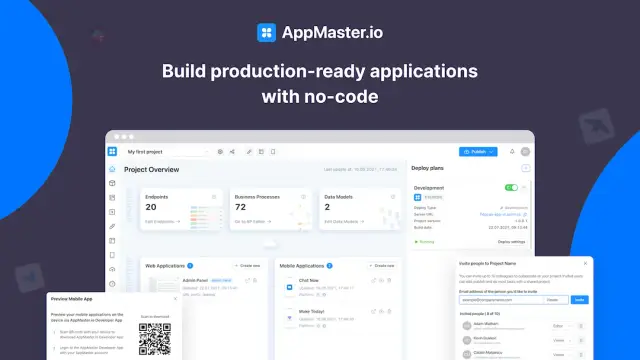
By taking advantage of AppMaster's no-code capabilities, businesses can reduce their reliance on developers' expertise and significantly speed up the application development process, saving time and resources. The combination of OpenAI and AppMaster provides a complete solution for predicting mobile app user behavior and delivering personalized experiences. It allows businesses to improve user engagement, satisfaction, and retention while increasing revenue generation opportunities.
This cutting-edge integration allows developers and businesses of all sizes to use AI-powered personalization and user behavior prediction for mobile applications, even without advanced technical knowledge or resources.
Anticipating future trends in mobile app user behavior prediction involves a nuanced understanding of evolving technologies and user preferences.
The future of mobile app user behavior prediction is poised for exciting advancements, promising more accurate, personalized, and ethical user experiences.
 What is OpenAI?
OpenAI is an artificial intelligence research lab focused on creating safe and beneficial AI systems that can positively impact a wide range of industries, including mobile app development.
How can OpenAI be used in mobile app user behavior prediction?OpenAI can be used to collect and analyze user data, build predictive analytics and machine learning models, enhance personalization and custom user experiences, and ultimately improve user engagement and revenue generation for app developers.
What are the benefits of using OpenAI in mobile apps?Using OpenAI in mobile apps can lead to better personalization, increased user engagement, and enhanced revenue opportunities for app developers. It also helps to improve the overall user experience, creating a positive impression on the users.
How does personalization impact mobile app user behavior?Personalization can significantly influence mobile app user behavior, as customizing the app experience to individual user preferences can encourage them to stay longer, engage more, and make purchases, ultimately leading to higher revenue for app developers.
How can OpenAI be integrated into a no-code platform like AppMaster?OpenAI can be integrated with AppMaster's no-code platform through APIs and custom plugins, enabling app developers to easily incorporate AI-driven user behavior prediction and personalization into their applications without the need for complex coding.
Does using OpenAI in mobile apps ensure user privacy?Implementing OpenAI in mobile apps should always be done responsibly and in compliance with data protection regulations to ensure user privacy. Combining OpenAI with secure data collection and storage practices is crucial for maintaining user trust and safeguarding their information.
What is predictive analytics?Predictive analytics involves using various techniques, including machine learning and data mining, to analyze historical data and make predictions about future events or trends. It can be applied to mobile app user behavior prediction to anticipate users' actions, preferences, and engagement patterns.
How does OpenAI improve user engagement?OpenAI can enhance user engagement by using data-driven insights to offer personalized experiences, content, and recommendations that cater to individual users' preferences, making the app more appealing and encouraging users to engage and interact with it more frequently.
Experiment with AppMaster with free plan.
When you will be ready you can choose the proper subscription.
 Jul 14, 20268 min
 Jul 13, 20268 min
 Jul 08, 20268 min