


 Jul 14, 2026
 8 min
8 minEquipment reservation app: prevent conflicts and track returns
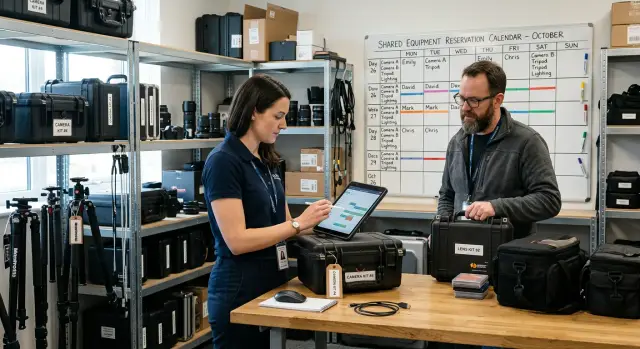
Plan an equipment reservation app that prevents double bookings, records returns and damage, and places faulty items on maintenance hold.

Set up a lead follow-up dashboard that highlights each lead’s next action date, so busy owners stay consistent and no one slips through.

Most leads don’t get lost because you never replied. They get lost because you replied once, then got pulled back into everything else.
A new inquiry comes in. You send a quick answer and plan to follow up in a day or two. After that first message, the lead stops feeling urgent, so it stops being visible. By the time you remember, it’s been a week and the lead has moved on or gone cold.
"Forgotten" usually looks messy, not dramatic. A note sits in your inbox. A name is saved in your phone with no context. A half-written draft is stuck in messages. Sometimes the same lead exists in three places, each with different details.
Small business days are full of mode-switching: customers, fulfillment, problems, bills. Anything that isn’t right in front of you when you can act tends to disappear.
Follow-ups usually vanish into a few familiar hiding places: email threads pushed down by new messages, a notebook that never becomes a system, a calendar reminder with no context, a chat that looks "handled" because you replied once, or a spreadsheet that stops getting updated.
The fix is simple: one list where every lead has a clear next action and a next action date. Not a perfect CRM. Not a new habit that takes an hour a day. Just one place you can check in two minutes and know who needs attention today.
That’s what a lead follow-up dashboard is for: clarity. If it can’t tell you, at a glance, what to do next and when, it turns into another tool you avoid.
If you build this as a small internal tool in a no-code platform like AppMaster, keep the first version boring on purpose. A plain list you actually use beats a fancy system that quietly forgets your leads for you.
Most follow-up problems aren’t caused by bad sales skills. They happen because the lead record is missing one promise: what happens next, and when.
Before you think about charts or filters, lock down two fields that are crystal clear for everyone.
A lead record covers the "who" and "why" (person, company, channel, what they want). The next action is the "what".
Keep it plain and specific. "Follow up" is vague. "Email quote" is clear. Your next action should be something a human can do in one sitting.
Good next actions are simple verbs: call, email, send quote, schedule demo, request missing info. If someone can’t tell what to do in five seconds, the lead will sit untouched.
The next action date is the "when". It matters more than "last contacted" because last contacted is history. It can look active while the lead is already cooling off.
Example: you emailed a lead on Monday, so "last contacted = Monday" feels good. But if you didn’t set "next action date = Wednesday", nothing pulls that lead back onto your radar. A list sorted by next action date makes silence visible.
To keep the list easy to scan, use a simple status that matches reality:
If you build this in AppMaster, these fields become the backbone of your Data Designer model and the main table view. Notes, deal size, and tags can be optional, but these two fields shouldn’t be blank.
A lead follow-up dashboard works when it answers one question in seconds: what do I need to do next, and for whom?
Start with the smallest set that still lets you take action:
If next action date tracking is right, you can sort by date and work top to bottom.
Add a few "decision helpers" only if they reduce back-and-forth: source (referral, website, ad, event), owner, last touch, and a single short notes line.
You also need an obvious "stuck" signal. The simplest options are an overdue label for anything past the next action date, or a small overdue count at the top.
If a column doesn’t change what you do today, it doesn’t belong on the main list. Common offenders are long activity logs, too many micro-stages, piles of contact fields, and tags that multiply until nobody trusts them.
Keep the dashboard as the action list, and put deeper details on the lead record page.
A dashboard only works if everyone plays by the same rules. If you build the screen first, you’ll end up arguing about what counts as "done" and who was supposed to update it.
Start with a cadence that fits real small-business life: a short daily check for anything due today, plus a weekly clean-up to close dead leads and fix messy records.
A simple cadence that sticks:
Next, decide who updates the list when more than one person touches a lead. "Everyone updates their own leads" breaks the first time someone is out sick or a handoff happens mid-conversation.
Pick one ownership model and write it down:
Your non-negotiable rule: every active lead must always have a next action date. No exceptions, even if the next step is "wait for reply". If there’s no date, the lead is invisible.
Finally, set response targets that match your capacity. If two people are doing sales plus support, "reply within 5 minutes" is fantasy. "First reply same day" and "follow up within 2 business days if no response" is more realistic. The goal is consistency, not perfection.
A useful dashboard starts before the dashboard. Write down where leads come from and how they reach you: a website form, a phone call you jot down later, a referral text, a marketplace message. If you skip this, you’ll build something that only works for half your leads.
Next, create one simple lead table and keep it small so you’ll actually use it. Most small teams can start with:
Once the table exists, the layout is a focused list. Sort by next action date (soonest first) so today and overdue float to the top.
Build the layout in this order:
The last point matters most. Updating should take under 30 seconds. If people have to click around, the list goes stale.
A lead follow-up dashboard works when it fits into what you already do. The simplest habit is to update the next action before you close the conversation.
When you finish an email reply, a call, or a chat message, set (1) the next action and (2) the next action date right then. If you wait, you’ll forget and the dashboard turns into another chore.
After every touch:
Examples that stay specific:
If a lead isn’t ready, still set a next action. "Wait" isn’t an action. "Check in next Tuesday" is.
Notifications should be boring. A daily reminder for overdue leads only is usually enough. If reminders include leads that aren’t due, you train yourself to dismiss them.
A simple daily pattern: open the dashboard once, filter to overdue and due today, and clear that list. If there’s nothing due, you’re done in under a minute.
Long notes don’t get read. Capture just enough to restart the conversation without re-opening old threads. Examples: "Asked for 10 seats, needs invoice, worried about setup time" or "Wants a quote by Friday, prefers email, competitor is cheaper".
Real life example: you send a quote at 4:45 PM and the lead says, "I need to check with my partner". Before you close the email tab, set next action to "Check decision with partner" and set the date two business days out. Add a short note: "Waiting on partner approval, follow up Thursday". That’s the difference between a calm system and a forgotten lead.
Picture a 3-person service business: Maya (owner), Chris (sales), and Jen (assistant). They do home energy audits and send quotes by email. Most leads come from a contact form and a few phone calls.
On Monday morning, a new lead arrives: "Sam R., 2,000 sq ft house, wants pricing." Chris replies fast and logs it. The key is that every update also sets a next action date.
Here’s how the lead moves, and how the date changes each time:
Now the quiet part. After the quote, Sam goes silent. This is where leads usually disappear because everyone assumes someone else will "circle back".
On Monday, the lead shows up at the top of the dashboard because its next action date is due. Maya sees it in the morning review and assigns it back to Chris with one clear task: "Call, ask if any questions, and offer two time slots for a quick follow-up."
Chris calls, learns Sam is waiting on a spouse to review the quote, and agrees to follow up Friday. The next action date is updated to Fri, and the lead drops out of the urgent view until then.
Nothing magical happened. The team simply never let the lead sit without a next step. When a lead goes quiet, the list pulls it back into view before it gets forgotten.
A lead follow-up dashboard fails for boring reasons. The biggest one is leaving the next action date blank after the first reply. It feels harmless because you just did something, but a blank date is the same as saying, "Future me will remember." Future you won’t, especially on busy weeks.
Another failure is vague next actions like "follow up" with no detail. Two people can read that and do two different things. A useful next action is clear enough that anyone can execute it: "Call to confirm budget" or "Email 2 case studies and ask for a 15-minute demo time".
Mixing support requests with sales leads also ruins the list. Support has different urgency and different success metrics. When everything lives together, real leads get buried under "password reset" and "invoice question" items. If you must keep both, use separate views or filters so they never share the same default list.
Many owners track only "last contacted" and hope they’ll remember the next step. "Last contacted" is history. The next action date is the trigger that makes follow-up automatic.
Quick fixes that keep the dashboard useful:
If you build this in AppMaster, it’s worth enforcing these rules early with required fields and sensible default filters. It prevents the slow drift that turns a clean list into a pile of good intentions.
Before you trust your dashboard to run your day, do a reality check with real data.
A simple stress test: ask someone else to find "what needs attention today" without instructions. If they hesitate, the dashboard is too clever.
Also check the "blank date" problem. If your system allows an active lead to exist without a next action date, it will happen. Make that state obvious (a warning label or a dedicated "Needs scheduling" view) so it can’t hide.
Once the list works in a spreadsheet, you can turn it into a small internal tool so updates are faster and follow-ups are harder to miss. The goal isn’t more features. It’s fewer places where leads can disappear.
Keep the habit first. If the team still forgets to set a next action date, automation won’t save you. Give it a week or two of daily use until "update the next action date" feels automatic.
After the basics stick, add one boring, predictable upgrade at a time:
A practical internal tool needs three pieces: a database, a list view, and a quick update form.
For example, in AppMaster you can model a Leads table in the Data Designer, build a web list screen sorted by next action date, and highlight overdue items. Then add a small edit form that lets someone change status, set the next action date, and add one note in a few seconds.
If you want a simple place to start, appmaster.io is designed for building internal tools like this without hand-coding, while still generating real backend, web, and mobile app source code when you’re ready to deploy.
A realistic scenario: a lead replies "check back next Tuesday". Instead of leaving it in email, you open the tool, set the next action date to Tuesday, and you’re done. On Tuesday morning, the lead appears at the top of the list. If Tuesday passes, the owner sees it as overdue.
 Why do leads go cold even after I reply quickly?
Leads usually drop because there’s no scheduled next step after the first reply. Without a clear next action and a next action date, the lead stops showing up in your day and gets buried by new work.
Why is “next action date” more important than “last contacted”?Because it’s history, not a trigger. A “last contacted” date can look active while nothing is planned, but a “next action date” forces the lead to resurface when follow-up is due.
What counts as a good “next action”?Write the next action as something a person can do in one sitting and that another teammate could execute without guessing. “Email quote,” “Call to confirm budget,” or “Request missing info” are clear; “Follow up” is not.
What do I set as the next action when I’m waiting on the lead?Treat waiting as a planned check-in, not an empty state. Set the next action to something like “Check in for reply” and choose a specific date so the lead doesn’t become invisible.
What columns should be on the main follow-up dashboard?Start with lead name, stage, next action, and next action date. Add only fields that help you decide faster today, like owner or a short note, and keep long histories off the main list.
What are the most common reasons a follow-up dashboard becomes useless?Dashboards fail when updating takes too long, when next action dates are left blank, or when actions are too vague to execute. Keeping updates under 30 seconds and making the date required for active leads prevents most breakdowns.
How often should I check and clean up the list?Default to a short daily review of items due today or overdue, plus a weekly cleanup to close dead leads and fix missing dates. Consistency beats an aggressive schedule you won’t maintain.
Who should be responsible for updating the next action date?Pick one rule and stick to it: either the current owner updates after every touch, a coordinator keeps dates clean, or whoever reassigns a lead must set the next action date. The key is that responsibility is never unclear.
Should I mix support requests and sales leads in the same dashboard?Separate them or at least use separate default views and filters, because support items will bury sales follow-ups. If they must live in one table, keep “active sales leads” as the default view and hide support from it.
When does it make sense to build this as an internal tool in AppMaster?Build a lightweight internal tool once your team is already using the process reliably in a simple list. In AppMaster, you can model a Leads table, make a list sorted by next action date, and add a quick edit form so updating stays fast and consistent.
Experiment with AppMaster with free plan.
When you will be ready you can choose the proper subscription.
 Jul 14, 20268 min
 Jul 13, 20268 min
 Jul 08, 20268 min