


 Jul 14, 2026
 8 min
8 minEquipment reservation app: prevent conflicts and track returns
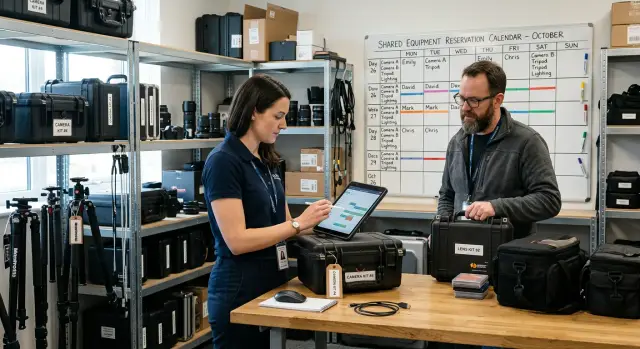
Plan an equipment reservation app that prevents double bookings, records returns and damage, and places faulty items on maintenance hold.

Build an inventory reorder suggestions app to store min/max per SKU, calculate reorder quantities, and create a draft purchase list your team can review.

Running a store usually means bouncing between two expensive mistakes: running out of fast movers (lost sales, frustrated customers) or buying too much (cash tied up in slow stock). The daily problem isn't “do we have inventory?” It's “what should we buy next, and how much?”, without spending an hour doing spreadsheet math.
A min/max setup keeps that decision simple. For each SKU, you store two numbers:
If a SKU is at 6 units, the min is 10, and the max is 25, the suggestion is to order 19. You’re not guessing from memory. You’re using a clear rule that stays consistent week to week.
An inventory reorder suggestions app takes your current on-hand counts (and optionally what’s already on order), applies those min/max rules per SKU, and produces a draft purchase list. That draft is the main output: a short, reviewable list that answers “what should we order and how many?” before anyone opens a supplier portal or emails a rep.
What it does not do is purchase automatically. That matters because real purchasing has exceptions: a supplier is out of stock, case pack sizes force rounding, a seasonal item should be skipped, or a promo is coming. The app should generate suggestions fast, then let a human approve, edit, or remove lines.
This kind of tool is usually used by store managers, operations leads, and purchasing staff. It’s also useful for small teams where one person wears multiple hats and just needs a dependable starting point.
Good suggestions start with boring, consistent SKU data. If the basics are messy, your draft purchase list will feel random, and people will stop trusting it.
Aim for a SKU record that keeps the same “shape” over time, even if your process evolves.
To be usable on day one, you need:
Min and max are the guardrails. A separate reorder point is optional, but helpful when you want to reorder earlier than the min due to long lead times or unreliable supply.
These details turn “how much to buy” into “what you can actually order”:
Be explicit about where “on hand” comes from. If you start with manual entry, store the last count date. If you later sync from a POS or warehouse tool, store the last sync time too. That one detail answers a lot of “why did it suggest this?” questions.
Min/max is a simple rule: you only reorder when stock is low, and you order enough to get back to a safe level. The result is a draft list that’s easy to understand and easy to audit.
Pick one trigger and keep it consistent. The most common is:
This avoids noisy recommendations for items that are already healthy.
Once an item is eligible, the base idea is “order up to Max.” The simple formula is:
base_suggested = max - on_hand
suggested = max(0, base_suggested)
Example: Min = 10, Max = 40, On Hand = 14.
If On Hand drops to 8:
After the base calculation, add a few small rules to match how purchasing works in the real world:
Bad data creates bad suggestions, so make these situations obvious:
The best flow is the one your team will actually use. Keep it simple: record what you have on hand, then generate suggestions. Extras (labels, dashboards, analytics) can come later.
A typical session looks like this: the user does a quick count, picks a location (if needed), enters counts per SKU, saves, then taps one button to create a draft purchase list. The buyer reviews that draft and adjusts it before anything is approved.
To keep the screen calm, add one practical filter: show only SKUs below min, or show all SKUs with a clear status. “Only below min” is faster on busy days. “Show all” helps when you want confidence that nothing was missed.
A simple flow that works for most small teams:
Overrides matter because reality is messy. A buyer might order extra for a promotion, or less because cash is tight or a supplier is delayed. Treat the suggested quantity as a starting point, not a rule.
A few small controls prevent a lot of frustration:
Finally, save a snapshot when the draft is generated: timestamp, the on-hand counts used, the min/max values at that moment, and the suggested quantities before overrides. When someone asks “Why did we order 24 of this?”, you can open the draft and see the exact inputs that produced it.
A good reorder app starts with a small set of tables you can trust. The goal isn’t a perfect ERP. It’s a clean base that can grow as you add suppliers, locations, or smarter rules.
For a single store, separate “what the item is” from “what you have” and “how you reorder”:
This stays flexible because you can change reorder rules without rewriting your SKU list, and you can keep draft orders as a record of what was suggested versus what was approved.
If you only have one store today, don’t overbuild locations. Store inventory as a single number per SKU. When you add a second store or a warehouse, introduce a Locations table and switch Inventory levels to one row per SKU per location.
Small validation rules prevent bad inputs from turning into bad orders. Add checks like: min must be less than max, reorder points can’t be negative, and pack size can’t be zero. Decide what happens when settings are missing: block suggestions, or mark SKUs as “needs setup.”
Roles help when multiple people count stock and adjust rules:
Plan how you’ll send orders out. Even if you later automate purchasing, most teams start with a simple export: a CSV download or a supplier-ready list they can copy from the draft order screen.
Start with two simple lists: your SKU catalog and your suppliers. Each SKU should have a name people recognize, a default supplier, and a buying unit (each, case, carton). Keep it practical. This is the list your team will search every day.
Next, add reorder settings to the SKU record. Min and max are the basics, but you’ll get better suggestions if you also store pack size and lead time. If you buy the same item from two suppliers, pick one as the default and allow changes on the draft order later.
For inventory counts, build a fast screen that favors speed over perfection. A quick edit grid works well: filter by aisle or category, type the counted quantity, and save.
Most teams need these core screens:
Then implement the suggestion logic: for each SKU, compare “on hand” (and optionally “on order”) to your reorder rules, calculate a suggested quantity to move back toward max, and apply pack size rounding so you don’t suggest 13 units when the supplier only sells cases of 12.
Generate a draft order for review and treat it like a document with statuses such as Draft, Approved, Sent. When a user creates a draft, copy suggestion lines into order lines grouped by supplier, then let people edit quantities, swap suppliers, or remove items.
Finish with a clean output step. Some teams print the draft and place orders manually. Others export a file. Either way, save what was approved so you can compare “suggested vs ordered” later and improve your rules with real evidence.
Reorder math is simple. What breaks trust is messy setup. Most problems show up as a draft list that feels “off,” even when the formula is correct.
A classic issue is mixed units. You count “each,” but you order in “cases,” or you receive in “packs.” If a SKU’s unit is unclear, the app may suggest 24 when you meant 24 cases. Pick one base unit per SKU (often “each”) and store a conversion like “1 case = 24 each” so the final order quantity is translated correctly.
Min and max also get set like guesses. If you ignore sales speed and supplier lead time, the rules look tidy but fail in real life. A slow-moving item with a high max ties up cash, while a fast mover with a low min creates stockouts.
Other common mistakes:
A simple scenario: you sell coffee pods. The shelf shows 6 boxes, the back room has 18, and a second store has 12. If you only track one “on hand” number, someone counts 6 and the system suggests ordering, even though you actually have 36. Location fields fix this quickly.
A min/max system is simple, but the draft list is only as good as the data behind it. Before you send anything to a supplier, take a minute to scan for the silent errors that make reorder suggestions look confident but wrong.
Start with setup: every reorderable SKU needs a minimum, a maximum (or target), and the right pack size. If any of those are missing, the app should flag the SKU and either skip it or mark it as “needs setup.” One blank field can quietly produce a huge order or no order at all.
Next, sanity-check on-hand quantities. Negative stock happens (returns processed late, receiving not posted, unit mix-ups), but it should be rare. If you see -12 on hand for a slow item, treat the suggestion as “investigate,” not “buy.” A recount or a quick transaction review is cheaper than unwinding excess later.
A short checklist that catches most problems:
Packaging rules deserve special attention. If your supplier sells in cases of 24 and your draft suggests 13, your system should adjust based on your policy (often rounding up to avoid stockouts). Same idea for MOQ: show the original suggestion and the adjusted suggestion so the reviewer understands what changed.
Also decide what “good enough” means for your team. Ordering to max is aggressive and can tie up cash. A more conservative target (for example, order to max only for top movers, and to a midpoint for slower items) can reduce overstock while you build trust.
Finally, keep an audit trail. Even a simple “Last changed by” and “Last changed at” on each line builds confidence and helps resolve disputes later.
Picture a small neighborhood shop that carries 30 SKUs. The owner does a physical count every Monday morning and wants an inventory reorder suggestions app to create a draft purchase list they can quickly sanity-check.
They buy from two suppliers: Supplier A (snacks and drinks) and Supplier B (household basics).
SKU 1: Sparkling Water 12-pack (Supplier A)
On hand: 8 packs. Min: 10. Max: 30. Pack size: 6.
Because 8 is below the min (10), the app suggests ordering up to max.
Needed to reach max = 30 - 8 = 22 packs.
Round to pack size (6): 22 becomes 24.
Suggested order: 24 packs.
SKU 2: Potato Chips (Supplier A)
On hand: 14 bags. Min: 12. Max: 36. Pack size: 12.
Because 14 is above the min, the suggestion is 0. Even though it isn’t at max, it’s still healthy and doesn’t need replenishment this week.
SKU 3: Dish Soap 500 ml (Supplier B)
On hand: 3 bottles. Min: 6. Max: 18. Pack size: 6.
Because 3 is below min, order up to max.
Needed to reach max = 18 - 3 = 15 bottles.
Round to pack size (6): 15 becomes 18.
Suggested order: 18 bottles.
The draft list is a starting point, not a command. This week, the owner has a tighter budget and also knows sparkling water sales slow down when it rains.
They adjust Sparkling Water from 24 packs down to 18 packs (still a multiple of 6). Chips stay at 0. Dish soap stays at 18 because it’s a steady seller and currently looks risky.
That review-and-tweak step is why a draft is often more useful than auto-sending purchase orders.
Supplier A
Supplier B
With only 30 SKUs, this weekly loop can take about 10 minutes: count, review suggestions, make a few edits, then share the grouped draft with each supplier.
The fastest way to get value is to start narrow. Pick one store (or one location) and one supplier group with a manageable number of SKUs. You’ll learn more from a clean, reviewed draft list than from trying to cover every edge case on day one.
Decide early how you’ll capture on-hand counts. Manual entry is fine at first, as long as it’s consistent. A simple rule like “counts are updated every Thursday before ordering” beats a complex setup nobody trusts.
A practical rollout plan:
Once the basics work, improve the math slowly. Two upgrades usually pay off quickly: an average demand estimate (like “average weekly sales over the last 4 weeks”) and a bit of safety stock based on lead time. If a supplier takes 10 days, raising the reorder point to cover an extra week of demand can help you avoid reacting to delays.
Set a cadence for keeping the rules honest. Weekly, review the suggested order and fix obvious misses. Monthly, tune min/max values, focusing on top movers and the biggest overstock risks.
If you’re building this as a no-code inventory app, AppMaster (appmaster.io) is one option that fits the workflow: model SKUs and suppliers in a database, put the min/max logic into a visual process, and generate a draft order that staff can review and approve before anything is sent.
 What is a min/max reorder system in plain terms?
A min/max system stores two levels per SKU: a minimum you don’t want to drop below, and a maximum you want to refill up to. When on-hand falls to or below the minimum, the app suggests an order quantity to bring stock back toward the maximum.
When should the app actually suggest reordering an item?Use one clear rule and stick to it: trigger a suggestion when on-hand is at or below the min (or your reorder point if you use one). If on-hand is above that trigger, the suggested quantity should be zero so the draft list stays quiet and reviewable.
How do you calculate the suggested quantity?The simplest calculation is suggested = max(0, max_level - on_hand) after the item qualifies for reorder. This keeps results easy to explain, because you’re just filling back up to a known target.
Should I include items already on order in the math?Yes, if you track “on order” reliably, subtract it from what you need so you don’t double-buy. A common approach is to treat available stock as on_hand + on_order and then calculate the refill amount from that number.
How do case packs and rounding work in a reorder app?Round suggestions to what you can actually buy, then show the adjusted number clearly. For example, if the supplier sells cases of 12, a computed need of 32 should become 36 if your policy is to round up to avoid stockouts.
What should happen if a SKU is missing min/max settings?Don’t guess and don’t silently create weird orders. If min or max is missing, set the suggestion to 0 and flag the SKU as needing setup so someone fixes the data before it affects purchasing.
How should the app handle negative inventory counts?Treat negative on-hand as a warning sign, not normal input. You can still compute a suggestion so the buyer sees risk, but the UI should highlight that the count likely needs a recount or a transaction cleanup.
Do I need to track inventory by location (back room vs shelf, multiple stores)?If you have more than one place stock can sit, track it separately; otherwise your suggestions will be wrong even with correct min/max. At minimum, split shelf and back room, and later expand to store-by-store or warehouse locations as needed.
How do I make reorder suggestions auditable and trustworthy?Save a snapshot of the inputs used to generate the draft, including on-hand values, min/max at the time, and who approved edits. This makes “why did we order this?” easy to answer and helps people trust the system.
Can this workflow stay manual but still save time, and can I build it in AppMaster?Keep purchasing human-approved by default: generate a draft order, let someone edit quantities, then mark it approved and export or copy the final list. You can build this workflow in AppMaster by modeling SKUs and draft orders in the database and putting the min/max logic into a visual business process that creates grouped draft order lines for review.
Experiment with AppMaster with free plan.
When you will be ready you can choose the proper subscription.
 Jul 14, 20268 min
 Jul 13, 20268 min
 Jul 08, 20268 min