


 Jul 14, 2026
 8 min
8 minEquipment reservation app: prevent conflicts and track returns
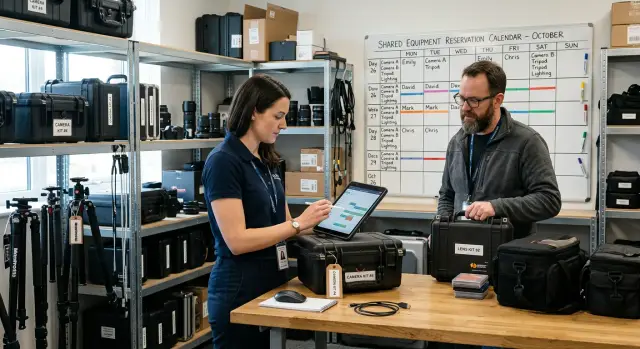
Plan an equipment reservation app that prevents double bookings, records returns and damage, and places faulty items on maintenance hold.

Use this incident runbook for no-code apps to spot issues fast, triage impact, roll back safely, communicate clearly, and prevent repeats.

An incident is any unexpected problem that stops people from using your app, makes it painfully slow, or puts data at risk. In no-code apps, that might look like sudden login failures, broken screens after a change, background automations that stop firing, API errors, or “successful” workflows that quietly write the wrong values into the database.
A written runbook turns a stressful moment into a set of small, clear actions. It reduces guesswork, speeds up decisions (like when to roll back), and helps everyone share the same facts. Most delays during incidents aren’t technical. They come from uncertainty: Is it real? Who’s leading? What changed? What do we tell users?
This playbook is for anyone who touches the app when things go wrong: builders who ship changes, ops or platform owners who manage deployments and access, support teams who hear the first reports, and product or business owners who judge impact and priorities.
It’s intentionally lightweight, including for teams building on platforms like AppMaster where you may have visual logic, generated services, and multiple deployment options.
It covers the full incident loop: detect and confirm a real issue, triage fast, stabilize and recover (including rollback decisions), communicate during the outage, then run a short post-incident review so the same problem is less likely to happen again.
It does not cover long-term architecture redesign, deep security forensics, or complex compliance procedures. If you handle regulated data or critical infrastructure, add stricter steps on top of this runbook.
Incidents feel chaotic when you don’t know what “normal” looks like. Define your baseline so the team can spot real problems quickly. For a no-code app, early signals usually come from a mix of platform health, business metrics, and people.
Write down the signals you’ll watch every day, not just during outages. Common ones include uptime, error rate, slow screens, failed logins, payment failures, and spikes in support tickets or user messages.
Define severity in plain language so anyone can use it:
Set response targets that create momentum. Example targets: acknowledge within 5 minutes, post the first update within 15 minutes, and aim to stabilize within 60 minutes (even if the full fix takes longer).
Decide roles before you need them. Name who can declare an incident, who leads it, and who is backup if that person is offline. On AppMaster teams, that’s often the person who owns the Business Process logic, plus a backup who can handle deployments or exports.
Finally, keep one shared place for incident notes. Use timestamps for every action (what changed, when, by whom) so you can reconstruct the story later without guessing.
Confirm impact before you stare at dashboards. Ask one clear question: who can’t do what right now? “Support team can’t open tickets” is more useful than “the app is slow.” If you can, reproduce the problem using the same role and device as the affected user.
Next, work out how wide it is. Is it one account, a customer segment, or everyone? Do quick splits: region, account type, web vs mobile, and a single feature vs the whole app. In no-code tools, something can look global when it’s really a permission rule or one broken screen.
Then check what changed. Look back 1-2 hours for a release, a config toggle, a database schema edit, or a data import. On platforms like AppMaster, changes to business processes, data models, or auth settings can affect many flows at once, even if the UI looks fine.
Before you blame your app, rule out external dependencies. Email/SMS providers, payments (like Stripe), and integrations (Telegram, AWS services, AI APIs) can fail or rate-limit. If the app breaks only when sending messages or charging cards, the root problem may be upstream.
Use a simple decision checklist:
Once you classify severity and scope, you can move from “is it real?” to “what do we do first?” without guessing.
Open an incident record immediately. Give it a plain title that names user impact, not the suspected cause (for example, “Checkout failing for EU customers”). Write down the start time (first alert or first report). This becomes the single place for decisions, timestamps, and what changed.
Assign roles so work doesn’t overlap. Even in a small team, naming owners reduces mistakes when stress is high. At minimum, you want:
State two things in writing: what you know for sure, and your current hypothesis. “Known” might be: error rate spiked, a specific endpoint is failing, only mobile is affected. The hypothesis can be wrong, but it should guide the next test. Keep both updated as you learn.
While things are unstable, set a 15-minute update cadence. If nothing changed, say that. Regular updates stop side discussions and prevent duplicate “any news?” pings.
Choose the first containment action. The goal is to reduce harm fast, even if the root cause isn’t clear yet. Typical first moves include pausing background jobs, disabling a risky feature flag, limiting traffic to a module, or switching to a known-safe configuration. In AppMaster, this often means turning off a specific flow in the Business Process Editor or temporarily hiding a UI path that triggers failures.
If containment doesn’t improve metrics within one cadence window, start rollback planning in parallel.
Once you confirm it’s a real incident, switch from “finding the bug” to “stopping the bleeding.” Stabilizing buys you time. It also protects users, revenue, and data while you investigate.
Start with the smallest change that reduces harm. Containment is often faster than a full fix because you can disable a new feature, pause a workflow, or block a risky input path without a rebuild.
If you suspect data is being corrupted, stop writes first. That can mean temporarily disabling forms, pausing automations that update records, or blocking an API endpoint that accepts updates. Reading bad data is painful, but writing bad data multiplies the cleanup.
If users are locked out, treat login as the top priority. Check authentication settings and the login flow before anything else. Every other fix is slower if users (and your own team) can’t access the app.
If the app is slow or timing out, reduce load and remove expensive paths. Turn off heavy screens, pause background jobs, and disable new integrations that spike requests. In AppMaster, containment might be as simple as disabling a problematic business process or temporarily removing a UI action that triggers a costly chain.
Keep actions deliberate and documented. Under pressure, teams repeat steps or undo a fix by accident. Write down each change and the result.
A simple stabilization sequence:
You’re aiming for “safe and usable,” not “fully solved.” Once impact is contained, you can diagnose calmly and choose the right rollback or fix.
When something breaks, speed matters, but the safest move wins. You usually have three practical options: roll back, ship a forward fix, or do a partial revert (turn off one feature while leaving the rest).
First, be clear what “rollback” means in your setup. It might mean deploying the previous app version, reverting a config change, or restoring a database state. On platforms like AppMaster, a “version” can include backend logic, web UI, mobile builds, and environment settings.
Use these risk checks to decide whether rollback is safe:
Set a simple go/no-go rule before you touch anything. Pick 2-3 metrics that must improve within 10-15 minutes after the action, such as error rate, login success, checkout completion, or API latency. If they don’t move the right way, stop and switch strategy.
Plan the backout of the rollback too. Know how you’ll undo it if the older version causes new issues: which build to redeploy, which config to re-apply, and who approves that second change. Keep one person responsible for the final “ship” decision so you don’t change course mid-step.
Silence makes incidents worse. Use a simple, repeatable way to keep people informed while the team investigates.
Start with internal updates. Tell the people who will get questions first, and the people who can remove blockers. Keep it short and factual. You typically need:
For external updates, stick to what you know. Avoid guessing the root cause or blaming a vendor. Users mostly want three things: confirmation, impact, and when you’ll update them again.
Keep one status line consistent across channels:
If users are angry, acknowledge first, then be specific: “We know checkout is failing for some customers. We are rolling back the last change now. Next update in 30 minutes.” Don’t promise deadlines, credits, or permanent fixes during the incident.
Declare resolved only when the main symptom is gone and key checks are clean (logins, core flows, error rates). Use monitoring when you’ve applied a fix (for example, rolling back a deployment or restoring a configuration) but you still need time to watch for repeats. Always state what you’ll monitor, for how long, and when the final update will be posted.
Once things are stable, switch from firefighting to gathering the smallest set of facts that explains the symptoms. The goal isn’t a perfect root cause. It’s a likely cause you can act on without making the incident worse.
Different symptoms point to different suspects. Slow pages often mean slow database queries, a sudden traffic spike, or an external service lagging. Timeouts can come from a stuck process, an overloaded backend, or an integration that’s waiting too long. A spike in errors or retries often tracks back to a recent change, a bad input, or an upstream outage.
Run one real user journey end to end with a normal test account. This is often the fastest signal because it touches UI, logic, database, and integrations.
Focus on a handful of checks:
If you’re on AppMaster, this often maps cleanly to a Business Process step, a Data Designer change, or a deployment config change.
If the quick checks point to a clear culprit, pick the safest move: keep the current mitigation in place, or apply a small permanent fix. Only remove rate limits, feature toggles, or manual workarounds after the journey succeeds twice and the error rate stays flat for a few minutes.
It’s 10:15 a.m. on a Tuesday. A team ships a small change to a customer portal built on AppMaster. Within minutes, users start seeing blank pages after login, and new orders stop coming in.
Support notices three tickets with the same message: “Login works, then the portal never loads.” At the same time, monitoring shows a spike in 500 errors on the web app and a drop in successful API calls. You treat it as a real incident.
The incident lead does a quick confirmation: try logging in as a test user on desktop and mobile, and check the last deployment time. The timing matches the release, so you assume the latest change is involved until proven otherwise.
The first 30 minutes might look like this:
By 10:40 a.m., errors return to normal. You keep an eye on metrics while support confirms new tickets slow down.
Afterward, the team does a short review: what caught this first (alerts vs support), what slowed you down (missing owner, unclear rollback steps), and what to change. A common improvement is adding a release smoke-test checklist for the portal’s top three flows and making rollback a documented, one-action step.
Most incidents get worse for one of two reasons: people let the system keep doing harm while they investigate, or they change too many things too quickly. This runbook is meant to protect you from both.
A common trap is investigating while the app is still writing bad data. If a workflow is looping, an integration is posting duplicates, or a permission bug is letting the wrong users edit records, pause the offending process first. In AppMaster, that might mean disabling a Business Process, turning off a module integration, or temporarily restricting access so the issue stops spreading.
Another trap is “fixing” by guessing. When several people click around and change settings, you lose the timeline. Even small edits matter during an incident. Agree on one driver, keep a simple change log, and avoid stacking tweaks on top of unknowns.
Mistakes that repeatedly cause longer outages:
Communication is part of recovery. Share what you know, what you don’t know, and when the next update will land. “We are rolling back and will confirm billing events are correct within 15 minutes” beats “We’re looking into it.”
Don’t close the incident just because errors stopped. Verify with a short checklist: key screens load, new records save correctly, critical automations run once, and backlogs (queues, retries, scheduled jobs) are drained or safely paused.
When things break, your brain will try to do ten tasks at once. Use this to stay calm, keep people safe, and get service back.
Pin this section where your team will actually see it.
Take one minute to name an incident owner. One person decides, everyone else supports.
Stabilize and contain (10 minutes): Stop the bleeding before hunting root cause. Disable the risky path (feature toggle, temporary banner, queue pauses) and test one key journey end to end. Pick the journey that matters most to the business, not the one that’s easiest to test.
Recover service (10-20 minutes): Choose the safest move: rollback to the last known good version or apply a minimal fix. On platforms like AppMaster, that may mean redeploying a previous build or reverting the last change, then confirming error rates and response times return to normal.
Communicate (throughout): Post a short status update with what’s impacted, what users should do, and the next update time. Brief support with a two-sentence script so everyone says the same thing.
Wrap up cleanly (before you forget): Record what happened, what you changed, and what time service recovered. Assign next steps with an owner and a due date (monitoring tweak, test gap, data cleanup, follow-up fix).
An incident isn’t fully “done” when the app is back up. The fastest way to reduce future downtime is to capture what happened while it’s still fresh, then turn that learning into small, real changes.
Schedule a short post-incident review within 2-5 days. Keep it blameless and practical. The goal isn’t to find someone to blame. It’s to make the next incident easier to handle.
Write a record that someone can read months later: what users saw, when you detected it, what you tried, what worked, and when service returned. Include the root cause if you know it, and note contributing factors like missing alerts, unclear ownership, or confusing rollout steps.
Turn learnings into tasks with owners and due dates. Focus on the smallest changes that prevent the same failure:
Pick one prevention measure per incident, even if it’s small. “Any change to roles requires a second reviewer” or “Data migrations must run in a staging copy first” can prevent repeat outages.
Keep this runbook next to your build and release process. If you’re building with AppMaster, write down where each app is deployed (AppMaster Cloud, AWS, Azure, Google Cloud, or self-hosted), who can redeploy quickly, and who can roll back. If you want a single home for that documentation, keeping it alongside your AppMaster project notes (appmaster.io) makes it easier to find when minutes matter.
 When should we treat a problem as an incident for a no-code app?
Use it anytime an unexpected issue blocks core tasks, makes the app unusably slow, or risks incorrect or unsafe data changes. If users can’t log in, payments fail, automations stop, or records are being written incorrectly, treat it as an incident and follow the runbook.
What’s the fastest way to confirm an incident is real and measure impact?Start with user impact: who can’t do what right now, and since when. Then reproduce it with the same role and device, and check whether it’s one account, a segment, or everyone so you don’t chase the wrong cause.
How do we quickly decide SEV1 vs SEV2 vs SEV3?Declare SEV1 when most users are blocked or money/security/data is at risk. Use SEV2 when a key feature is broken but there’s a workaround, and SEV3 for minor or limited-scope issues; deciding quickly matters more than being perfect.
Who should do what during an incident, especially in a small team?Pick one incident lead who makes the final calls, then assign a fixer, a comms owner, and a note taker so people don’t overlap or change things accidentally. If the team is small, one person can hold two roles, but the incident lead role should stay clear.
What does “containment” look like in AppMaster or similar no-code platforms?Containment is about stopping harm fast, even if the root cause is still unclear. In AppMaster, that often means disabling a specific Business Process, temporarily hiding a UI action that triggers failures, or pausing an automation that is looping or writing bad data.
When should we roll back versus ship a quick fix forward?Rollback when the issue started right after a release and you have a known-good version that restores service quickly. Choose a forward fix only when you can make a small, low-risk change and verify it fast without risking more downtime.
What makes a rollback unsafe in no-code apps?Treat rollback as risky if the database schema changed, if irreversible writes happened, or if queued jobs and webhooks might be re-processed by older logic. If any of those are true, stabilize first and confirm what the older version expects before redeploying it.
If we suspect data corruption, what should we do first?Stop writes first if corruption is possible, because bad writes multiply cleanup work. Practically, disable forms, pause update automations, or block update endpoints until you can confirm new records are no longer being changed incorrectly.
What should we say during an outage, and how often should we update?Send short, factual updates on a fixed cadence with what’s impacted, what you’re doing, and when the next update will be. Avoid guessing the cause or blaming vendors; users and stakeholders mainly need clarity and predictable updates.
When is it okay to call an incident “resolved” versus “monitoring”?Consider it resolved only after the main user symptom is gone and key checks are clean, like login, the primary workflow, and error rates. If you fixed something but still need time to watch for repeats, call it monitoring and say what you’re watching and for how long.
Experiment with AppMaster with free plan.
When you will be ready you can choose the proper subscription.
 Jul 14, 20268 min
 Jul 13, 20268 min
 Jul 08, 20268 min