


 Jul 14, 2026
 8 min
8 minEquipment reservation app: prevent conflicts and track returns
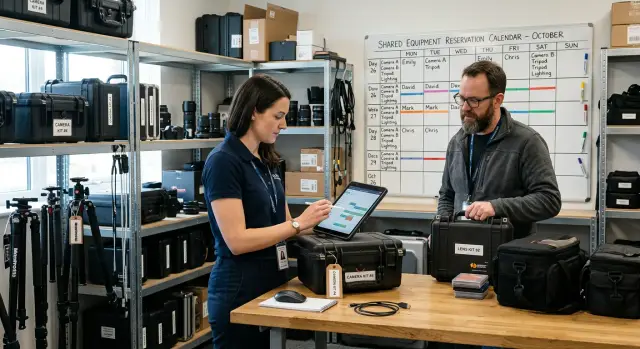
Plan an equipment reservation app that prevents double bookings, records returns and damage, and places faulty items on maintenance hold.

Build a proposal pipeline app to track Draft to Won/Lost, trigger status-based reminders, and measure close rates by service type without heavy CRM overhead.

Most freelancers don’t lose proposals because their work is weak. They lose them because the proposal disappears.
The usual mess looks familiar: a draft in a doc, a final PDF in a folder, the last client message buried in email or chat, and the only “status” is whatever you remember. When you’re busy delivering client work, it’s easy to forget who’s waiting on a quote and who needs a second nudge.
Proposals end up scattered across places like:
Proposals slip for one simple reason: there’s no single place that shows the next action. If you can’t answer “What do I do next, and for which client?” in 10 seconds, follow-ups get delayed. Delayed follow-ups turn into lost deals, even when the client was interested.
That’s what a pipeline is, in plain terms: a small set of clear statuses that show where each proposal stands and what should happen next. A proposal pipeline app isn’t a fancy sales machine. It’s a scoreboard and a to-do list in one.
Keep expectations grounded. You’re not building a complex CRM with forecasting, territories, and reports you’ll never read. You want a lightweight tool that fits how you actually work and makes the “next step” obvious.
Here’s what this prevents. You send a website redesign quote on Tuesday and tell yourself you’ll follow up Friday. Friday gets busy. By Monday, you can’t remember whether you already checked in. A tiny pipeline with one visible “Waiting on client” stage and a clear next-follow-up date stops that quiet loss.
A proposal pipeline app has one job: keep every proposal moving from Draft to Won or Lost with as little effort as possible. If it creates extra admin work, you’ll stop using it right when you need it.
Before you design anything, decide what you must know about a proposal even months later. Keep it to the handful of details that help you follow up, forecast income, and learn what sells.
A practical minimum for each proposal:
Then define what “done” means so the app stays trustworthy. A proposal shouldn’t sit in Sent forever. “Done” means stalled items trigger reminders, outcomes get logged when you hear back, and you can see simple reporting without exporting spreadsheets.
Keep scope small at first. One user, one workspace, and simple fields beat a big system you never maintain. If you send three proposals this week (two for “landing page + copy” and one for “retainer support”), a pipeline that forces a next follow-up date and an outcome will quickly show which service closes more often and where you lose time.
Statuses only help if they reflect your real day, not an ideal process you won’t follow. Keep the set small enough that moving a card forward feels effortless.
A practical set:
Keep the names short and action-based. If you can’t tell what to do next when you read a status, rename it.
Next, set a few simple rules so nothing turns into a zombie proposal.
For example:
Follow-up dates are the other guardrail. Not every status needs a reminder, but some do. A solid default is: Sent and Follow-up due must have a next follow-up date. Negotiating can require one too, but only when the next step is on you.
A quick scenario: you send a website redesign quote on Monday. If you don’t hear back by Thursday, it shows up as Follow-up due. If the client replies with “can we remove the blog and lower the price?”, you move it to Negotiating and set the next follow-up for the next day. That’s enough structure to keep momentum without turning your workflow into paperwork.
A proposal pipeline app lives or dies on its data. If the structure is too loose, you’ll skip fields. If it’s too strict, you’ll stop using it. Aim for a small set of records you can trust, then add details only when you feel real pain.
Start with four core objects: Clients, Proposals, Services, and Activities.
Keep the first version simple:
For proposals, next_follow_up_date is your future self’s safety net. outcome_reason matters when you mark Won or Lost, because “Lost: too expensive” and “Lost: timing” lead to different fixes.
One service type per proposal is the fastest setup and works if you sell clear packages. Multiple services per proposal is better if you bundle work (design + build + maintenance), but it adds complexity. You’ll need a join table (like ProposalServices) and your reporting gets harder.
A good compromise is to start with one service type and add multiple services only when you see real mixed proposals.
Activities give you lightweight history without digging through email. After sending a proposal, log a quick note like “Sent v2, client asked about timeline.” Later, you can see what happened at a glance.
A proposal pipeline app only needs a few screens if each one answers a clear question. The goal is speed: open it, see what needs attention, make one update, move on.
This is the screen you live in. Each column is a status. Each card should show just enough to decide your next move:
Quick actions matter more than perfect layout. From the card (or a small detail drawer), you should be able to change status, set a follow-up date, add a note, and mark Won or Lost without filling out a long form.
Boards are great for flow, but lists are better for finding things. Use a simple table-style list with filters like status, client, service type, and follow-up overdue. This becomes your “catch-up” view when the week gets busy.
You only need two: a Proposal page and a Client page.
The Proposal page is for the timeline (notes, status changes, next follow-up date) plus key fields like value and service type. The Client page is where context lives: contact info, current proposals, and recent activity.
If changing a follow-up date takes 30 seconds, you won’t keep it updated. Optimize these pages for one-tap edits.
One lightweight report is enough at first: close rate by service type and average time to close. It should answer two questions: “What should I sell more of?” and “Where do deals stall?”
A usable proposal pipeline app isn’t a “full CRM.” It’s a place to see what’s active, what’s stuck, and what needs a follow-up today.
Start with the data model and a few fake records so you can test the flow. Create one client with two proposals and at least two service types (for example, “Website refresh” and “Ongoing SEO”).
Then build two core screens: a board (columns by status) and a proposal detail form. The board is for daily scanning. The form is for accurate updates.
A build order that keeps you moving:
This is what makes the app trustworthy.
Example: you drag a proposal from Draft to Sent, but the app stops you if there’s no client email or no proposal amount. That small friction prevents messy data later.
One default rule keeps everything from drifting: every open proposal must have a next follow-up date. If it’s missing, show a warning on the board.
A simple definition of “usable”:
Reminders work best when they’re tied to a clear moment in your pipeline, not a random calendar ping. If your app knows the current status, it can nudge you only when a proposal is likely to go stale.
You don’t need many triggers. A simple setup looks like this:
Keep reminder text short and action-focused. Include only who it’s for, what it’s about, and the next action:
Add guardrails so it doesn’t become noise: cap reminders at one per proposal per day, and include Snooze options (1 day, 3 days, next week).
Track what happened to each reminder, too. Store a small outcome log: completed, snoozed (until when), skipped, or sent.
Example: you mark “Website refresh - Acme Co” as Sent on Monday and set follow-up for Thursday. Thursday morning you get one reminder and snooze it to Friday. On Friday you follow up, mark the reminder completed, and the “no reply after X days” timer resets.
A proposal pipeline app is only valuable if it helps you decide what to do next. The easiest way to get there is to track close rates by service type, not just overall. “Website redesign” and “monthly maintenance” often behave like different businesses.
First, make outcomes consistent:
Pick one rule and stick to it, or your numbers become noise.
Keep loss reasons short and consistent:
Then compute close rate per service type over a window you actually use (last 30 or 90 days). If you sent 12 “Brand strategy” proposals and won 3, that’s a 25% close rate. If you sent 6 “Landing page builds” and won 4, that’s 67%. It doesn’t need to be perfect, just steady.
Add “time to close” to keep yourself honest. Track days from Sent to Won or Lost. You might learn “SEO audit” closes in 5-10 days, while “Full website rebuild” takes 30-45 days. That changes how often you follow up and how you forecast income.
Make the numbers actionable with one simple rule. If a service has a low close rate and a long time to close, tighten the offer (scope, proof, pricing) or qualify harder before you write the proposal. If a service has a high close rate, protect it: reuse what works and raise your price carefully.
The fastest way to make a proposal pipeline app useless is to make it confusing. Freelancers start with good intentions, then end up with a tool they don’t trust.
One trap is having too many statuses that mean the same thing. If you can’t explain the difference between “Sent”, “Submitted”, “Delivered”, and “In review” in one sentence, you probably only need one.
Another trap is letting Sent become a graveyard. If you don’t require a follow-up date, you’ll open your board later and see a pile of proposals with no next step. One simple rule fixes most of this: every proposal in Sent must have a next action scheduled.
A few other mistakes that quietly break focus:
Keep reminders boring and specific. One reminder tied to a follow-up date is usually enough. More rules can wait until you have a month of real usage data.
If you lose three proposals in a row with the note “timeline too long”, that’s a signal to offer a smaller first phase, not to add five new statuses.
Before you treat your proposal pipeline app as the single source of truth, make sure nothing sits in limbo and the next step is obvious.
Open the pipeline view and time yourself. You should understand today’s priorities in under 30 seconds. If you have to click into multiple proposals to find the next step, your design is hiding the most important field.
Checklist:
Do a small stress test. Create three sample proposals for different services, move them across statuses, and trigger reminders. If you can break it in five minutes, you’ll break it during a busy week.
On Monday, you send five proposals. Three are for a web redesign package, and two are for a monthly support retainer. Everything starts in Draft, then moves to Sent once the email goes out.
By Wednesday, the statuses tell a story:
Reminders keep you from dropping the ball. A “Viewed but no reply in 2 days” rule nudges you to follow up with the two redesign leads on Friday morning. A “Sent but not viewed in 3 days” rule catches the quiet one, so you resend with a shorter message and a clear next step.
Real life is messy, though. One client replies late on Sunday with “Sorry, busy week” and asks to start next month, so you move it to On Hold instead of letting it rot in Sent. The negotiation stays active, but the reminder checks in once, not every day.
By the end of the week, close rate by service type is eye-opening: support retainer is 1/2 won, web redesign is 0/3. Next week you change one thing: tighten the redesign scope into two tiers and add a simple deadline for feedback.
The fastest way to get value is to ship the smallest version you’ll actually open every day. A proposal pipeline app doesn’t need templates, complex automation, and charts on day one. It needs to tell you what you sent, what’s waiting, and what you should do next.
Set your statuses so each one answers a simple question: what action is expected now? If you can’t explain a status in one sentence, it will slow you down.
Three actions to take this week:
Once the basic loop feels natural, add improvements one at a time. A good order is reminders first (so nothing slips), reporting second (so you learn), and templates later (so you save time). If you add everything at once, you won’t know what helped and what became noise.
If you want to build this without heavy coding, AppMaster (appmaster.io) is a practical option: you can model the database (clients, proposals, services) and build the UI and status rules in one place, then iterate as your process changes.
Keep upgrades small and measurable. After one week, ask: did I follow up faster, and did I miss fewer replies? After one month, ask: which service closes best, and which one needs a better offer or a higher price?
Treat the first version like a personal tool, not a product. If it takes more than 30 seconds to log a new proposal or move it forward, simplify the fields and screens before you add anything else. When it feels effortless, you’ll actually use it, and the data will stay reliable.
 What is a proposal pipeline app, and why would a freelancer need one?
A proposal pipeline app is a simple place to track every proposal from Draft to Won or Lost. The main goal is to make the next action obvious so you don’t forget follow-ups when you’re busy delivering client work.
What statuses should I use for a lightweight proposal pipeline?Start with the smallest set that matches your real day: Drafting, Ready to send, Sent, Follow-up due, Negotiating, Won, Lost. If two statuses feel the same in practice, merge them so moving a proposal forward stays effortless.
What’s the minimum info I should store for each proposal?Keep only what helps you follow up and learn what sells: client, service type, estimated value, sent date, current status, and a next follow-up date. Add an outcome reason only when you mark Won or Lost, so your reporting stays useful without adding daily admin.
Do I really need a follow-up date for every proposal?Default to requiring a next follow-up date for every open proposal, especially in Sent and Follow-up due. If a proposal has no next step scheduled, it will quietly rot and you’ll lose track of whether you already checked in.
How do I set reminders without getting annoyed by notifications?Tie reminders to pipeline moments, not random calendar pings. A practical setup is: when a proposal becomes Sent, require a follow-up date; on that date, send one reminder; if it stays stuck too long, prompt a new follow-up date instead of spamming alerts.
What counts as “Won” so my numbers don’t get messy?Use a clear rule you can apply the same way every time. A good default is Won only after a signed agreement, paid deposit, or a written “yes” with a confirmed start plan, so your close rates don’t get inflated by “maybe” deals.
How should I track why proposals are lost?Record a short loss reason every time you mark Lost, such as price, timing, scope mismatch, no response, or chose someone else. You don’t need perfect detail; you need consistency so you can spot patterns and improve your offer or qualification.
Should a proposal have one service type or multiple services?Start with one service type per proposal because it’s faster and keeps reporting simple. Switch to multiple services only when bundles are common for you and the extra complexity will actually change decisions you make.
What’s the point of tracking activities like notes and calls?Log a quick activity note after key moments, like when you send a revised version or the client asks about timeline. A lightweight activity trail saves you from hunting through email and helps you respond faster and more consistently.
Can I build this without heavy coding, and how would AppMaster fit?You can model clients, proposals, services, and activities, then build a board view with status rules and follow-up reminders in one place. With a no-code tool like AppMaster, you can generate a working app quickly, iterate on the statuses and required fields, and keep the workflow lightweight so you’ll actually use it daily.
Experiment with AppMaster with free plan.
When you will be ready you can choose the proper subscription.
 Jul 14, 20268 min
 Jul 13, 20268 min
 Jul 08, 20268 min